
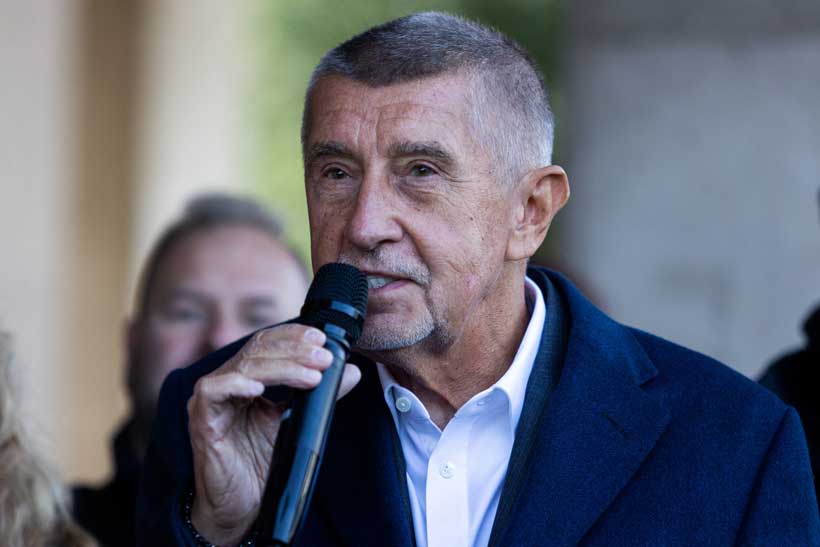
The populist ANO party, led by billionaire Andrej Babis, won the recent Czech election with 34.5% of the votes but did not secure a majority. This leaves ANO needing coalition partners to form a government. The party, aligned with Hungary’s Viktor Orban and several far-right EU groups, aims to strengthen the populist and anti-immigration bloc in the European Union.
Despite winning, ANO will hold only 80 seats in the 200-seat lower house, necessitating alliances to successfully govern and implement Babis’s plans for higher wages and lower taxes. Babis expressed a desire for a one-party ANO government, supported by the anti-NATO and anti-EU SPD and the right-wing Motorists, who are demanding cabinet positions. With these two parties, Babis identified 108 seats but acknowledged the need for further discussions.
Babis, who has previously served as prime minister, did not provide additional comments after meeting President Petr Pavel, who plays a crucial role in appointing ministers and could block candidates perceived as undermining the country’s EU and NATO commitments. Following his election win, Babis dismissed claims that he may weaken Czech relations with the EU and NATO but indicated opposition to certain EU policies, particularly regarding carbon reduction and immigration.
Moreover, Babis is dealing with a conflict of interest linked to his business ownership and is facing a trial for subsidy fraud. Political analyst Jan Charvat noted that forming a cabinet with the Motorists and backing from the SPD could be the simplest route for Babis, despite challenges in negotiations. Overall, the formation of a coalition appears complex, and failure to reach an agreement may lead Babis to consider other parties from the outgoing government, though this has been ruled out currently. An early election would also be difficult to initiate.
With information from Reuters