

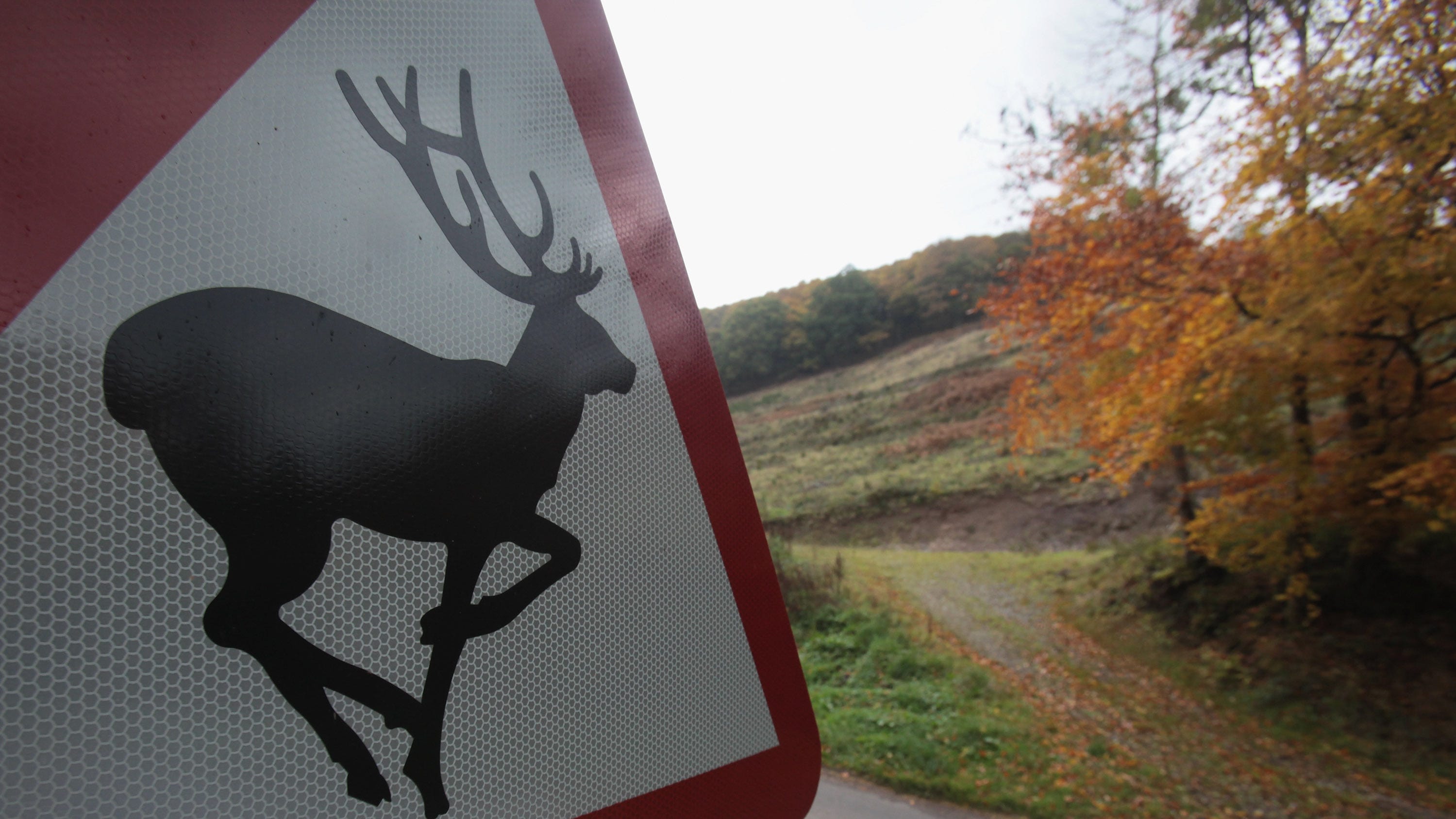

How to avoid hitting deer on road this fall season
Motorists are warned to watch out for deer on the roads to help avoid collisions during the fall season.
- The Tennessee Wildlife Resource Agency said they’re tracking instance of hemorrhagic disease.
- Unlike chronic wasting diease, hemorrhagic disease is not always fatal.
- Hemorrhagic disease is spread to deer through tiny flies, known as midge.
As if the local deer population had enough to worry about as the bow hunting season begins, now a disease is spreading between them.
The Tennessee Wildlife Resource Agency is tracking instances of hemorrhagic disease, also known as HD, in eight counties across Tennessee, according to a statement from the agency.
“HD occurs seasonally, but the severity is highly variable year-to-year, ranging from a few infrequent cases to highly visible outbreaks,” the agency said.
Unlike the always fatal chronic wasting disease, hemorrhagic disease is survivable for a deer.
What is hemorrhagic disease?
Hemorrhagic disease is a naturally occurring disease in deer, the wildlife agency said. The disease is transmitted by small flies called midge, and is not known to cause disease in humans.
Typically, when there is an outbreak of hemorrhagic disease, Tennessee saw excessive rain in spring and early summer with dry coditions in late summer, the agency said. These are the ideal climate conditions for midge to breed in the mud around water sources like stump holes and small puddles.
More midge means a higher chance of disease.
Which Tennessee counties have reported instances of hemorrhagic disease in deer?
The wildlife agency has confirmed hemorrhagic disease through lab testing in eight counties.
They are:
- Franklin
- Giles
- Humphreys
- Lewis
- Shelby
- Sumner
- Wayne
- Williamson
The agency has seen additional reports of sick or dead deer that are consistent with a hemorrhagic disease diagnosis.
If you find a sick or dead deer, the wildlife agency asks people to submit a report at tn.gov/twra/sickdeer.
“TWRA staff may reach out to you if there is an opportunity to collect a viable sample for HD testing. Testing can only occur within 24 hours of death,” the agency said.
Are deer with hemorrhagic disease safe to eat?
There is no evidence that hemorrhagic disease can spread to humans, through contact or consumption.
“While it’s not recommended you consume venison from animals that are visibly sick, if a deer is harvested during the hunting season in an area that had hemorrhagic disease , there is no evidence humans can contract the virus from consuming venison,” the Michigan State University Veterinary Diagnostics Laboratory said in a 2024 report.
Some deer who succumb to the disease don’t look sick, the state wildlife agency said.
What are the symptoms of hemorrhagic disease in deer?
The disease has a laundry list of possible symptoms including:
- Fatigue
- Respiratory distress
- Swollen tongue
- Sores in the mouth
- Fever
- Sloughing of hooves which may cause lameness
Deer with hemorrhagic disease may become thin, their tongues might hang from their mouths and might have a lack of fear, the wildlife agency said.
“Usually, sick, dying, or dead deer are found in or near water as they try to relieve fever symptoms,” according to the agency.
Is hemorrhagic disease fatal for deer?
Not always.
“Deer can recover from this disease and develop immunity that can be passed on to the next generation. Therefore, the severity of outbreaks also depends on the level of herd immunity to circulating viruses,” the agency said.
Survivors may look thin and suffer from lameness until their condition improves.
“Deer populations in the Southeast have evolved with these viruses and show long-term resiliency,” the agency said. “Developed immunity often prevents consecutive outbreaks, allowing time for natural population recovery.”
How long can an outbreak of hemorrhagic disease last in Tennessee?
Deer usually start showing symptoms during the summer, when the midge are fully mature.
Midges will die off with the first hard frost, according to the wildlife agency. The Farmer’s Alamanc predicts the first fall frost will come around Oct. 25 for the Middle Tennessee region.
“Already infected deer may exhibit symptoms for several weeks after,” the agency said.