
Published on
October 6, 2025

Greece’s Nisyros Island has earned international recognition by joining the prestigious UNESCO Global Geoparks Network, highlighting its exceptional volcanic landscape and geological significance. This recognition is a testament to the island’s unique geological features, including its active volcano, craters, and volcanic rock formations, which have shaped both its natural environment and cultural heritage. By securing a place in the UNESCO network, Nisyros is now recognized globally as a geological monument of outstanding value, paving the way for increased sustainable tourism and scientific research while ensuring the protection and conservation of its extraordinary natural resources for future generations.
Nisyros, a volcanic island located in the Dodecanese group of islands, has recently joined the prestigious UNESCO Global Geoparks Network, an international initiative that celebrates sites of exceptional geological significance. Nestled between two other islands, Nisyros now joins a select group of locations around the world recognized for their rare and outstanding geological heritage. This recognition is expected to bring a host of benefits, particularly in terms of environmental conservation, sustainable development, and the promotion of cultural and eco-tourism.
A significant aspect of this UNESCO designation is the island’s potential to strengthen its commitment to environmental preservation while also fostering tourism that is mindful of sustainability. This recognition places Nisyros on the global map as a geological monument, highlighting its exceptional natural features, while underscoring the importance of preserving these unique landscapes for future generations. By joining the Global Geoparks Network, Nisyros is now part of an international community that is committed to sustainable tourism, environmental protection, and raising awareness about the importance of geological conservation.
In addition to Nisyros, the UNESCO listing extends to the surrounding islets of Stroggyli, Pergousa, Pachia, and Kandeliousa, making the entire volcanic complex part of the geopark. This inclusion further enhances the significance of the entire area, reinforcing its status as a unique and irreplaceable natural resource. The volcanic complex is not only a key area for scientific research but also an inspiring destination for travelers who are looking to experience the geological and cultural wonders of the region.
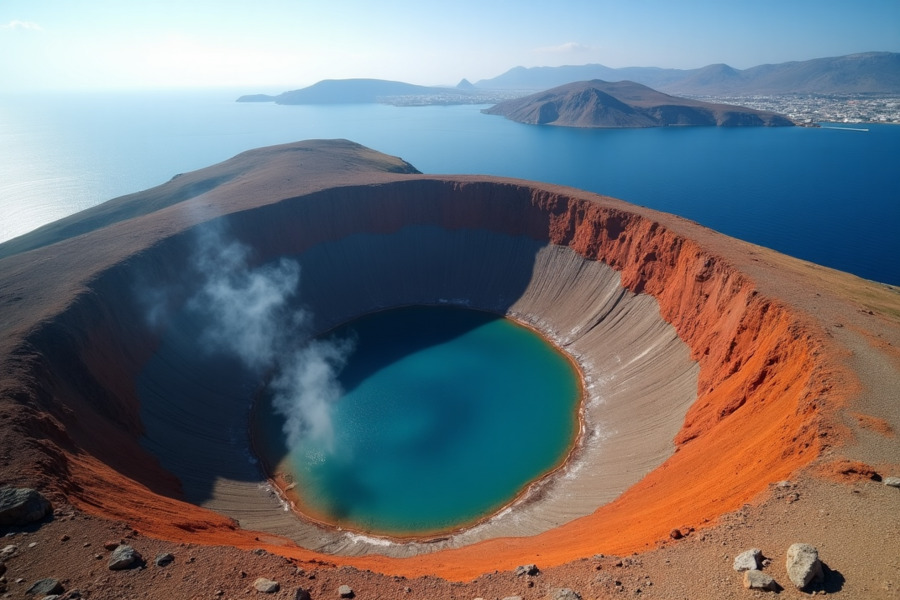
Nisyros itself is a remarkable island, often described as an open-air geological museum. The island is essentially a giant volcanic structure, with accessible craters that offer visitors the chance to explore its dramatic geological features. Among the most notable aspects of the island are its active volcano and the stunning craters scattered throughout its landscape. The island is a fascinating mix of natural beauty and historical significance, offering visitors the rare opportunity to explore both geological wonders and cultural heritage in a single location.
The heart of Nisyros is its active volcano, which is considered the youngest in the Aegean Sea. The island’s volcanic activity has shaped not only the landscape but also the cultural and historical development of its people. The largest crater, Polyvotis, spans 260 meters in diameter and is 30 meters deep. Visitors can explore this vast depression and marvel at the geological formations that were created over thousands of years. Nearby, there are five smaller craters, with Stefanos being the most prominent. These craters offer visitors a chance to descend into the volcanic landscape, or they can choose to admire the views from nearby villages.
The island’s volcanic history is also visible in the traditional architecture, as many of the structures on the island are built from volcanic rock. This gives the island a distinctive character, as the homes, churches, and other buildings are seamlessly integrated into the natural landscape. Visitors can stroll through charming villages with winding streets, stone-built houses, and picturesque squares paved with pebbles. The architectural style of the island reflects its volcanic past, with structures designed to withstand the harsh conditions created by the island’s volcanic activity.
For those interested in learning more about the island’s geological story, the Volcanological Museum in Nikia provides valuable insight. The museum offers exhibits detailing the island’s evolution from a submarine stratovolcano to the surface formation that visitors see today. Through interactive displays and informative exhibits, visitors can gain a deeper understanding of how Nisyros’ volcanic landscape was shaped by explosive eruptions over millions of years. The museum provides a comprehensive overview of the island’s volcanic history, allowing visitors to appreciate the geological forces that have formed this unique island.
Nisyros’ journey through time is also preserved in its ancient sites. Just outside the main port, visitors can explore Paleokastro, an ancient fortification that once protected the island’s inhabitants. The fort provides a glimpse into the island’s long history, offering visitors a chance to imagine life in ancient times and understand the strategic importance of Nisyros in the broader context of the region.
Mandraki, the island’s capital and main port, is where most visitors begin their journey. From here, travelers can easily access the Monastery of Panagia Spiliani, which is a significant cultural landmark. The Archaeological Museum, located nearby, showcases a range of artifacts, including Neolithic tools from the nearby island of Gyali, burial items from Nisyros’ ancient necropolis, and ceramics recovered from shipwrecks around the island. These artifacts provide a glimpse into the island’s rich history and its connection to the broader Mediterranean world.
Greece’s Nisyros Island has gained international recognition by joining UNESCO’s Global Geoparks Network, elevating it as a geological monument of outstanding value due to its unique volcanic landscape, active craters, and significant scientific and environmental importance. This designation ensures its preservation while promoting sustainable tourism and global awareness of its natural heritage.
Overall, Nisyros is a place where nature, history, and culture come together in a unique way. As part of the UNESCO Global Geoparks Network, it is set to become an even more important destination for eco-tourism and geological study, attracting visitors from around the world who are eager to experience the island’s natural beauty, rich history, and vibrant culture. The designation serves as both a recognition of the island’s extraordinary geological features and a commitment to preserving them for future generations.
