
Published on
October 7, 2025
By: Tuhin Sarkar

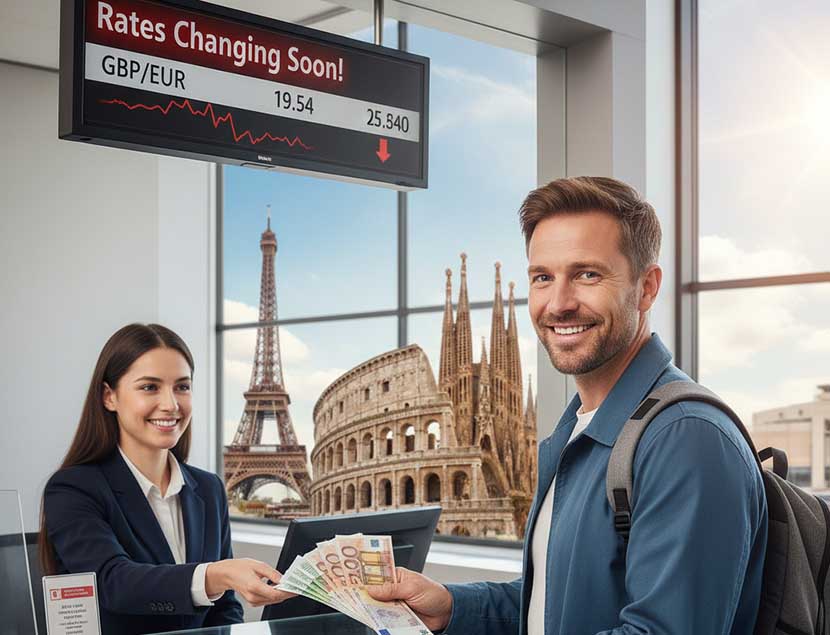
Brits, don’t wait! The Euro’s about to skyrocket, and if you’re planning to travel to Spain, Italy, Germany, or France, now is the time to secure your Euros. With the Pound continuing to weaken, exchange rates are rapidly shifting, making it more expensive for Brits to travel across Europe.
The Euro is expected to rise even further, which means your hard-earned Pounds will buy less. This is a crucial moment for anyone heading to top European destinations like Spain, Italy, Germany, and France. By buying Euros now, you can lock in a better exchange rate and save money on everything from flights to meals and souvenirs.
Don’t wait until it’s too late—take advantage of today’s rates before the Euro continues to climb. Protect your travel budget and ensure a stress-free holiday by securing your Euros now.
Brits planning their winter holidays to Spain, France, Greece, and other European destinations are being urged to purchase Euros sooner rather than later. As the Pound continues to weaken, it is predicted that the exchange rate will drop further, making it more expensive for travellers. With experts projecting the Pound to weaken to €1.11 before the end of 2025, holidaymakers are advised to act fast to save on their trips. Securing Euros now can help Brits avoid the rising costs associated with exchanging currency later.
Pound Faces Continued Decline Against the Euro: Holiday Alert for Brits
Millions of Brits travel to Spain, France, Greece, and other European hotspots each year, and many are now facing the reality of a weakening Pound. At present, £1 secures €1.15, a noticeable decline from €1.21 earlier this year. As the UK economy stagnates and inflation rises, many Brits looking to escape the colder months and head to sunnier destinations are being advised to secure their Euros in advance. Currency specialists warn that the Pound will likely continue to face downward pressure, especially with recession fears and the upcoming UK Budget looming.
Why Brits Should Buy Euros Now for Upcoming Holidays
Currency exchange rates are not just numbers—they directly impact the costs of travel. With the Pound expected to weaken further against the Euro in the coming months, holidaymakers planning trips to Europe should act quickly to lock in a better exchange rate. Experts predict that £1 will fall to €1.11 by the end of 2025, causing prices to rise significantly for British tourists. For many, this means higher costs for flights, hotels, and spending money while on holiday. Securing Euros now ensures that Brits can enjoy their trips without facing unexpected financial strains.
Impact of a Weak Pound on Travel to Spain, France, and Greece
Travellers to Spain, France, and Greece are expected to feel the effects of the weakening Pound more than others. These popular European destinations have long been favourites for UK tourists, especially during the winter months when Brits seek warmth and sunshine. However, with the Pound expected to drop to €1.11, British holidaymakers will see a significant increase in the cost of their Euros. This means higher prices for food, excursions, and local transportation, all of which can add up quickly. Planning ahead and purchasing Euros at a more favourable rate can help reduce the financial impact of the currency’s decline.
Experts Predict Continued Currency Pressures Ahead of 2026
Tony Redondo, founder of Cosmos Currency Exchange, highlighted the ongoing challenges for the Pound, noting that it has already fallen over four per cent against the Euro in the past year. With the global economy still facing uncertainties and the UK’s budget looming, Redondo and other experts believe the Pound will continue to face pressure as the year progresses. Goldman Sachs predicts a further three per cent drop, pushing the exchange rate to €1.11 by the end of 2025. This forecast means that travellers to European destinations like Spain, Portugal, and the Christmas markets will likely see increased travel costs if they delay purchasing their currency.
How Brits Can Save on Euros Before the Pound Weakens Further
For holidaymakers looking to save money, the key is to act now. Experts recommend buying Euros before the Pound weakens further, and many specialists advise against using airport currency exchanges. These exchanges often offer poor rates and add extra costs to transactions. Instead, pre-loaded travel cards offer a better option for securing more favourable exchange rates. Travellers can also top up these cards with small amounts of cash to use for taxis or at street markets, where payment by card is not always an option. By planning ahead and using these options, Brits can make the most of their holiday budgets.
Avoiding Costly Airport Exchange Rates and Finding the Best Deals
While it may be tempting to leave currency exchange to the last minute, this could prove costly. Airport exchange rates are notoriously unfavourable, and with the Pound set to continue its decline, holidaymakers could end up paying far more for their Euros than necessary. By planning in advance and using services like pre-paid travel cards or ordering Euros online, Brits can avoid these high fees and secure a better rate. In addition, travellers should avoid exchanging currency on impulse, as doing so at the last minute often results in a significant loss of value.
Looking Ahead: Tips for Winter Getaways and European Travel
As winter approaches, many Brits are planning trips to warmer European destinations, including Spain, France, Greece, and Portugal. However, the weakening Pound is expected to affect these plans, particularly in terms of currency exchange. Holidaymakers are urged to take action now to avoid paying higher prices for their Euros later. By buying Euros in advance, Brits can ensure they get the best exchange rate possible and avoid rising costs associated with the weakening Pound. This simple step can help make holiday travel more affordable and enjoyable, allowing tourists to focus on their vacations instead of worrying about their budget.
Currency fluctuations play a key role in shaping how much we pay for travel, where we go, and how the global tourism industry performs. A strong or weak currency affects both tourists and destinations. If your currency is strong, foreign travel becomes cheaper. However, when your currency is weak, international travel becomes more expensive, and local travel might get more popular. This is especially important for people travelling to European countries like Spain, France, and Greece. The value of a currency can change how much you spend on things like flights, hotels, food, and experiences. In this article, we will explore how these currency changes impact the travel industry and why they matter to both tourists and tourism businesses.
What Are Currency Fluctuations and How Do They Affect Travel?
Currency fluctuations refer to the changes in the value of one country’s money compared to others. If the British Pound (GBP) is strong compared to the Euro (EUR), UK travellers will find it easier to visit countries that use the Euro, like Spain or France. On the other hand, if the Pound weakens, UK tourists will need more money to get the same amount of foreign currency. This can make holidays abroad feel more expensive.
In 2025, the Pound has been weakening against the Euro. This means British holidaymakers might find their travel budgets stretched when visiting European destinations. This situation can also affect how tourists from other countries view Europe as a travel destination.
How Currency Strength Influences Travel Costs
The value of a currency affects the cost of things like flights, hotel stays, food, and activities when travelling abroad. When the UK Pound is strong, British tourists enjoy more spending power in countries that use the Euro, making everything feel cheaper. For example, in 2023, £1 was worth around €1.21. This made European countries attractive to Brits looking for a value-for-money getaway.
However, when the Pound weakens, it takes more Pounds to get the same amount of foreign currency. In 2025, £1 is worth about €1.15, which means British tourists will have to pay more for things like food, drinks, and activities in destinations like France, Spain, and Greece. This change might reduce the number of tourists travelling abroad, as holidaymakers look for more affordable destinations.
Why Currency Changes Matter to Tourists
For tourists, currency changes can have a big impact on their holiday experience. A weaker Pound makes holidays abroad more expensive, meaning tourists may need to adjust their budgets. This can lead to a rise in domestic tourism, where people prefer to stay within their own country instead of flying abroad. For instance, UK tourists may decide to visit domestic destinations like Cornwall or the Lake District instead of heading to popular European spots.
Tourists from countries with weaker currencies may find Europe more affordable when their money goes further. This could lead to an increase in international visitors to countries like Spain, France, and Italy. For example, Americans or Australians visiting Europe may benefit from a stronger US Dollar or Australian Dollar against the Euro, making travel more appealing.
How Currency Changes Impact Hotel and Flight Prices
Currency fluctuations also affect hotel prices and the cost of flights. When a currency weakens, the cost of services that rely on foreign currency, like airline tickets and hotel stays, increases. Airlines and hotels in countries with strong currencies might raise their prices to adjust for the change in exchange rates. For example, if the Pound weakens against the Euro, British tourists may find themselves paying higher rates for flights or accommodation in Spain, Greece, or France.
Hotels and airlines closely monitor currency changes and adjust their prices accordingly. A hotel in Spain might raise its prices when the Pound weakens, while a UK hotel might see an increase in bookings from foreign tourists if their currency becomes stronger. Currency fluctuations can make the travel experience more expensive for some and more affordable for others, depending on their home currency.
The Impact of Currency Fluctuations on the Tourism Industry
The tourism industry is highly sensitive to currency fluctuations. For countries that rely heavily on tourism, changes in currency values can significantly affect their economy. When a country’s currency weakens, it can see a rise in international visitors. This happens because foreign tourists can get more value for their money, leading to an increase in tourism-related spending. Spain, for example, often attracts more tourists from countries with stronger currencies, like the US and the UK, when the Euro weakens.
On the flip side, if a country’s currency strengthens, it may see a decline in the number of international visitors. Tourists from countries with weaker currencies might be discouraged from travelling because everything feels more expensive. For countries like Spain, Greece, and Italy, which are hugely popular with tourists, currency fluctuations can directly affect visitor numbers and their spending habits.
How Airlines and Travel Agencies Adapt to Currency Changes
Airlines and travel agencies must keep a close eye on currency fluctuations to stay competitive. When the value of a currency changes, airlines adjust ticket prices to reflect the new exchange rate. If the Pound weakens, airlines might increase ticket prices for UK travellers, while offering promotions or discounts to tourists from countries with stronger currencies.
Travel agencies also play a big part in helping tourists plan their holidays during times of currency uncertainty. They offer tips on how to secure the best exchange rates and recommend travel options that offer better value for money. For example, travel agencies may suggest pre-booking travel and activities in advance to avoid last-minute price hikes caused by currency changes.
How Tourists Can Manage Currency Risks
Tourists can take steps to manage the risks associated with currency fluctuations. One of the best ways is to purchase foreign currency in advance when exchange rates are favourable. Travel money cards, which allow tourists to load foreign currency before their trip, are a great way to lock in a good exchange rate and avoid poor airport exchange rates. Another option is to use international credit cards that offer competitive exchange rates and avoid high fees.
By planning ahead and monitoring currency trends, tourists can reduce the impact of currency fluctuations on their travel budgets. For example, buying Euros ahead of time when the Pound is strong can save money and help avoid the stress of fluctuating exchange rates while on holiday.
Impact of Currency on European Destinations
The weakening of the British Pound has a significant effect on European destinations. Countries like Spain, France, Greece, and Italy, which rely heavily on British tourists, may see fewer visitors when the Pound weakens. A decline in the number of British tourists can lead to a reduction in overall tourism revenue for these countries. However, countries with stronger currencies may see an increase in tourists as their money goes further.
Spain is one of the most popular European destinations for British tourists, and its tourism sector is closely tied to the Pound-Euro exchange rate. When the Pound weakens, British tourists may look elsewhere, like domestic UK holidays or cheaper destinations outside the Eurozone, such as Turkey or Egypt. Similarly, countries like France and Italy, which depend on tourism from the UK, may notice changes in visitor numbers as a result of currency fluctuations.
The Future of Currency and Travel
As we look to the future, currency fluctuations will continue to play a key role in global travel patterns. Economic factors, such as inflation, recession fears, and government policies, will continue to influence exchange rates. Countries with strong tourism industries will need to adapt to changing currency values by adjusting their pricing strategies and offering attractive packages to tourists.
For tourists, understanding how currency fluctuations affect travel costs can help them make more informed decisions. By keeping an eye on exchange rates, using smart currency management strategies, and planning ahead, tourists can make the most of their travel budgets. For the tourism industry, currency fluctuations present both challenges and opportunities. By embracing flexibility and adapting to the changing economic landscape, the travel industry can continue to thrive.
Currency fluctuations have a profound impact on global tourism. They affect travel costs, the demand for destinations, and the overall economic health of tourism-dependent countries. For UK tourists, the weakening Pound has made travel to Europe more expensive, while offering opportunities for tourists from stronger currencies. Destinations like Spain, France, and Greece must adjust their pricing strategies to cope with these changes. For tourists, understanding the impact of currency fluctuations and planning accordingly can help make travel more affordable. The travel industry will continue to adapt to currency changes, ensuring that tourism remains accessible and appealing to global travellers.
Secure Euros Now for Cheaper European Travel
With the Pound continuing its downward trajectory, Brits planning winter getaways to Spain, France, Greece, and other European destinations should act now to secure their Euros. Experts predict the exchange rate will fall even further by the end of 2025, making it more expensive for British travellers. To avoid these additional costs, holidaymakers should consider buying Euros sooner rather than later. Pre-loaded travel cards and online currency exchanges provide better rates than airport exchanges, ensuring that Brits can save on their travel expenses. By acting quickly, travellers can enjoy their European holidays without financial stress.
