
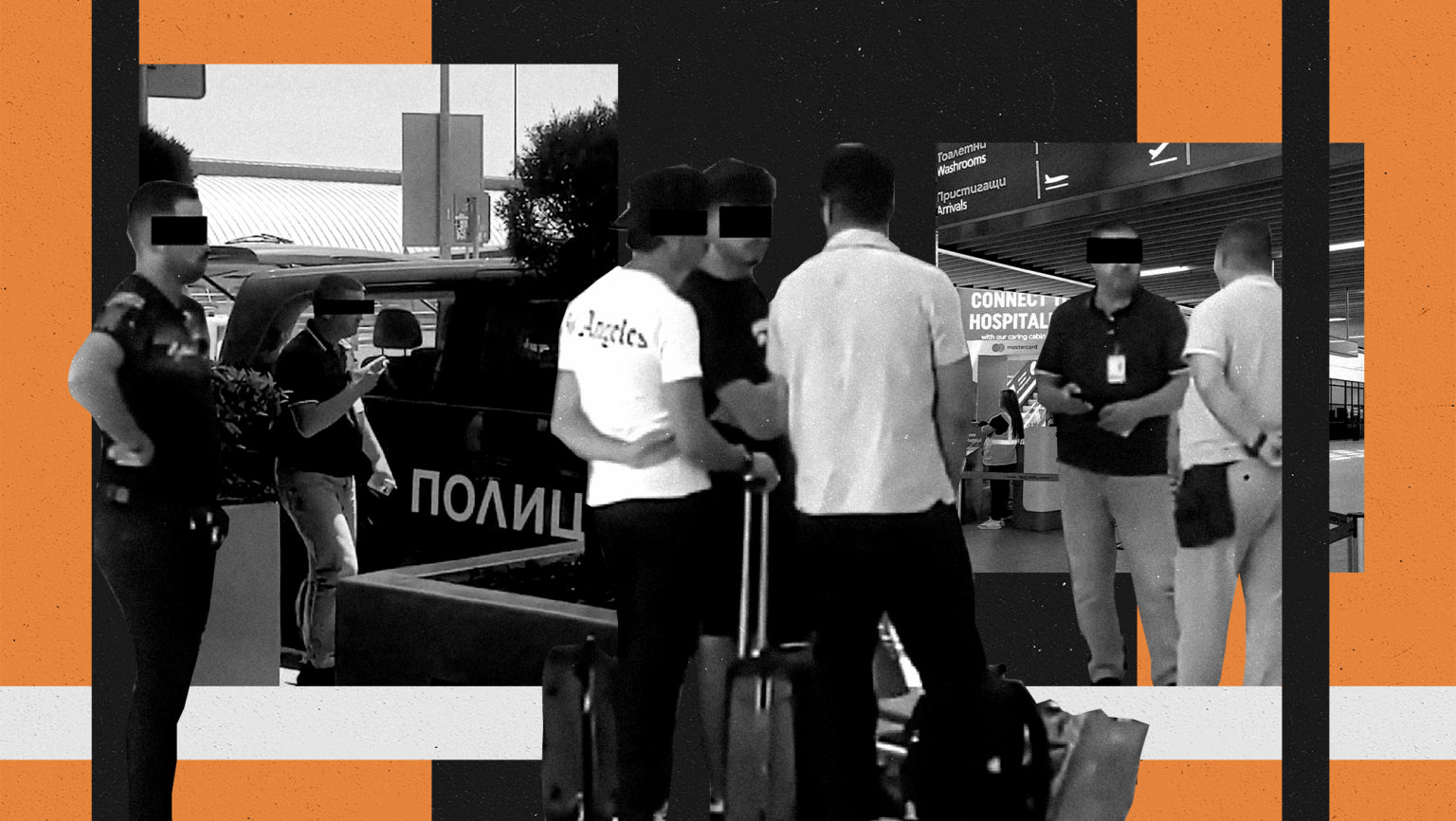
A year later, however, Imad was arrested in his home at dawn and then stripped of his residence permit by Bulgaria’s intelligence service, the State Agency for National Security, SANS, which cited national security reasons. Banned from re-entering the EU, Imad appealed unsuccessfully and remains in detention pending deportation. He told BIRN he is regularly interrogated.
“They say I am a terrorist,” Imad said in July. “Why did you give me residence if I’m a terrorist?”
Deportation is not simple, however. Bulgaria, or the European Union, would need some kind of agreement with the new post-Assad government in Syria, but so far no such deal has been publicly announced.
So instead, Imad has been visited four times in the past year by officials from Frontex, who, his lawyer said, tried to convince him to return to Syria ‘voluntarily’. Bulgarian officials, almost certainly from the Migration Directorate of the interior ministry, regularly do the same, Imad told BIRN.
“They say that you must sign, and if you do not sign, we will forcibly deport you,” he said. But Imad says he has no home to return to, and has a younger brother in Bulgaria too. “I can’t leave him. What if they get my brother on terrorism as well?”
For a decade, as Assad clung to power, Syrians were almost guaranteed some form of international protection in Bulgaria. But in 2023, asylum claims hit record levels and attitudes hardened towards those trying to cross its borders irregularly, including Syrians, Afghans and others from the Middle East, Africa and Asia.
A programme of Assisted Voluntary Return and Reintegration, AVRR, was expanded under the auspices of the interior ministry, and, in the wake of Assad’s ouster in December 2024, more than 200 Syrians were returned in the first six months of this year alone.
Authorities insist these returns are voluntary, even when they occur from detention. Each ‘volunteer’ receives 150 euros in cash at the airport before boarding a return flight.
Lawyers, rights groups and detainees describe a system in which prolonged detention and destitution leave Syrians with little genuine choice but to sign their own deportation papers.
Funded by the European Commission, the executive arm of the EU, to the tune of millions of euros and supported by Frontex, the expanded AVRR programme marks a sharp shift in Bulgaria’s approach to the protection of Syrian refugees but faces growing questions about the tactics deployed.
“The main instrument [authorities] have is the psychological push for people to sign up to voluntary returns, and the main ‘technology’ they have for this psychological push is detention,” said Diana Radoslavova, a lawyer and founder of the Bulgarian legal aid NGO Centre for Legal Aid.
A Frontex spokesperson said its staff only conduct what they described as “counselling sessions” if the individual agrees. “Consent is key,” the spokesperson said. “As for anything that happens inside the centres, that’s something only the Bulgarian authorities can speak to.”
The Bulgarian interior ministry said the Migration Directorate is “obliged to inform all third-country nationals with imposed coercive administrative measures about the existing voluntary or forced return programmes”.
The European Commission did not respond to a request for comment by the time of publication.
Detention as tool of coercion