
Dejana Vukadinović
BBC journalist
The political situation in Kosovo is extraordinary, but local elections are regular.
Even after seven months since the parliamentary elections, the assembly has not been constituted, and therefore the government has not been elected, and residents are again facing a vote – on October 12th, they will elect new local leaders.
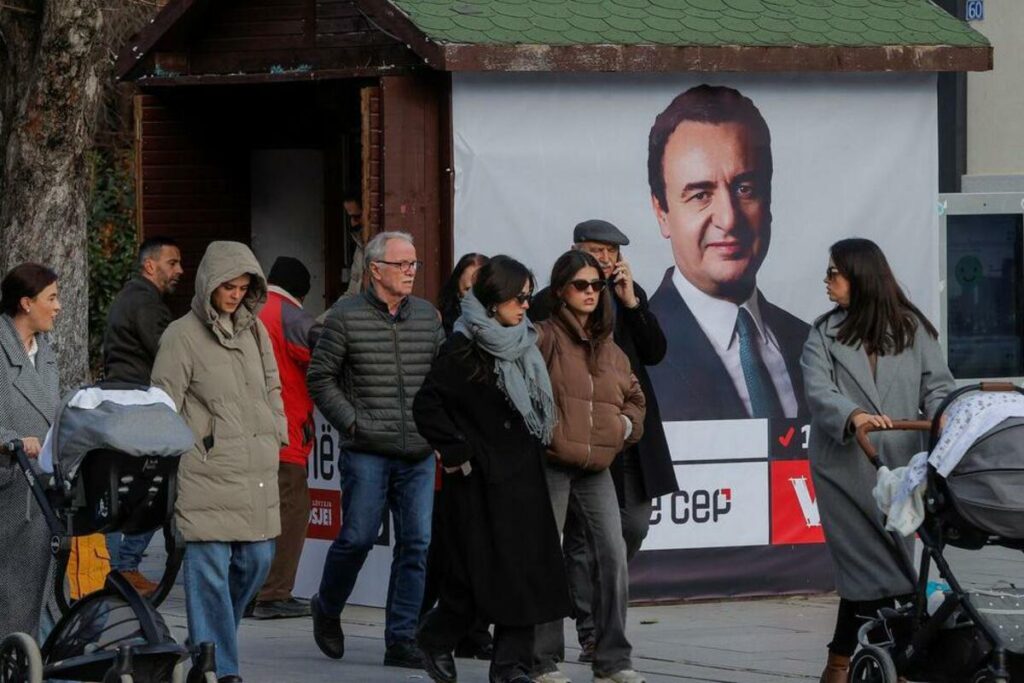
Many opposition parties blame Albin Kurti, the caretaker prime minister, for the months-long turbulent situation, and the results of the local elections could be read in the context of the political crisis, says Agon Maliqi, a political analyst.
“If the opposition parties achieve a relatively good result, it could signal future changes in a deeply divided society,” he added for BBC Serbian.
Dozens of political parties, movements, civic initiatives, as well as 27 independent candidates participates in local elections.
This time, candidates from parties representing Serbs will also be on the ballot, as they are holding early local elections in four municipalities in northern Kosovo with a majority Serb population in 2023. boycotted, previously leaving the most important institutions.
“What is important is what happens next, whether there will be incidents and whether, if they win and return to the institutions, they will overturn the decisions of the Albanian mayors, which could contribute to the strengthening of animosity,” adds analyst Maliqi.
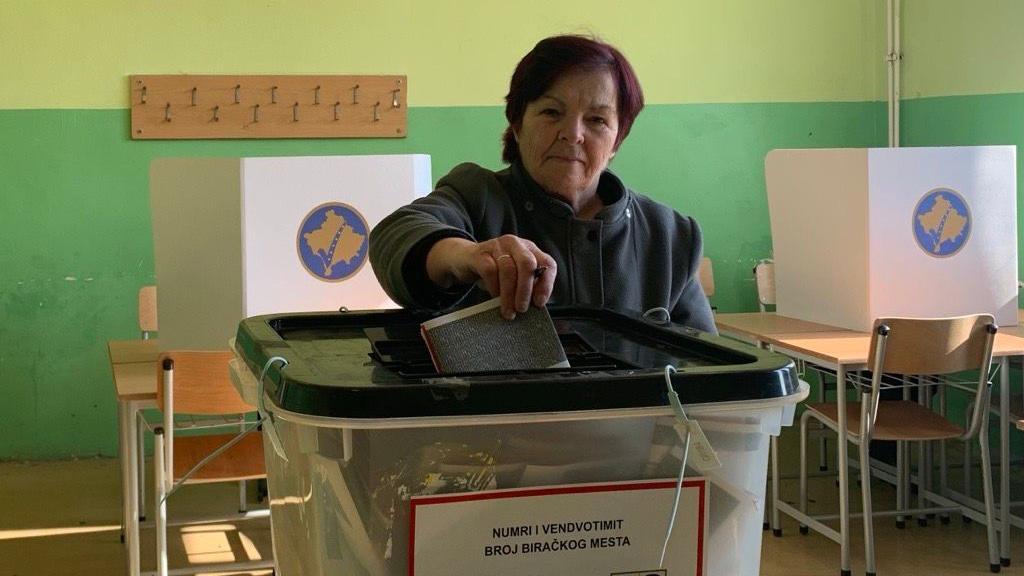
Just over two million voters, including 100.000 outside Kosovo, will have two ballots in front of them.
One is the mayoral candidates, where the winner is the one who wins more than 50 percent of the vote in the first round, or the top two face off in the second round.
The future members of the 38 municipal assemblies are on another paper.
Friends at the bar
Albin Kurti’s Self-Determination Movement had the best result in February, but not enough votes to form a majority in parliament.
The President of the Assembly is elected from 57th record attempt, but not all five vice presidents, which is why the work of parliament is still blocked.
In the midst of this institutional crisis, Vjosa Osmani, the President of Kosovo, at the beginning of June still called local elections.
They could therefore be a turning point and a demonstration of real support for the Vetëvendosje Movement, not only at the central level, but also in local communities, says the analysis of the Slovenian International Institute for Middle Eastern and Balkan Studies (IFIMES).
They have the potential to change governments in municipalities with a large share of the diaspora, provided that these voters become active, because the favorites for mayor in larger cities such as Pristina, Prizren, Peja, Gjakova and Gjilan are precisely the candidates of Vetëvendosje, the authors of the study point out.
Pristina i Furnace since 2021, led by politicians from the Democratic League of Kosovo (LDK), Prizren is governed by the rival Democratic Party of Kosovo (PDK), while in Gnjilan Mayor of Vetëvendosje.
Kurti addressed diaspora voters in a special message, emphasizing that their vote is crucial for the future of municipalities in Kosovo.
“With your vote, our victories become complete,” he said.
I local elections in 2021. They were a test for Kurti’s party, as he had previously won convincingly in the parliamentary elections.
However, the Democratic League of Kosovo (LDK) won in most municipalities previously dominated by Vetëvendosje and the Democratic Party of Kosovo (PDK) of Hashim Thaci, the former leader of the Kosovo Liberation Army (KLA) and former president, accused for crimes before the International Criminal Court in The Hague.
Will a similar scenario repeat itself or will a new political panorama emerge?
BBC/Nataša Anđelković
Pristina, the capital, and North Mitrovica (the smallest municipality in Kosovo by area) have the most candidates for mayor.
In addition to the traditional parties PDK, Self-Determination and LDK, the Alliance for the Future of Kosovo (AAK) also has candidates for mayor in almost all municipalities. Ramush Haradinaj, a former prime minister who was also suspected of war crimes before the Hague Tribunal.
Dok Democratic Alliance of Kosovo says he “believes in a Kosovo with strong institutions, a developed economy and a better life for every citizen” from the rival Democratic Party of Kosovo They say that their “vision, program and candidacy guarantee development, stability and prosperity for every municipality.”
They will also have candidates in municipalities in the north with a Serb majority.
For council seats in six municipalities The Social Democratic Initiative (NISMA) of Fatmir Limaj, which was in coalition with Haradinaj’s party in the parliamentary elections, will also fight.
Nisma, along with the Serbian List and PDK, was against the election of the President of the Assembly from the ranks of Vetëvendosje.
And while at the parliamentary level they are rivals, who have been unable to agree for months on the formation of central institutions in Pristina, the opposition Albanian parties are acting as Albanian Federation in the nearby municipality of Gračanica.
“This is not an uncommon practice in ethnically divided societies.”
“This practice follows a decades-long tradition of the Serbian List prioritizing ethnicity over political and ideological affiliation, and using it to bolster voter support,” explains Gzim Visoka, Associate Professor of Peace and Conflict Studies at the University of Dublin.
The campaign passed in the shadows big ones, republican issues in both Albanian and Serbian circles, such as the Thaci trial in The Hague.
Serbian parties back in the political ring
The Serbian List has just returned to the political arena after two years outside the institutions.
It also participated in the parliamentary elections, and they have candidates in all municipalities with a Serb majority.
Due to the boycott of the early local elections in northern Kosovo in 2023, four municipalities with a Serb majority were led by mayors of Albanian ethnicity, which also caused several incidents.
“We learned our lesson and understood that we don’t have time to complain. We must not repeat the same mistakes.”
“That is why the decision to participate in the elections now is the only correct one and should lead to a positive change in the situation,” he said Dalibor Jevtić, vice president of the Serbian List and former mayor of the municipality of Štrpce.
There will be more mayoral candidates in 10 municipalities on October 12th. 11 Serbian political parties and movements.
“That is why one of the more important elements of these elections is the participation of Serbs in the north and the behavior of the Serbian List (supported by Belgrade) during and after the elections,” Professor Visoka points out.
“If they overcome their own boycott tactics and agree to defend the interests and rights of Serbs within the existing constitutional and legal order of Kosovo, we could see a positive leap in the normalization of ethnic relations without the need for European Union (EU) dialogue or external mediation,” he adds.
Watch the video: Conflict in Kosovo – what happened in Banjska in 90 seconds
Criticism of a ‘faithful’ partner
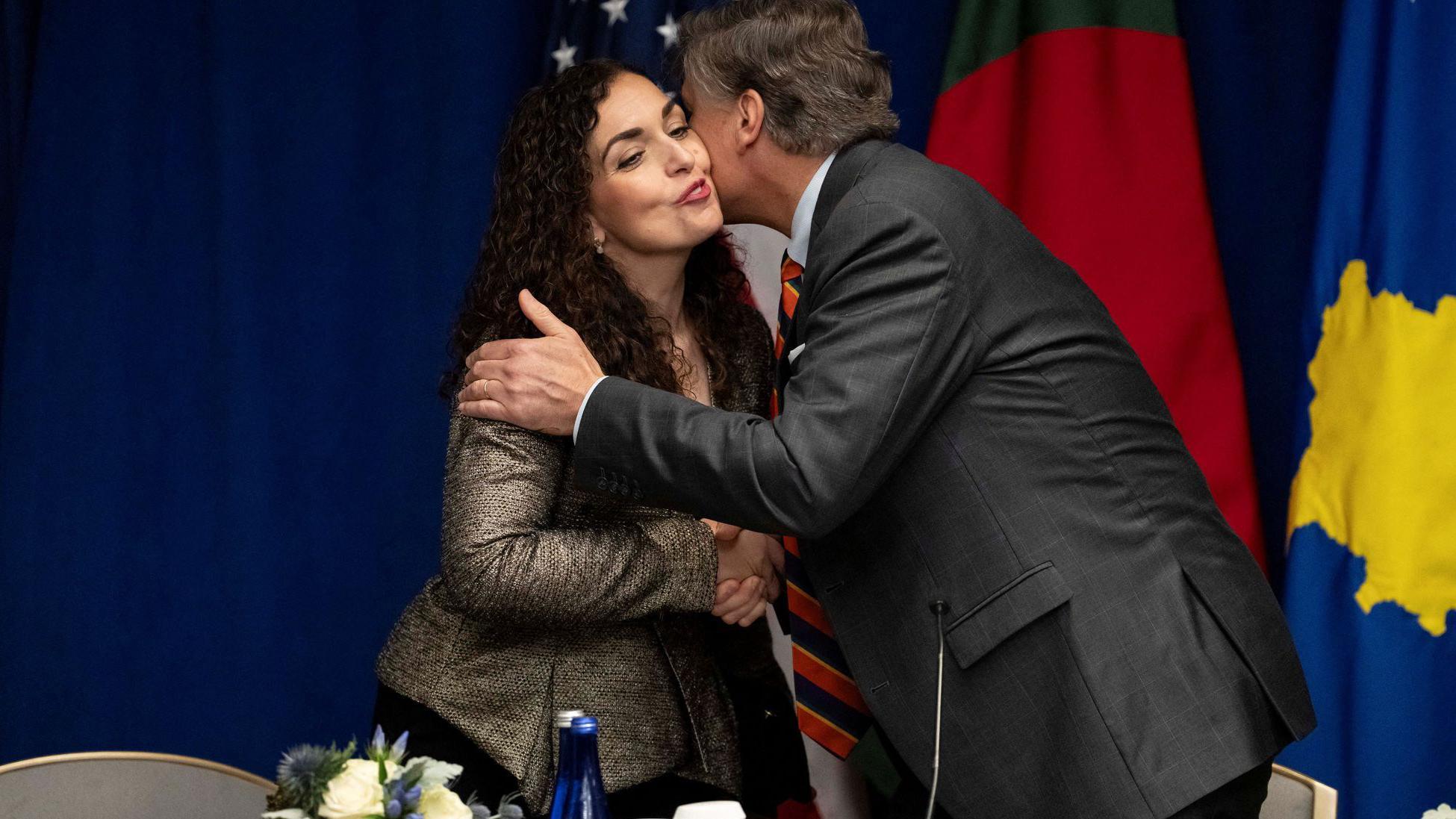
The turbulent political atmosphere in Kosovo was further shaken by the decision of the United States of America (USA) to freeze strategic dialogue with Pristina indefinitely due to “the actions of the caretaker government (Albina Kurti) that have increased tensions and instability.”
Some opposition parties are blaming Kurti, one of Kosovo’s most important and economic partners, for the latest move.
Yuki Iwamura/Pool via REUTERS
That the message from American partners worried Kurti is “also shown by his quick departure to Washington, under the guise of holding a United Nations session, although he did not formally participate in it,” points out political scientist Agon Maliqi.
“By using the narrative of ethnic conflicts, he is trying to strengthen the electorate, so Washington’s message, I suppose, could be a warning that it will not allow new conflicts to occur.”
“But it’s certainly not decisive,” he adds.
It seems that the new convocations of local parliaments will be announced before the deputy speaker of the Assembly from the ranks of the Serbian minority is elected.
“Kosovo never ceases to surprise,” concludes Professor Gzim Visoka.
Watch the video: New bridge over the Ibar opened in Mitrovica
Seventeen years after declaring independence, Kosovo has been recognized by around 100 countries. However, the exact number is unknown.
Pristina cites a figure of 117 countries, and in Belgrade they say that there are far fewer.
Among the countries of the European Union that have not recognized Kosovo are Spain, Slovakia, Cyprus, Greece and Romania, and when it comes to world powers, they are Russia, China, Brazil and India.
Since 2008, Kosovo has become a member of several international organizations, such as the IMF, the World Bank and FIFA, but not the United Nations.
BBC is in Serbian from now on and on YouTube, follow us HERE.
Follow us on Facebook, Twitter, Instagram, YouTube i Viber. If you have a topic suggestion for us, please contact bbcnasrpskom@bbc.co.uk


News