


Pensacola’s Wildlife Sanctuary to improve native shorebird environment
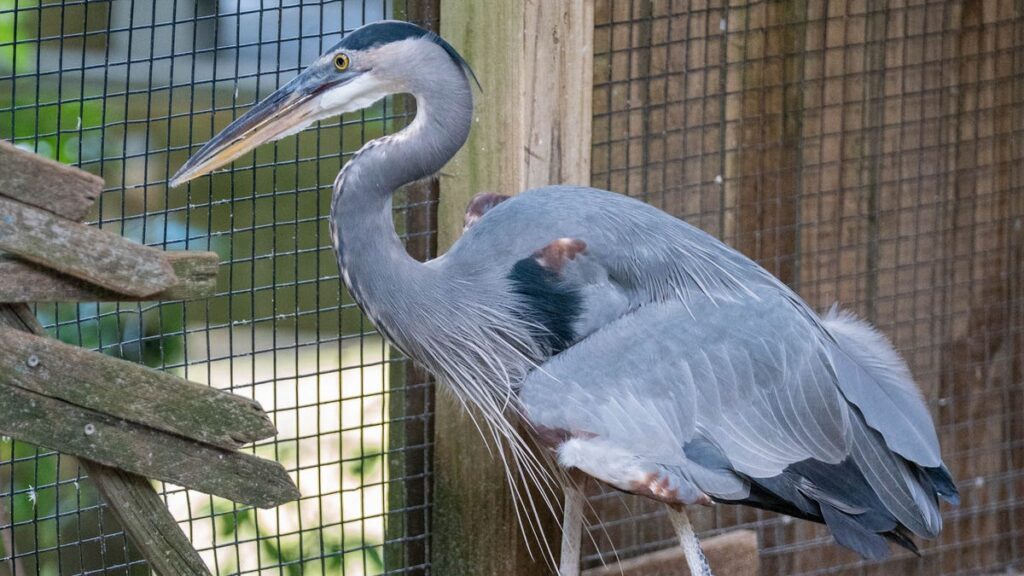
The Wildlife Sanctuary of NWF has received a PPBEP grant to expand the enclosure and create a more natural coastal environment for the permanently injured native shorebirds.
- The Pensacola and Perdido Bays Estuary Program has handed out $250,000 in grants to seven local groups and governments.
- Degraded water quality running through a Carpenter Park stream and into the Blackwater River will be addressed thanks to a $47,932 grant to the city of Milton.
- The Santa Rosa Band of the Lower Muscogee will use a $15,730 grant to create an immersive outdoor educational experience at its Creek Heritage Center at the Jones Swamp Wetland Preserve
In keeping with its pledge to fund programs and projects that protect the environment and enhance local waterways, the Pensacola and Perdido Bays Estuary Program has handed out $250,000 in grants to local groups and governments.
The funds were made available through a state-funded community grant program.
“The Pensacola and Perdido Bays Estuary Program is thrilled to support these Community Grant Program recipients, advancing much needed restoration, monitoring, and outreach opportunities across Pensacola and Perdido Bays,” Estuary Program Executive Director Matt Posner said in a news release announcing the grants.
Here’s a look at what the organization funded this year.
Building a new home for native shorebirds
Since 1982, the Wildlife Sanctuary of Northwest Florida has cared for injured and at-risk animals, some of which cannot be released following rehabilitation and thus become permanent residents.
With a $49,670 grant from the Estuary Program, sanctuary administrators have plans to transform their existing shorebird enclosure into something closely resembling the habitat once occupied by their resident population.
It is hoped the naturalized habitat will enhance the community’s understanding of the ecosystems local shorebirds occupy.
“Our shorelines tell stories of resilience, renewal, and the delicate balance between people and place,” the PPBEP release said. “A small group of permanently injured native shorebirds, including Brown Pelicans and a Great Blue Heron, serve as storytellers and ecosystem ambassadors.”
This project will expand and restore an existing enclosure to better reflect the coastal environment, with native plantings providing shelter, enrichment, and a living demonstration of the role native vegetation plays in shoreline health and estuarine resilience, the release said.
The habitat will become a year-round teaching tool and public-facing restoration effort that fosters environmental literacy and inspires stewardship.
Also as part of the project, volunteers will remove invasive tilapia, a fish species, from a pond created on Bayou Chico by a weir. The tilapia will be tested to determine their suitability for use as a supplemental food source for the sanctuary’s resident birds.
“This effort restores ecological balance, enhances sustainability, and deepens the project’s relevance to watershed health,” the news release said.
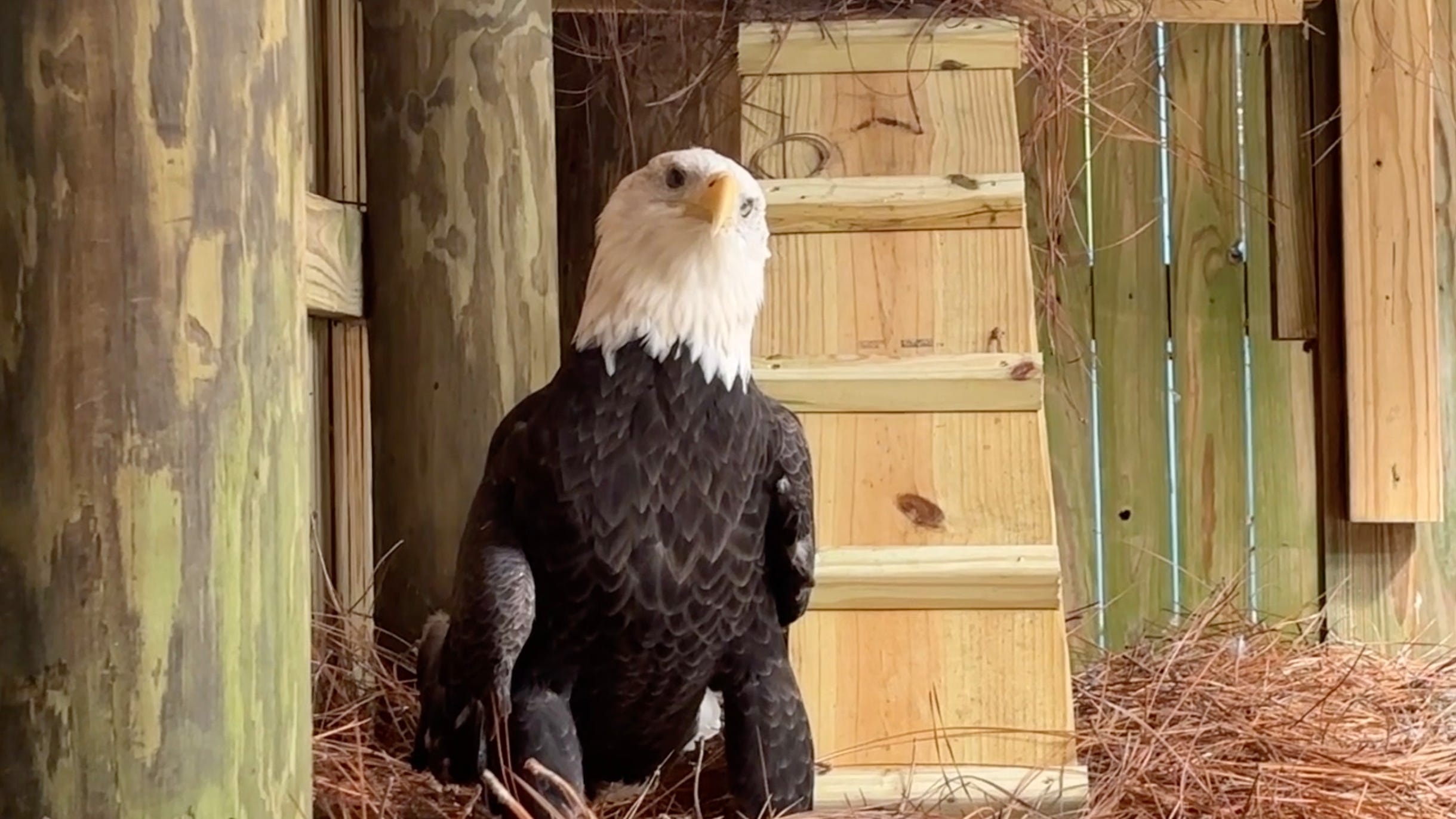
Bald Eagle celebrates 40th anniversary at Pensacola wildlife sanctuary
The Wildlife Sanctuary of NWF is celebrating the 40th anniversary of Apollo, the Bald Eagle, during its Owl-O-Ween Farmer’s Market on Oct. 12th in Pensacola.
Stream restoration at Carpenter Park
Degraded water quality running through a Carpenter Park stream and into the Blackwater River will be addressed thanks to a $47,932 grant to the city of Milton.
The city, in conjunction with the University of West Florida, will work with UWF to develop a restoration plan to restore and enhance the river tributary, addressing severe sedimentation, stormwater runoff, and a degraded wetland.
“By leveraging academic expertise, local knowledge, and a science-driven approach, the project aims to identify sources and pathways of sediment, perform comprehensive water and soil quality assessments of the stream, and develop a community-supported remediation and restoration plan,” a news release from the PPBEP said.
Keeping an underwater eye on aquatic life
Monitoring the waterways across Northwest Florida through use of acoustic telemetry will be the focus of an Escambia County project that will be conducted in partnership with the United States Geological Service and Florida Sea Grant/IFAS Extension.
Acoustic telemetry monitoring, which is an underwater technology utilized to track aquatic animals, will be expanded to areas across Escambia, Santa Rosa and Okaloosa counties thanks to the $54,170 grant. Research is intended to increase understanding of species migration and habitat utilization and inform natural resource management, the news release said.
“The Northwest Florida region offers a variety of ecosystems to serve as habitats for many threatened and endangered species and species of special interest,” the PPBEP release said.
While multiple institutions are engaged in active acoustic telemetry research and monitoring projects, significant gaps still exist, the release said. It is hoped with continued research scientists can fill data gaps regarding habitat use and population status while providing insights into the health of various ecosystems.
A major focus of the monitoring will be gathering information about the diamondback terrapin.
Diamondback terrapins are native to coastal salt marshes, estuaries and tidal creeks along the U.S. Atlantic and Gulf coasts and are unique in their capacity to survive in brackish waters. There are seven subspecies, two of which, the ornate and Mississippi subspecies, call the Florida Panhandle home.
In 2024, the Center for Biological Diversity petitioned the National Oceanic and Atmospheric Administration for protections for the diamondback terrapin under the Federal Endangered Species Act.
Big things happening at the Creek Heritage Center
The Santa Rosa Band of the Lower Muscogee, which Posner said had leased “kind of abandoned” Escambia County property at the Jones Swamp Wetland Preserve and established a Creek Heritage Center at the site, received a grant of $15,730 to create an immersive outdoor educational experience at the facility.
Designed for school-aged children, the project “will deepen understanding of the Pensacola and Perdido Bay watersheds, a watershed sacred to Creek ancestors,” the news releases said.
Grant funding will support the design and installation of interpretive signage, benches, native plantings, a walk-over bridge, and an outdoor classroom known as the Learning Grove.
Guided tours will be conducted through the Learning Grove,where cultural demonstrations, and hands-on conservation activities will be offered, the release said. Students will engage with native plants, wildlife, and watershed processes, reinforcing Creek values of respect, reciprocity, and care for land and water.
A split rail fence will also be installed around the pond to ensure the safety of students and visitors while maintaining the site’s natural aesthetic.
“The Nature Walk will illustrate the interconnectedness of humans and the estuarine ecosystem, emphasizing how plants and animals sustain both environmental and human health,” the news release said. “Culturally relevant signage will integrate Creek traditional ecological knowledge, tracing the historical shift from sustainable use to overexploitation and today’s efforts to restore resilience and balance.”
Producing native vegetation for shoreline restoration
A second grant, this one of $27,968 will be utilized at the Creek Heritage Center for restoration of a greenhouse that will produce native vegetation for shoreline and upland restoration projects.
Escambia County will partner with the Santa Rosa Lower Band of Muscogee and Franklin’s Promise Coalition, to restore the native plant greenhouse and construct an outdoor planting area.
Posner said the restored greenhouse at Jones Swamp Wetland Preserve, a second one funded and soon to be built at Santa Rosa County’s Bagdad Mill Site Park and a third in Orange Beach will give the Estuary Program a “three greenhouse network” for use in growing marshland vegetation such as black needle rush and spartina spartinea (Gulf cordgrass) for shoreline and upland projects.
“Most of the vegetation we get now comes from South Florida,” he said. “There’s not a great source here.”
Franklin’s Promise Coalition, a regional AmeriCorps partner, will contribute labor, materials and technical support, the news release said, through its Opportunity Youth Service Initiative.
“Youth trained in plant propagation and ecosystem restoration will lead hands-on efforts in plant care and construction,” the news release said.
The project will produce 10,000 native plants for the county over three years, with 2,000 plants produced in 2026, the release said, and promote ecological resilience, environmental education, and workforce development across the region.
Girl Scouts step into nature with environmental STEM experience
Fifty girls in grades four through eight will participate in a Girl Scouts of Gateway Council environmental science day thanks to a $10,000 grant from the PPBEP. The event is part of the council’s annual STEM (science, technology, engineering and math) Camp.
The day-long, immersive environmental STEM experience “invites girls to step beyond the classroom and into nature, where they will explore local ecosystems, investigate environmental issues, and engage with real-world science through a series of interactive learning stations,” the news release said.
Participants will examine the biological adaptations of native plants and animals, conduct water quality testing, observe estuarine habitats, and explore the interdependence of living systems, the release said with the goal of educating them regarding key scientific concepts deepening understanding of local conservation challenges and exploring the role healthy ecosystems play in community well-being.
Girls will complete a field journal, earn a STEM badge and patch, and walk away inspired to care for and protect the natural world around them, the release said.
What will those worms tell us anyway?
Armed with a $44,528 grant, the University of West Florida will undertake an assessment of both created and restored salt marsh habitat in the Pensacola and Perdido Bay watershed to analyze the health of the individual systems as a way of planning a path forward for future restoration project methods.
Salt marshes are essential to coastal health, supporting wildlife, protecting shorelines, and filtering water, the news release said, and with restoration projects extending across the Pensacola and Perdido Bay region, a key question remains: to what degree do restored marshes mirror the biodiversity and resilience of natural systems?
“This project will use cutting-edge DNA techniques to evaluate how well restored salt marshes compare to natural ones,” the release said. “By studying tiny sediment-dwelling organisms like marine worms and clams who are important indicators of ecosystem health, the project team will assess biodiversity and identify signs of functional recovery.”
A host of methods, will be used to analyze community structure and identify species that can serve as long-term indicators for restoration success, according to the release.
Data generated will improve wetland monitoring and management, and this project will engage the public through education and outreach.
“By combining innovative science with education and outreach, this project supports data-driven restoration and builds public understanding and stewardship of our coastal ecosystem,” the release said.