
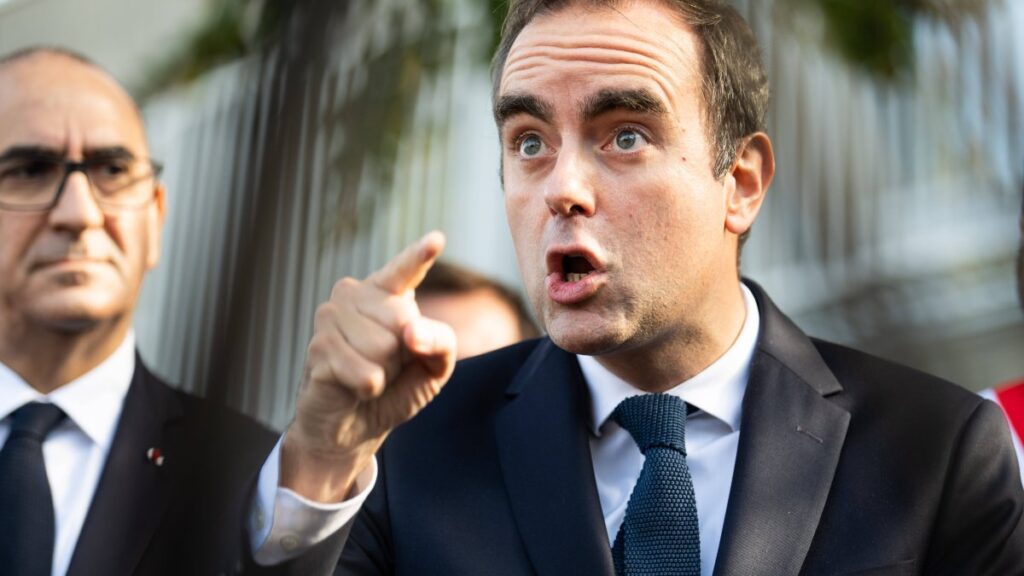
Sébastien Lecornu, newly reappointed prime minister after one of the most extraordinary weeks in French politics, returned to his job on Saturday with a trip to a police station.
Law and order ranks highly among the preoccupations of French voters, and the visit looked calculated to appeal to the growing numbers flocking to Marine Le Pen’s right-wing National Rally party.
Yet Lecornu’s calm as he worked his way down a row of police officers, shaking hands, could not hide that he was a man in a hurry, with 48 hours to put together a government and present a budget for next year to save France from its deepest political and economic crisis in decades.
“I don’t have an agenda. I don’t have any other ambition than to get through this moment, which is objectively very difficult for everyone,” Lecornu, 39, told reporters gathered outside the ugly concrete police station in L’Haÿ-les-Roses.
“So, I’ve set myself a fairly clear mission. After that, either the political forces help me and we work together to get it done, or they don’t.
“What matters is that by December 31, there’s a budget for social security, a budget for the state, and that we’ve dealt with a few urgent issues.”
Asked why he was back in the job, he quipped: “I don’t have the impression that there were lots of candidates.”

Lecornu visited a police station on the southern edge of Paris
MARTIN LELIEVRE/POOL/AFP

The visit may have been planned to win over voters concerned about law and order
MARTIN LELIEVRE/POOL/AFP
President Macron faced howls of outrage from foes and erstwhile friends alike on Friday evening after he announced he was reappointing Lecornu, one of his closest allies, only four days after he had stepped down: a bizarre first for French politics.
Le Pen tweeted it was now “more necessary than ever” to dissolve parliament, while Jordan Bardella, her right-hand man, called the decision proof of a president who is “isolated and disconnected” from reality.
On the Left, François Ruffin likened Lecornu’s return to something on the French equivalent of Spitting Image. “It’s a Guignols sketch, only worse, and the ending won’t be funny. What can we do?” he tweeted.
For many French people outside politics, the reaction was one of disbelief — or mockery.
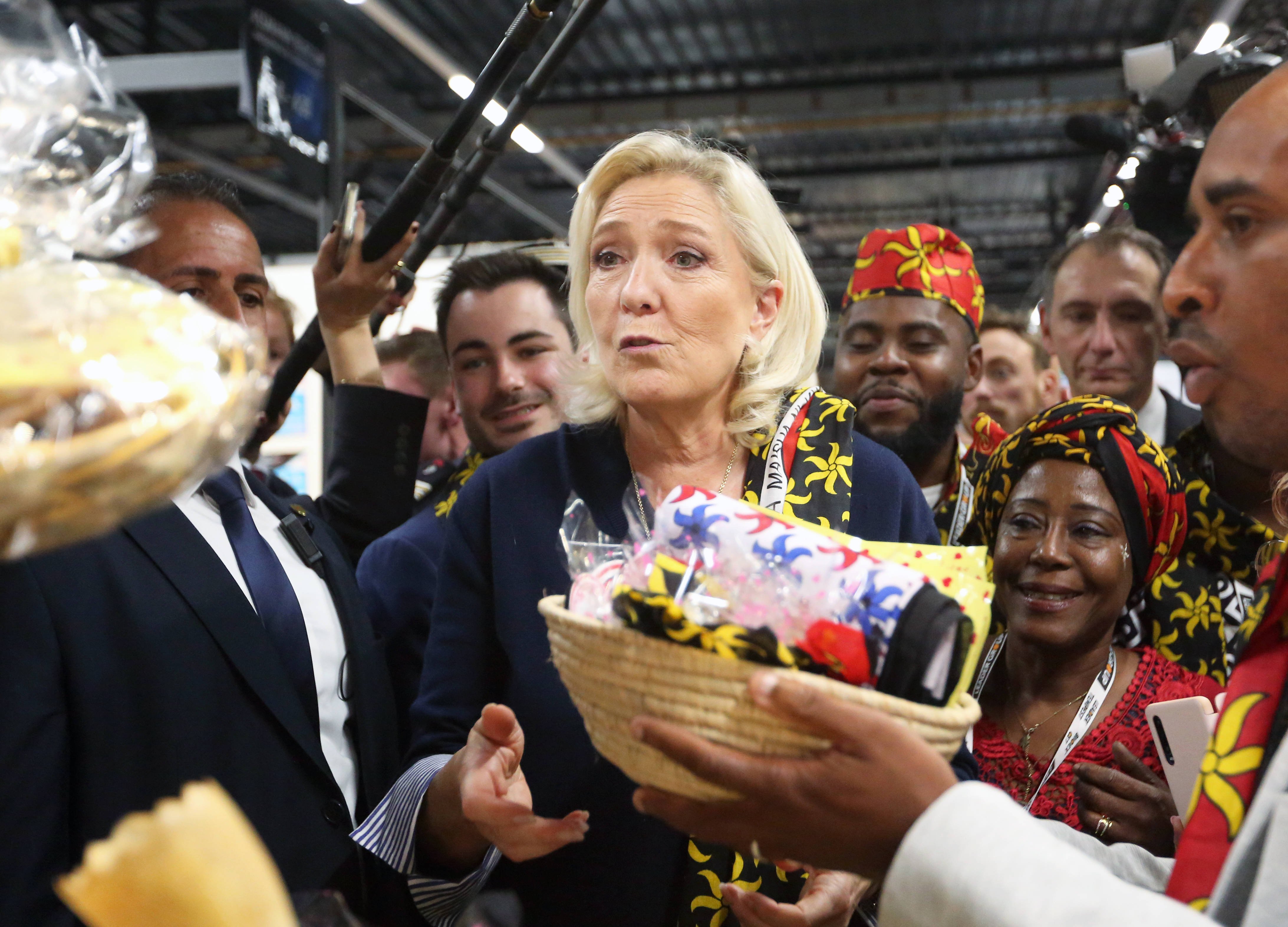
Marine Le Pen responded to Lecornu’s reappointment by calling for parliament to be dissolved
SICCOLI PATRICK/SIPA/SHUTTERSTOCK
In the post for barely a month, the former armed forces minister had thrown in the towel after it became clear he could not put together a government with sufficient votes in parliament to achieve its first task. This is to agree the budget, which must start its progress on Monday through the council of ministers and the chamber if it is to be in place by the start of the new year.
Macron, who has cut an increasingly isolated figure in recent months, has asked Lecornu to have another try, though this time explicitly offered him “carte blanche” to make concessions that could go to the heart of his own legacy. This could include unpicking a controversial reform to raise the retirement age from 62 to 64 that has been one of the few achievements of his two terms as president.
Lecornu’s chances of survival are on a knife edge: by Saturday morning an estimated 264 members of the parliament had backed calls for a vote of confidence to force him out, slightly short of the necessary majority of the 577-seat Assemblée Nationale.
The new government’s fate is in the hands of the Socialist Party, with 69 seats, which has made its decision to support him or bring him down dependent on what concessions he is ready to make. Also crucial is the position of the Republicans, on the centre-right, who are deeply split.
Macron himself is facing widespread anger — even from members of his own camp, who have grown increasingly exasperated with the president since a botched dissolution of parliament in June last year that left the parliament divided into three rival blocs.
Most damaging was a call earlier in the week by Édouard Philippe, appointed by Macron as his first prime minister in 2017, to step down once a budget has been passed and call an early presidential election. Philippe declared: “Faced with this terrible undermining of state authority, he must make a decision worthy of his office.” A CSA poll published this weekend suggested 61 per cent of people agreed with him.
If Lecornu’s new government falls, then parliamentary elections are almost certain to follow. Calls for Macron to step down, too, may become too loud for him to ignore.
Either way, the week’s events could be the final nail not just in the coffin of “Macronism”, a form of radical centrism that has shaken up French politics, but maybe also of the Fifth Republic, the political system under which the country has been governed for more than six decades.
“If the president resigns, we would no longer be in a political crisis, but in a regime crisis,” said Noëlline Castagnez, a leading historian of modern France.
France in crisis
It was during a late night dinner on Thursday evening in the Élysée palace that Macron is believed to have sounded out Lecornu — who was his seventh prime minister and will now be his eighth — about returning.
The French leader had just come back from a ceremony in the Panthéon honouring Robert Badinter, who as justice minister in the 1980s under François Mitterrand consigned the guillotine to the history books. Now calls were growing for Macron’s head.
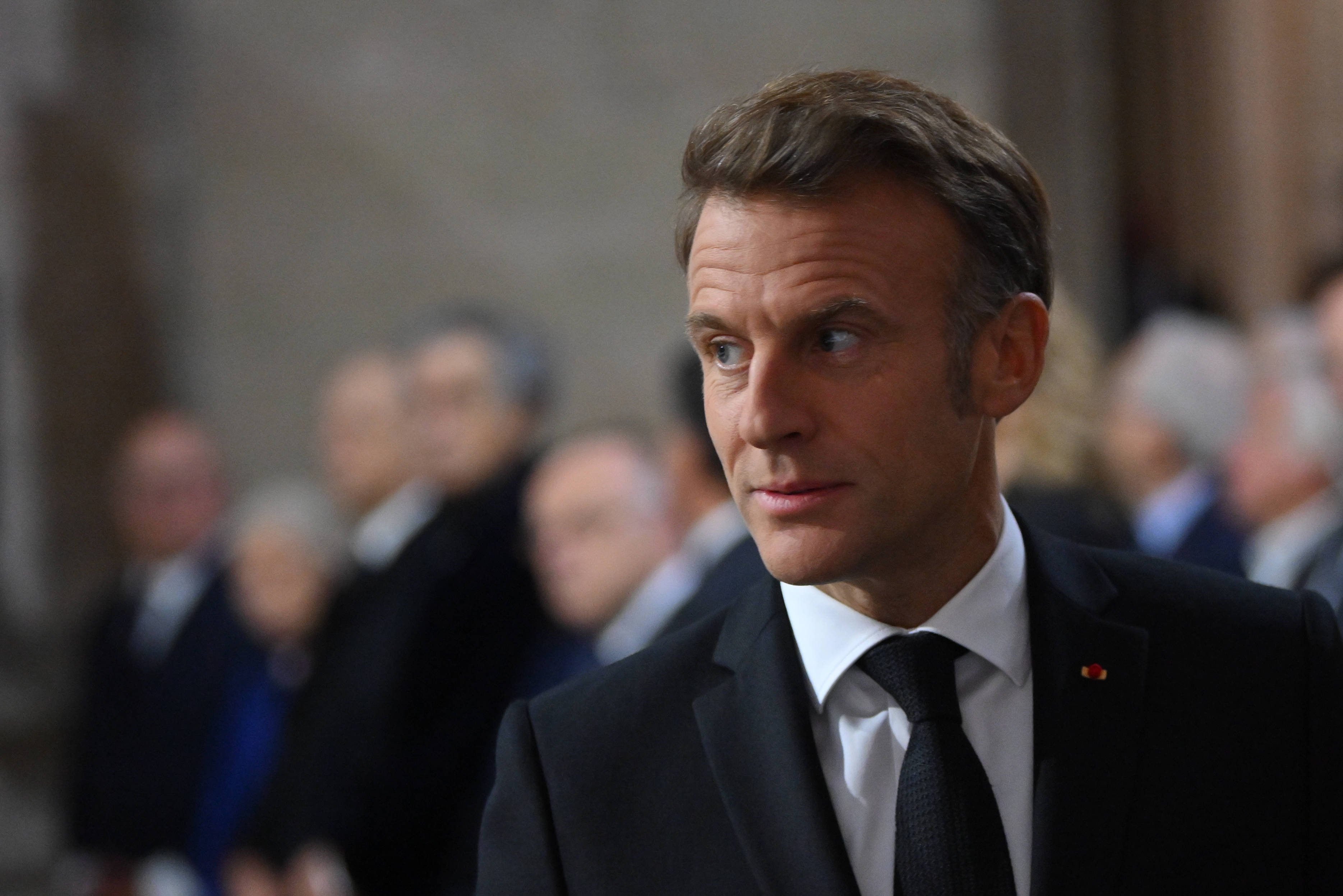
Macron at a ceremony in the Panthéon honouring Robert Badinter, a former justice minister
ELIOT BLONDET/SIPA/SHUTTERSTOCK
Although little known to the public before his appointment last month, Lecornu has been a key member of the Macron project, serving continuously in a variety of roles since 2017. The two men have long been personally close.
Macron was especially impressed by how Lecornu, a self-effacing character who styled himself a “monk soldier”, had handled himself during a prime-time television interview on Wednesday that drew seven million viewers in which he explained his decision to step down.
After their dinner, a message was sent at 2am on Friday to the leaders of the mainstream parties that Macron hoped would form the new government’s majority to come to the Élysée that afternoon to gauge the mood.
This was a meeting only for potential allies, and not political enemies: Le Pen and other representatives of the National Rally, which now has the support of about a third of voters, were not invited. She spent the day instead in Le Mans at the national congress of firefighters, where she railed against the goings-on in faraway Paris as “deplorable, distressing, desperate, pathetic”.
Also omitted from the guest list was Jean-Luc Mélenchon, head of the far-left France Unbowed party and a sworn enemy of Macron, who has been urging him to step down almost from the day he was elected.
If the president had hoped he could persuade the fractious parliamentarians to rally round, he was disappointed. Marine Tondelier, leader of the ecologists, whose 33 votes could be vital, was outraged when she emerged from the Élysée. “I am stunned and extremely worried,” she told journalists in the courtyard outside the palace, bemoaning the president’s failure to give straight answers to the questions put to him.
The president did not reveal during the meeting his intention to reappoint Lecornu but, struggling to find another option, appeared to have left with the feeling his audacious gamble might just work. The deal was only finally sealed at 9.30pm on Friday when Macron called him, Lecornu has since revealed, adding that he agreed only on condition that he could “do things his way from now on”. Minutes later his return was announced.
What next?
Lecornu’s new government, which he must announce quickly, will have different members from the administration he tried and failed to put forward a week ago: it will also be less political and more technocratic in nature.
For that reason, all those thought to harbour ambitions to stand for the presidency in 2027 will be excluded — among them Bruno Retailleau, the Republicans’ likely candidate, whose message on social media last Sunday denouncing Lecornu’s first attempt at forming a government triggered his resignation.
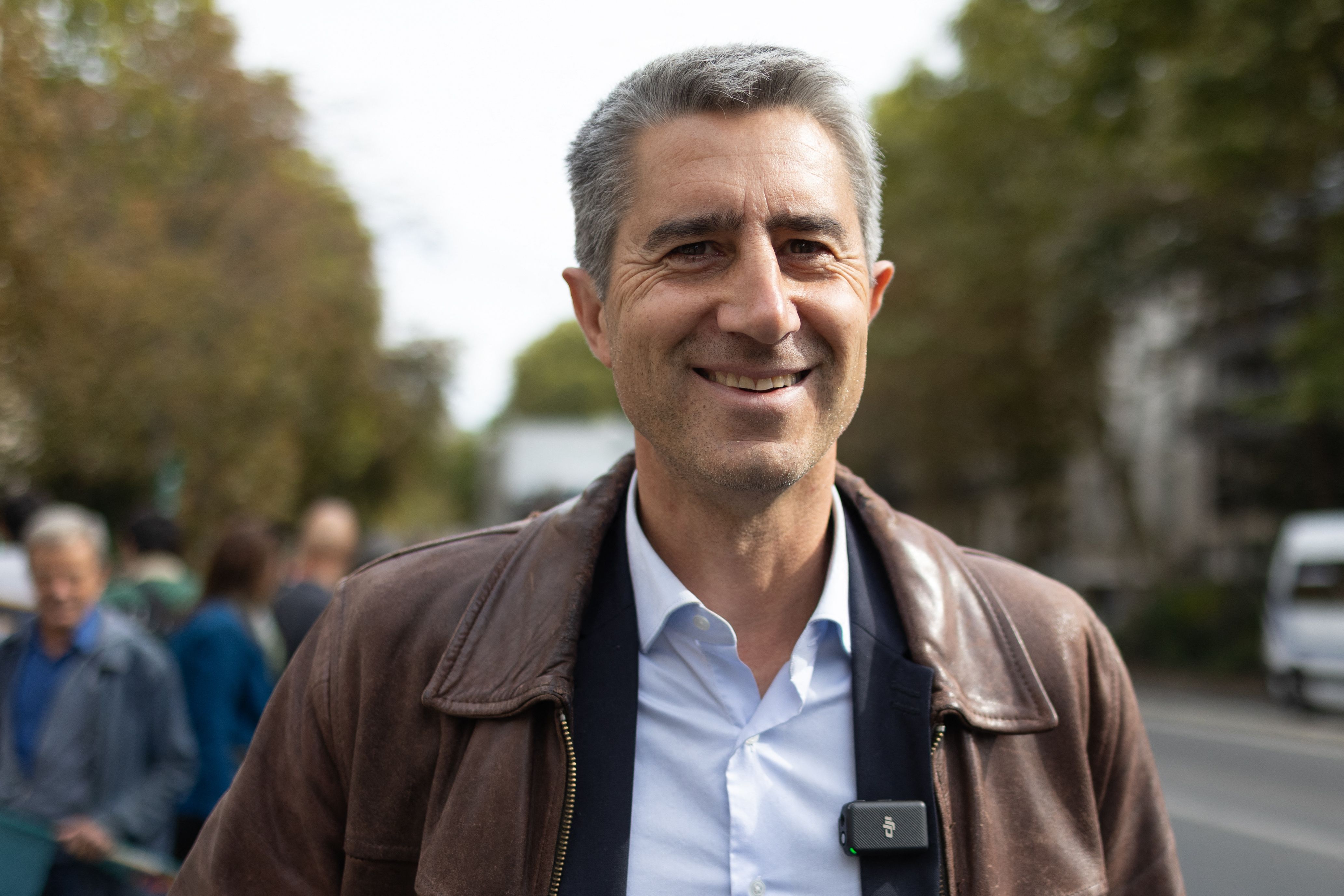
François Ruffin, a leftwinger who took part in a nationwide strike last week, likened the prime minister’s return to a comedy sketch
LAFARGUE RAPHAEL/ABACA/SHUTTERSTOCK
Crucially, the “carte blanche” given to Lecornu by Macron appears to give him freedom to look again at contentious policies in the budget, such as pension reform, which is still rejected by the left more than two years after it was passed by decree. But it could prove a difficult balancing act.
In a major concession, Macron indicated during Friday’s meeting a willingness to delay further application of the law to new people coming up to retirement until after the next presidential election. But this does not go far enough for the Socialists.
Breaking ranks with other parties on the left, Olivier Faure, the Socialist leader, has indicated he could support Lecornu if he went further and suspended the law completely. This, though, risks alienating the Republicans, who have warned of the financial consequences of any attempt to water it down.
Underlying the crisis is the parlous state of France’s public finances, with the deficit stuck at 5.4 per cent of GDP and debt at 114 per cent. The political crisis is threatening to make matters worse, by pushing up borrowing costs, while firms and households are cutting back on spending.
Failure to pass the budget could make matters worse, although France would not face an American-style shut down. Instead, various contingency measures allow the state to continue to pay staff and provide services — as happened last December when the deposing of a previous government headed by Michel Barnier delayed approval of the 2025 budget until this February.
Such uncertainty has knocked 0.4 to 0.5 per cent off growth, an amount equivalent to €12 to €15 billion, according to François Villeroy de Galhau, the governor of the Bank of France. “Uncertainty is the opposite of confidence, and therefore the primary enemy of growth,” he warned in a radio interview this month.
Confidence in Macron is also in precious short supply. The Fifth Republic, created by Charles de Gaulle in 1958 as a personal vehicle for himself, established one of the most powerful presidencies in the western world.
Yet De Gaulle felt obliged to step down in 1969 after his proposed constitutional reforms were rejected in a referendum. If Lecornu, his loyal “monk soldier” does not save him, Macron may ultimately believe he has no alternative but to follow suit.