
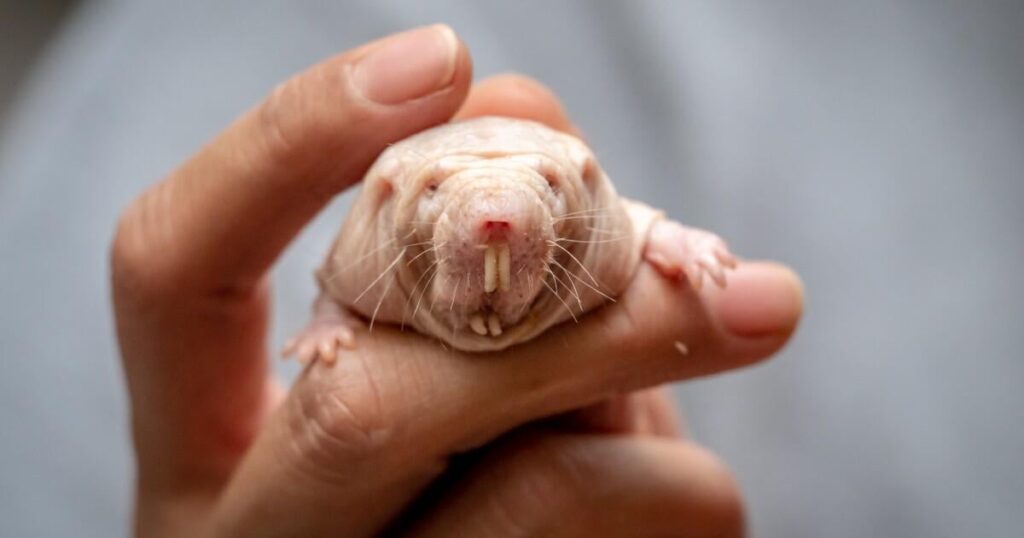
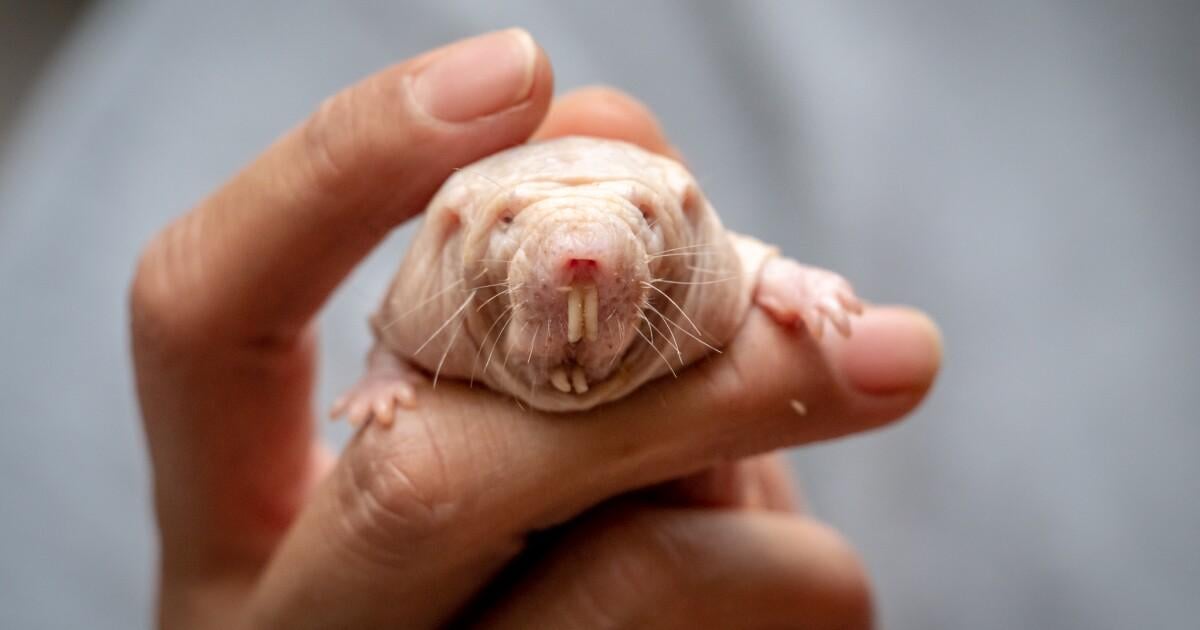
Scientists have uncovered just how naked mole-rat repair their DNA – and it has the potential to be harnessed for humans to do the same. Their enzyme has 4 key changes that facilitate the important work that extends their lifespan and keeps them healthy and disease-free for a remarkably long time.
https://newatlas.com/aging/naked-mole-rat-longevity/
1 Comment
Naked mole-rat DNA repair could unlock natural human longevity
What naked mole-rats lack in the looks department they make up for it in longevity, living healthily for nearly four decades. Now **scientists have uncovered just how they repair their DNA – and it has the potential to be harnessed for humans to do the same.**
Reseacher’s from Shanghai’s Tongji University have furthered our understanding of why these curious little rodents (Heterocephalus glaber) have such incredible lifespans, discovering that changes to four amino acid residues equip naked mole-rats with a kind of genetic toolbox that allows them to carry out repair jobs across their organs and prevent cell death (senescence).
Previously, scientists had found that the DNA sensor cyclic guanosine monophosphate–adenosine monophosphate synthase (cGAS) was driving this system-wide repair, patching up DNA double-strand breaks to stabilize the genome, but how this came to be has remained a mystery until now.
Using comparative molecular biology with human cGAS – which actually inhibits DNA repair – the scientists found that **the naked mole-rat’s enzyme has four key changes that facilitate the important work that extends their lifespan and keeps them healthy and disease-free for a remarkably long time**. When the rodent cGAS enzyme was inserted into human and mouse cells in the laboratory, the researchers observed that it significantly enhanced the cells’ ability to repair DNA and in turn reduced the molecular signs of aging. When they engineered fruit flies to produce the naked mole-rat’s cGAS, the insects lived around 10 days longer than expected. While this may not sound like much, these flies only live for around 40 days, so it’s a meaningful extension to their lifespan.
For those interested, here’s the link to the peer reviewed journal article:
https://www.science.org/doi/10.1126/science.adp5056