
U of M researchers studying how CWD lingers and travels in environment
Published 3:57 pm Tuesday, October 14, 2025
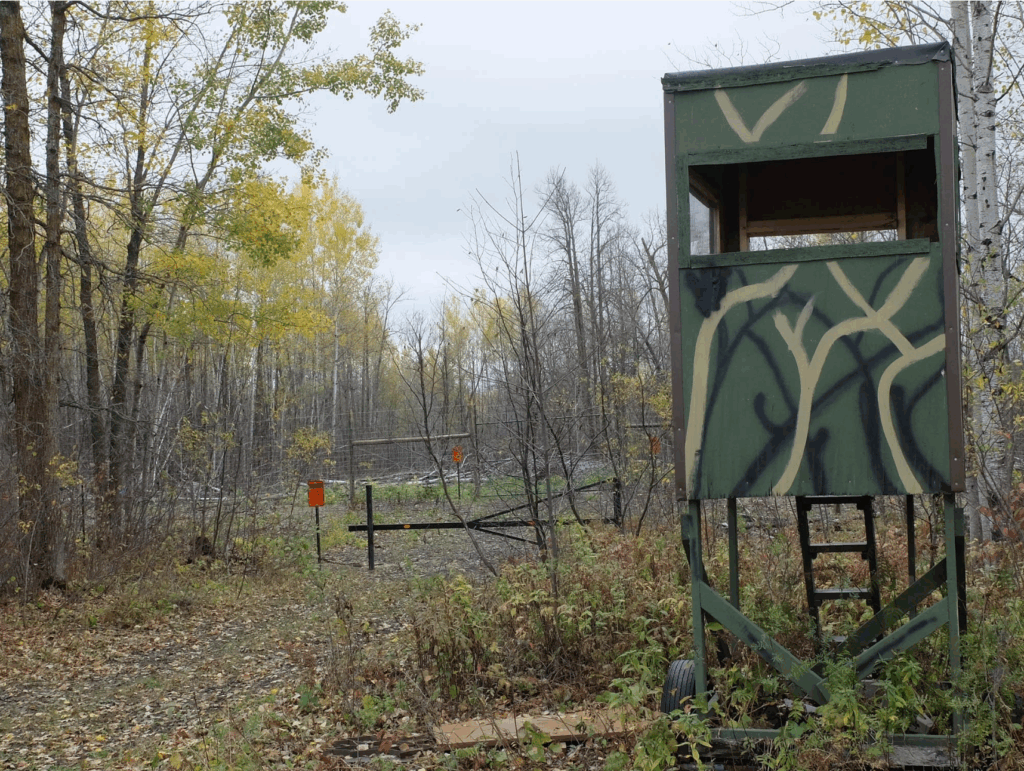
- A forested location in northern Minnesota is a hot spot for chronic wasting disease after a farmer reportedly dumped carcasses of infected deer. Photos taken October 15, 2021 near Hines.
Dan Gunderson/MPR News file
By Mathew Holding Eagle III
Four years ago, deer infected by chronic wasting disease were illegally dumped on public land in Beltrami County. Since then, a team from the University of Minnesota Center for Prion Research and Outreach has been studying CWD’s effects on the environment. MNPRO’s study site is in rural Beltrami County, near Hines.
Upon discovery of the site where the carcasses were dumped, the Minnesota Department of Natural Resources fenced in about 11 acres creating an exclusionary zone to limit potential spread of CWD to wild herds.
MNPRO associate director, Marc Schwabenlander, said CWD can remain in the soil and water for 2-16 years.
“It’s probably longer than that, so that environmental persistence can be leveraged to understand disease spread and risk,” he said. “And that is what we’re doing in the research in that area right now.”
CWD is always fatal in deer and other cervids like elk or moose. And it takes about two years to kill them. But during that time the animal can shed CWD through its urine, saliva and feces.
“It’s caused by a misfolded protein called a prion,” Schwabenlander said. “It’s not a bacteria, it’s not a virus. It’s kind of odd in that it’s a normal protein in the deer’s body that changes shape and then ultimately causes that disease.”
Schwabenlander said there’s very little research available on how much exposure to CWD prions a deer needs before becoming infected. The information that does exist points to it more likely being caused by a large one-time exposure versus smaller ones over time.
He said one of the most important discoveries MNPRO’s research has found at the study site is that CWD appears to cling to the sediments in water. And that leads to more accurate testing of the disease in the environment.
“We know the focus is on the sediment in the water,” he said. “We can separate the sediment and test the sediments that gives us a better answer and understanding if there’s prions in there versus the water without sediment.”
With the firearm deer hunt opener about a month away, Schwabenlander warned about eating meat from an infected deer.
“From a scientific perception, the one-liner is it’s a non-zero chance that it can cause disease in humans. So, it is possible,” he said. He noted that the bovine equivalent of CWD, mad cow disease, did cause illness in humans who ate meat from infected animals in the ‘90s.
Schwabenlander recommends not eating meat from infected deer.