

Parking lot construction at Sandy Neck Beach on Cape Cod ramps up
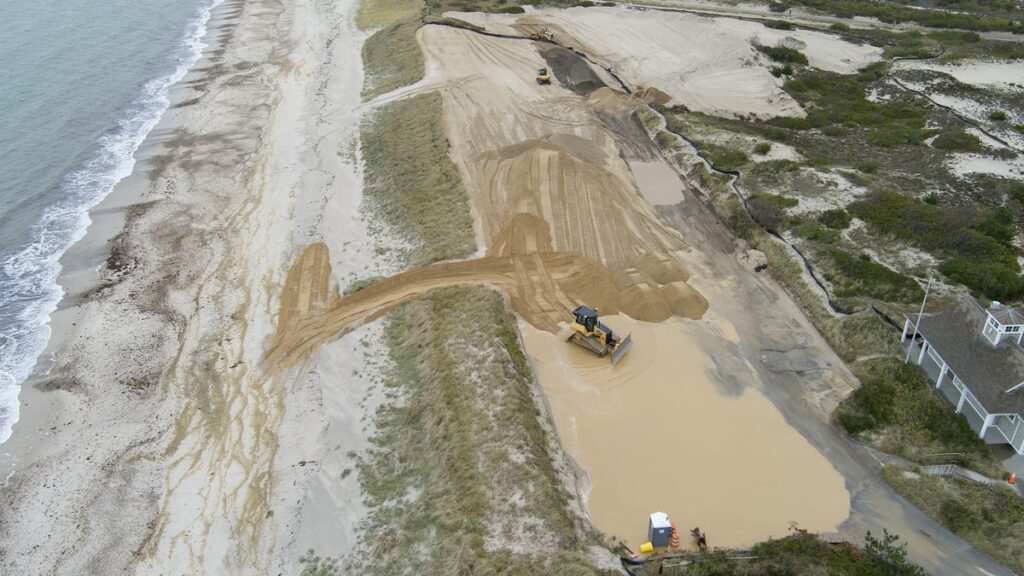
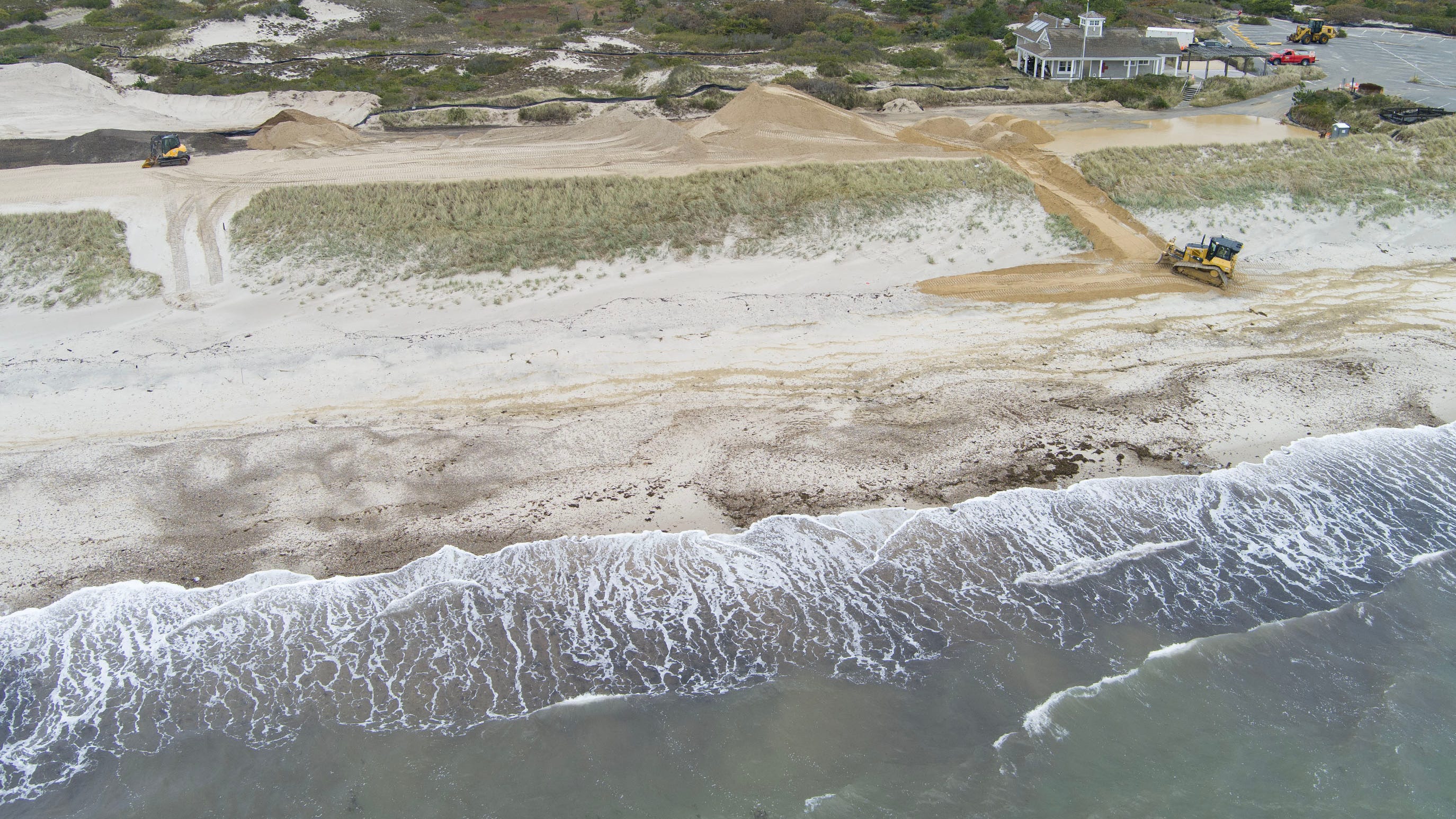
Sandy Neck Beach parking lot project forces closure of both upper and lower parking lots as work ramps up to move parking inland from Cape Cod Bay.
- A major coastline protection project at Sandy Neck Beach Park in Barnstable has led to parking lot closures and limited public access.
- The $6.6 million project aims to combat long-term erosion and flooding by relocating infrastructure and rebuilding dunes.
- Plans include moving a parking lot 60 feet inland, fortifying dunes with sand, and building a new observation deck.
WEST BARNSTABLE — Work on Barnstable’s largest coastline protection project has kicked into high gear, bringing more access restrictions, while moving closer to the goal of stemming long-term erosion, dune loss and flooding.
As of Oct. 14, both the upper and lower parking lots at Sandy Neck Beach Park — a six-mile barrier beach and marsh that is the town’s only publicly-accessible shoreline on Cape Cod Bay — are closed, as crews from Robert B. Our get to work, according to the Barnstable Department of Public Works.
Very limited parking is available near the gatehouse, but public access past the off-road vehicle trail is closed both to vehicles and pedestrians. The limited access is expected to continue in phases through May.
Gatehouse staff on Oct. 15 said visitors wanting to access the beach can take the Great Marsh Trail that has an access point near the gatehouse, or walk along the ORV access road. The marsh trail wends through the martime forest and dunes for about three-quarters of a mile before reaching the beach, while the ORV access is shorter at about a quarter of a mile.The ORV trail will remain open for off-road visitors until Nov. 11.
A town public works advisory urges visitors to plan accordingly, and notes that staff will be present to assist. Updated signs will let visitors know where to go as the project progresses.
The closures mark the latest milestone in the $6.6 million Sandy Neck Beach Long-Term Coastal Resiliency Project, an initiative that broke ground on Sept. 26. The plan calls for relocating vulnerable infrastructure, rebuilding storm-damaged dunes, and extending, as well as safeguarding, public access to Sandy Neck.
Project completion is targeted ahead of the 2026 summer season, with plans to work around nesting periods for protected bird species that rely on the beach to breed and to rest during migration.
The need for the project has been years in the making. Since 2013, repeated storms have battered the beach’s fragile dune systems, especially exposing the lower parking lot to such frequent flooding that staff began referring to it as “Lake Sandy Neck.”
“For more than 10 years, the town has wrestled with erosion, flooding, and storm damage at the 1,438-acre park,” the town noted in its initial project overview.
Designated as an area of critical environmental concern, the park has dunes, salt marsh, and maritime forest, as well as habitats for threatened species such as piping plovers and diamondback terrapins. It is a favored spot for year-round dog walking and beachcombing, and offers recreation, from swimming and hiking to shellfishing, horseback riding, off-road vehicle excursions and camping.
Shifting a parking lot 60 feet inland
As part of the work, the lower parking lot will be shifted 60 feet inland and redesigned to include a central rain garden. The front dune will be fortified with additional sand and seagrass, while a new protective dune will be built on the southern edge of the lot to buffer nearby neighborhoods and improve stability.
The project also involves relocating the flood-prone gatehouse to higher ground, expanding the off-road vehicle area, and building a new Americans with Disabilities Act-accessible observation deck. A revised traffic layout with a dedicated outbound lane and new parking spaces is planned to improve visitor access long-term — a primary goal, according to Barnstable Director of Natural Resources and park manager Nina Coleman.
Notably, the bathhouse — located beyond the projected 50-year dune loss aera — will stay intact.
Coleman has emphasized that the project is designed to ensure the beach can weather more extreme conditions in the future, so that 50 years from now, the parking lot will withstand a 100-year storm.
Updated project information is available online at https://bit.ly/sandyneckproject. Questions or requests for notifications can be directed to Kelly Collopy at the Barnstable DPW: Kelly.collopy@town.barnstable.ma.us or 508-790-6400.
Heather McCarron, hmccarron@capecodonline.com, writes about climate change, environment, energy, science and the natural world.
Thanks to our subscribers, who help make this coverage possible. If you are not a subscriber, please consider supporting quality local journalism with a Cape Cod Times subscription. Here are our subscription plans.