
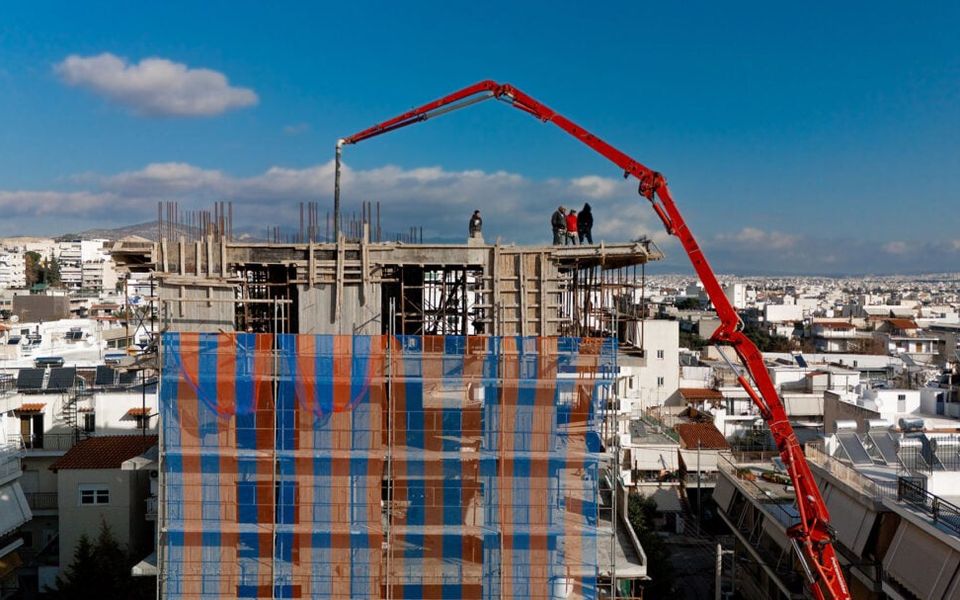
The Council of State ruled that aerial photographs cannot serve as proof that construction began before December 11, 2024, for buildings seeking completion under the incentives of the New Building Code (ΝΟΚ).
In its processing report (72/2025) on the Environment Ministry’s draft presidential decree, the court said photographic evidence “does not provide sufficient guarantees” unless issued by an authorized public body.
The court requested that “trial excavations by the archaeological service” be added as acceptable proof of work initiation. It also accepted demolition permits as valid evidence, calling them “a necessary precondition for issuing new construction permits.”
Projects licensed under the ΝΟΚ before December 11, 2024, may proceed only if excavation or concrete work had begun, prior structures were demolished up to six months earlier, or archaeological excavations had taken place by that date. Proof may include formal work notifications to authorities, timely social insurance filings, or contracts with certified dates.
The ruling also allows exceptions for projects financed by the EU’s Recovery Fund or the NSRF, as well as those halted by final or pending court decisions. In such cases, the court demands an environmental pre-screening by the Environment Ministry and payment of a “environmental equivalent” fine to municipalities.
The Council of State cited a 2013 Supreme Special Court ruling affirming that laws overriding pending or final judicial decisions may stand if “dictated by compelling reasons of public interest.” The decision upholds the ministry’s argument that legalizing certain canceled permits aims to protect “good-faith builders” and prevent “abandoned, unfinished buildings.”
Separately, the court ruled that the Athens City Council lacked authority to order a halt on high-rise permits, noting the issue has since become moot.