
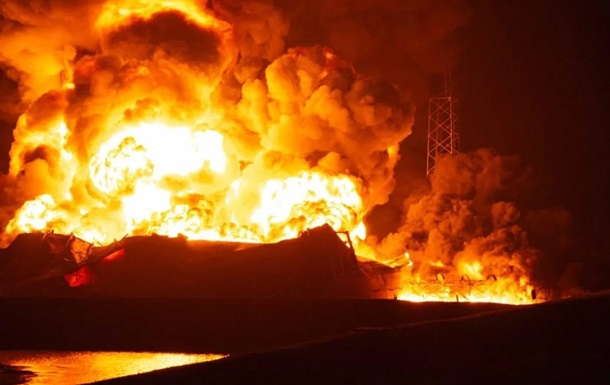
Russia has been efficiently integrating drones into hybrid campaigns, with civilian infrastructure becoming its central target. The Kremlin appears determined to seek the complete paralysis of the Ukrainian economy by targeting power plants, hospitals, schools, and rail hubs. The Russian army is striking them to cause cascading economic damage, disrupt essential services, and undermine Ukraine’s social cohesion.
By combining physical destruction with psychological warfare, the Kremlin aims to make everyday life unpredictable, forcing civilians to live between air-raid sirens, power cuts, and false alarms. It is a strategy of exhaustion meant to convince Ukrainians that the state cannot protect them, and Europe that sustaining Ukraine is too costly.
Follow our coverage of the war on the @Kyivpost_official.
Just in the last two weeks alone, Russia attacked Naftogaz production facilities in the Kharkiv and Poltava regions, the most significant strike on gas infrastructure since the war began. Several massive Russian air strikes last week have disabled nearly 60 percent of Ukraine’s gas production.
These recent attacks are part of the surge in pressure on Ukraine’s energy infrastructure ahead of winter’s arrival. Most brutally, the Kremlin attacks not just energy facilities but also conducts follow-up strikes to hit the repair crews to delay recovery of damaged energy assets and stretch Ukraine’s emergency capacity beyond its limits.

Other Topics of Interest
From Front Line to Recovery: How Dnipro’s Surgeons Save Lives
Since 2014, Ukraine’s largest trauma hospital in Dnipro has treated over 50,000 soldiers and civilians. Here, doctors battle severe injuries, saving lives and limbs every day
At the same time, since September, the Kremlin has also increasingly targeted its transport infrastructure, marking the opening of a second front in its campaign against Ukraine’s critical infrastructure. Recently, the Kremlin has methodically targeted railway junctions, power substations, and depots in the Chernihiv, Sumy, and Poltava regions to paralyze troop rotations, disrupt supply chains, and block the export of grain, iron, and steel that sustain the economy in wartime.
It becomes incredibly challenging for Ukrzaliznytsia to overcome inflicted damage as it has to deploy diesel locomotives, reroute trains via alternate corridors, and recover impacted railway infrastructure, such as transformers, turbines, and compressors, which are already deficient, which is not just costly but also problematic, considering growing spare parts deficiency with each such attack. Many repair teams now operate with minimal rest, and Russian drones increasingly target their maintenance bases.
The Kremlin’s failed offensive and shift toward increased air attacks
Russia’s intensifying strikes on infrastructure also reflect its frustration on the battlefield. In September, the Kremlin’s territorial gains shrank to 259 square kilometers, a 44 percent decline compared to August and the smallest monthly advance since May. Russia now controls roughly 19 percent of Ukraine’s territory.
As the land offensive slowed, the air war expanded dramatically. During September alone, Russia launched 5,636 drones and 187 missiles, a 38 percent increase from August. In October, these attacks continued to increase.
At the same time, there has been an increase in terms of civilian casualties with drone attacks in August and September. According to the UN Human Rights Monitoring Mission, short-range drone strikes caused the highest number of casualties in September, killing 58 civilians and injuring 272, mainly in the Donetsk and Kherson regions. This pattern has continued in October, with frequent short-range drone attacks making life increasingly dangerous and untenable for residents, particularly in the frontline areas like the Zaporizhzhia, Donetsk, and Kherson regions.
The winter test and the path to resilience
Ukraine enters this winter with greater capacity and stronger coordination with the EU than in 2022. Yet the challenge has shifted from surviving attacks to sustaining resilience. The key question is whether Ukraine can repair itself faster than Russia can destroy it.
Over recent months, the EU and its partners have expanded support for Ukraine’s critical infrastructure. On July 10, the European Investment Bank and the European Commission announced a €600 million financing package for energy systems, transport, and business resilience. On Aug. 13, the European Commission signed a €500 million guarantee agreement with the European Bank for Reconstruction and Development to help replenish Ukraine’s gas reserves after repeated Russian strikes. Most recently, on Oct. 1, the European Investment Bank approved a €300 million loan to Naftogaz under the EU’s Ukraine Energy Rescue Plan to finance gas purchases and build a winter reserve.
Together, these measures form part of a broader EU commitment exceeding €2 billion for Ukraine’s energy security since 2022, including generators, spare equipment, and electricity exports covering around 12 percent of Ukraine’s current demand. While these measures indicate a shift from emergency aid to preemptive resilience building, it remains to be seen whether this assistance can be deployed swiftly, considering the growing intensity of Russian strikes.
On Oct. 13, Ukrainian President Volodymyr Zelensky met with EU High Representative Kaja Kallas, underlining the need for further “strong decisions” from the EU to protect Ukraine’s energy system and accelerate delivery. They also discussed providing additional support for grid protection and utilizing frozen Russian assets for reconstruction. This meeting underscored both the increasing pace of Russian attacks and the need for quicker, more coordinated European responses.
Ukraine’s ability to endure the coming months will depend on how effectively these commitments are implemented. The EU must continue to evolve from a donor to a full partner in resilience, co-producing critical equipment, safeguarding energy corridors, and incorporating Ukraine into its broader infrastructure-security framework. Russia’s air terror campaign now increasingly targets vital infrastructure, and protecting power grids, railways, and communications becomes as essential as defending territory on the ground.
The views expressed in this opinion article are the author’s and not necessarily those of Kyiv Post.