

 How the Trump administration has responded to armed activity by Hamaspublished at 14:36 BST
14:36 BST
 Tom Bateman
US State Department correspondent
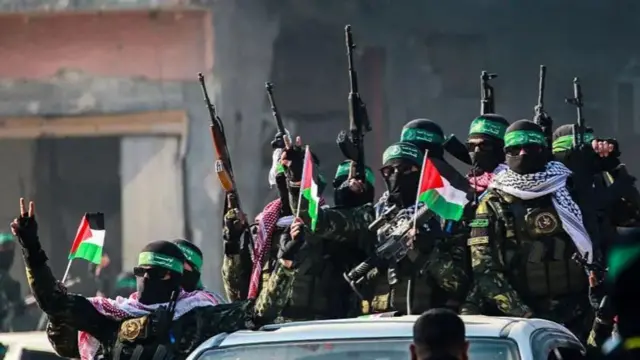 Image source, Getty Images
Image caption,
Hamas has run the Gaza Strip since 2007
Over the last week, the Trump administration’s position has shifted regarding what it would tolerate in relation to armed activity by Hamas.
Onboard Air Force One on Monday, Trump responded to questions from the BBC and other reporters about progress with the ceasefire and the appearance of Hamas-armed internal security forces in Gaza.
He said he had seen pictures of this, adding the US had given “approval for a period of time” in order to stop “big crime” and other “problems”.
The following day he claimed Hamas had “said they were going to disarm”, adding that “initially… they did take out a couple of gangs that were very bad; very, very bad gangs… And that didn’t bother me much, to be honest with you. That’s OK.”
It’s not clear which incidents Trump was referring to. Violent clashes had erupted between Hamas and rival Palestinian armed groups, including some it accused of collaborating with Israel.
In one video, gunmen wearing Hamas headbands were filmed carrying out a public execution of several bound and blindfolded men.
By Wednesday the administration began addressing the issue more clearly, urging Hamas to “immediately suspend violence and shooting at innocent Palestinian civilians” both in Hamas-held areas and, it said, behind the “yellow line” of IDF withdrawal.
A senior US official said the administration was working with Israel to create “space” in the IDF-held area, calling this a “safe zone” for “people who feel a threat”.
The gesture and other comments by the official appeared to conflate the idea of ordinary Palestinian civilians seeking refuge from Hamas with the possibility of the IDF-controlled areas providing a protected zone for the armed rivals of Hamas.