
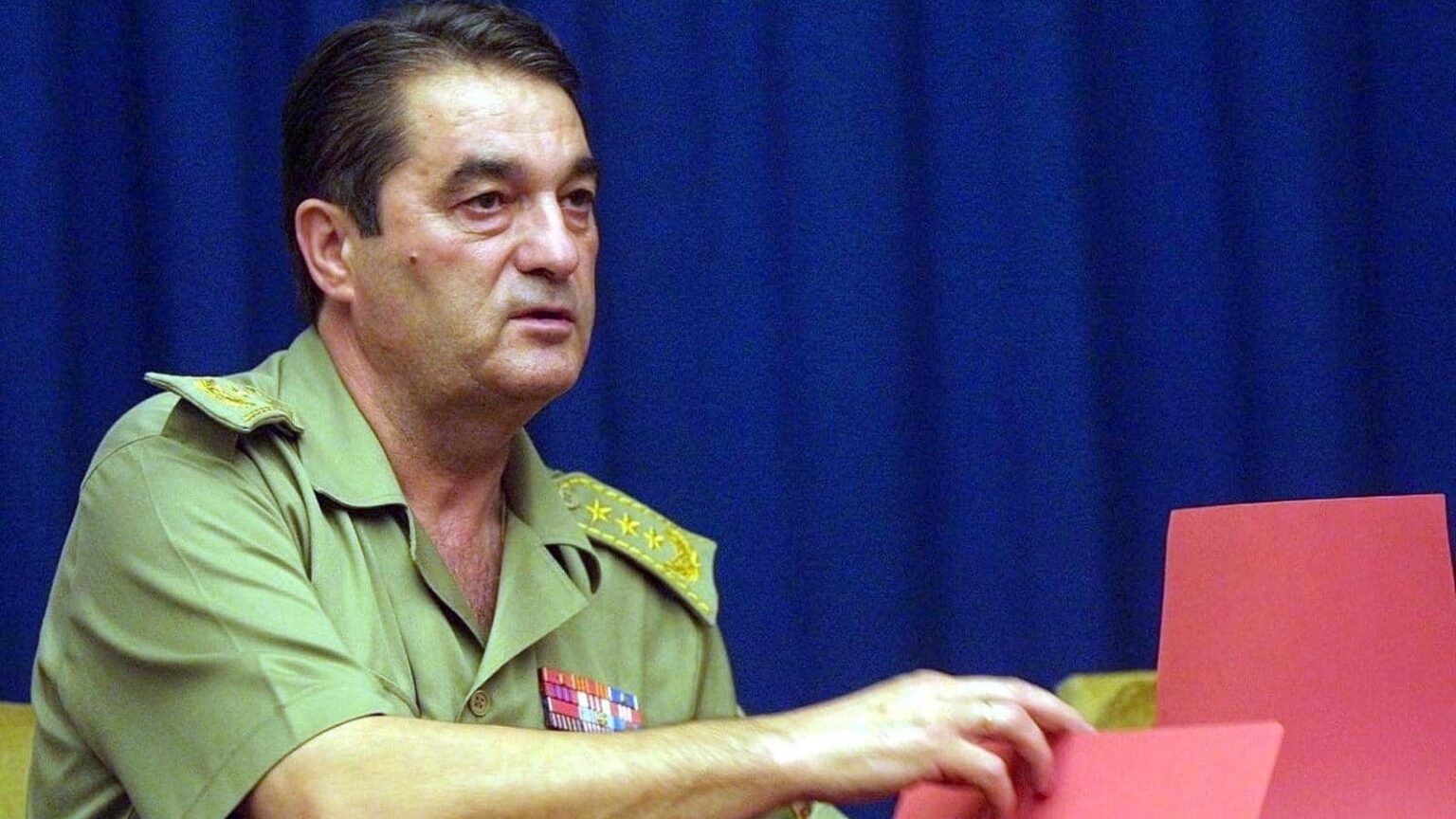
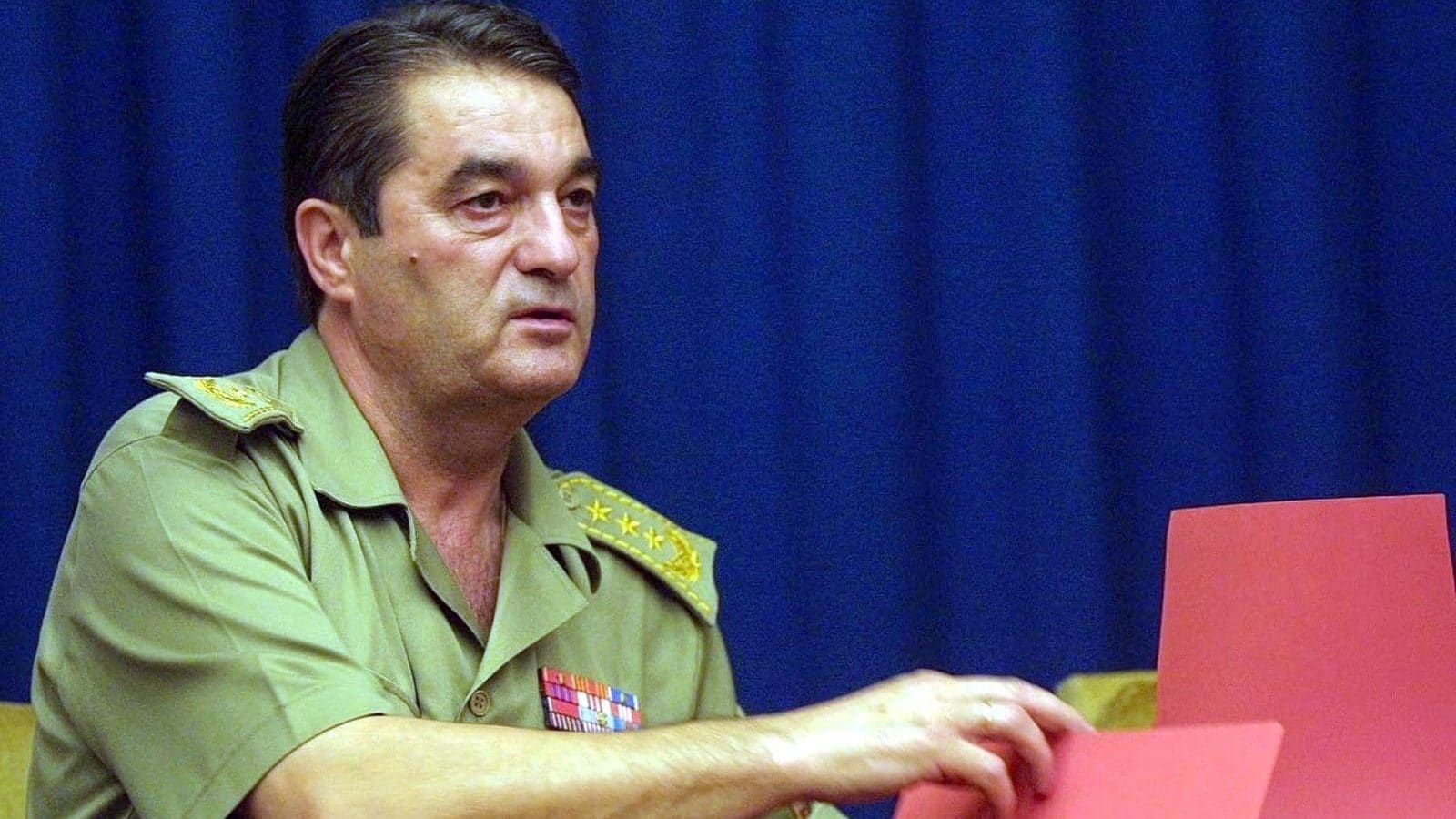
Archive photo, Nebojsa Pavkovic in Belgrade, June 2002. Photo: EPA/SASA STANKOVIC.
Nebojsa Pavkovic, a former Yugoslav Army general sentenced to 22 years in prison for war crimes, arrived back in Serbia on Sunday after being released by the Mechanism for International Criminal Tribunals before the expiry of his sentence.
In its decision from Friday, which was published only on Monday, Mechanism president Judge Graciela Gatti Santana said that, “there are compelling humanitarian reasons demanding Pavković’s early release, subject to appropriate conditions”.
Among those conditions are that he will remain within the confines of his residence or the relevant medical clinic during the remainder of his sentence, and that he will not “make any statement denying the crimes over which the ICTY had jurisdiction, and over which the Mechanism retains jurisdiction, that were committed during the conflict in the former Yugoslavia”.
Serbian Prime Minister Djuro Macut said Pavkovic’s arrival had “fulfilled the request of the Government of the Republic of Serbia to allow him early release for health reasons.
“General Pavkovic will continue his [medical] treatment in Serbia, with the support of his family and the health institutions of our country,” Macut said.
Pavkovic served his sentence in Finland, and came back to Serbia on a government plane.
Serbian President Aleksandar Vucic said on Friday in New York that he was “happy that he [Pavkovic] got to see the day when he can see the free sky of his country from the free soil of his Serbia”.
Pavkovic’s defence in August asked for early release, claiming that his physical health had “deteriorated to the extent of life threat”.
The Appeal Chambers of the International Criminal Tribunal for the Former Yugoslavia, ICTY, in 2014 upheld the guilty verdict convicting Pavkovic and three other high-profile Yugoslav military and civilian officials of war crimes in Kosovo.
The Tribunal upheld the 22-year sentence handed down to Pavkovic, finding him guilty of being part of a joint criminal enterprise, whose aim was the persecution and forcible removal of Albanians from Kosovo. He was also found guilty of murder.
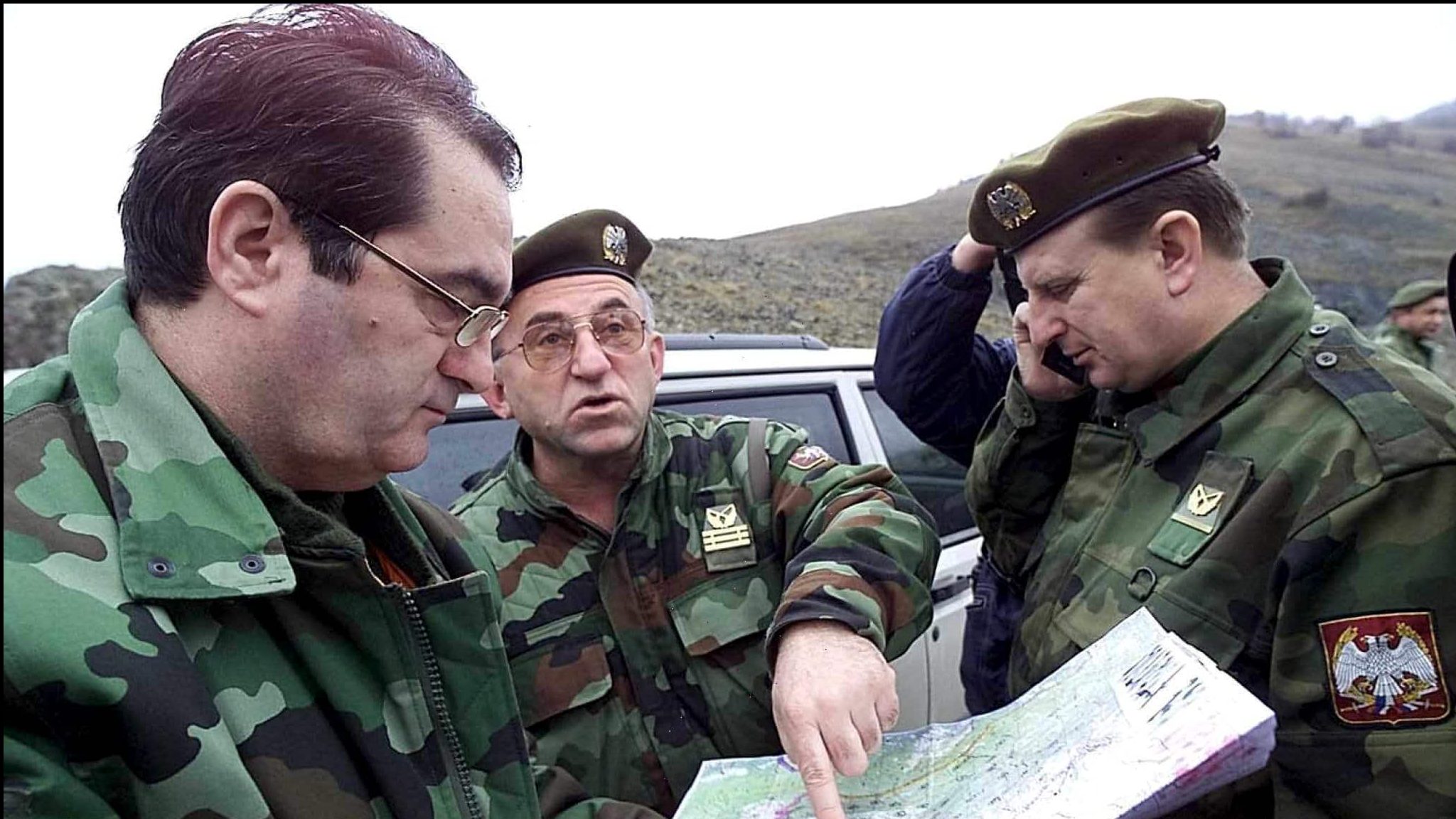
Archive photo, Nebojsa Pavkovic (left) with former general Vladimir Lazarevic (centre) near Serbian border with North Macedonia, March 2001. Photo: EPA PHOTO-SRDJAN SUKI-SS
Besides Pavkovic, former Yugoslav deputy prime minister Nikola Sainovic, former Yugoslav Army general Vladimir Lazarevic and former Serbian police general Sreten Lukic were also sentenced.
According to the 2009 first-instance verdict, “there was a broad campaign of violence directed against the Kosovo Albanian civilian population conducted by forces under the control of the [Yugoslav] and Serbian authorities, during which there were incidents of killing, sexual assault, and the intentional destruction of mosques”.
During his time in prison, Pavkovic wrote books, which in Serbia were published by the Defence Ministry. He also participated online in some television or YouTube shows in Serbia.
In December 2024, the Cultural Institute of Cuprija, a local body in the town in central Serbia, announced the “competition for the creation of a mural of General Nebojsa Pavkovic”.
Pavkovic was born in the village of Senjski Rudnik, some 20 kilometres from Cuprija. He was commander of the Yugoslav Army Third Battalion from December 1998 until early 2000, during the Kosovo War.
In previous years, Serbian authorities have welcomed other freed war criminals and helped them to rejoin public and political life.
In October 2017, Lazarevic delivered a lecture at the Serbian Military Academy on the subject of the “heroism and humanity” of Serbian soldiers during their “counter-terrorist operations” in Kosovo in 1998-99 and during the NATO bombing of Yugoslavia in 1999.
On May 9, 2019, he headed a World War II Victory Day parade through the Serbian city of Nis, an event organised by Russian war veterans with the backing of the Serbian authorities.
General Dragoljub Ojdanic, who was granted early release in 2013, retracted the confession he gave to the UN court after he was freed. Sainovic has become a senior official with the Socialist Party of Serbia, Slobodan Milosevic’s party during the 1990s, which is now part of the Serbian government.
Note: This story was updated on September 29, 2025 to include the Mechanism’s confirmation on Pavkovic’s release.