
Published on
October 21, 2025

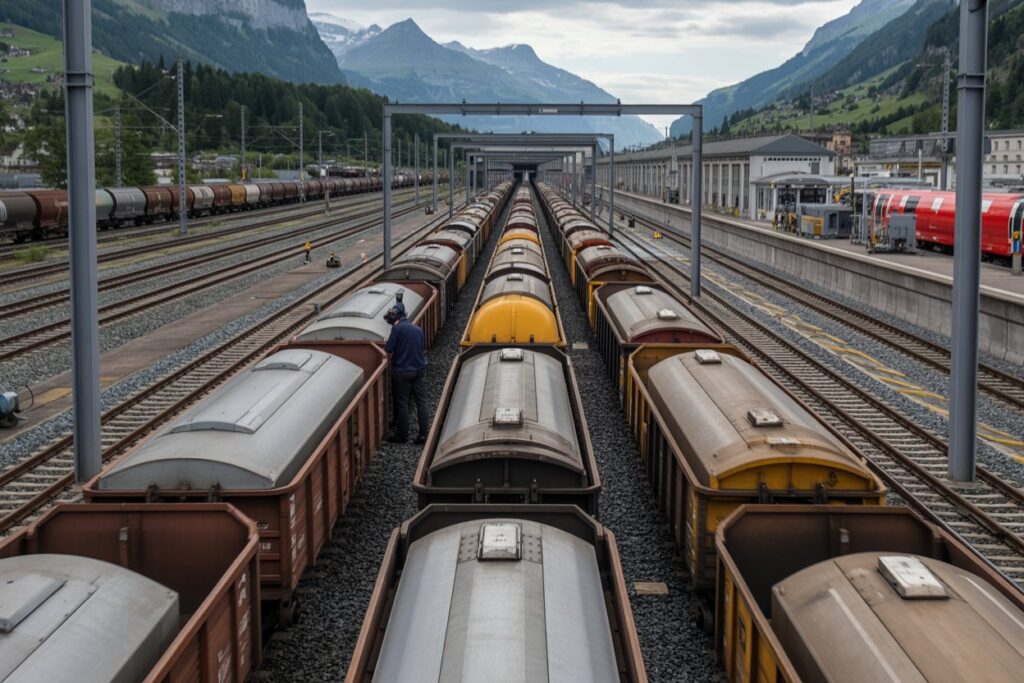
The Swiss Federal Office for Transport (FOT) has announced a one-year extension to the deadline for freight wagon owners and maintenance providers to comply with new regulations. Originally set for 2025, the revised deadline is now December 31, 2026. This decision comes as major industry players, including the International Union of Wagon Keepers (UIP), prepare to challenge the rules in court. The new regulations, which have generated significant controversy, aim to improve the safety and efficiency of freight wagons operating within Switzerland by mandating minimum wheel diameters, more frequent maintenance schedules, and improved inspection protocols.
The Basis for the New Regulations
The new rules were introduced in response to a report issued by the Swiss Transportation Safety Investigation Board (Sust). The report, published on June 2, 2023, followed a significant freight train derailment in the Gotthard Base Tunnel on August 10, 2023, which caused major disruptions to trans-Alpine rail freight traffic. The derailment was linked to several safety issues within the existing system, which led to the FOT’s decision to implement these new measures aimed at preventing future accidents.
In its announcement, SBB (Swiss Federal Railways) supported the regulations, arguing that they were critical for improving the safety and reliability of the Swiss rail network. SBB emphasized that digitalisation, modern maintenance practices, and digital signalling would help prevent accidents like the Gotthard derailment, ensuring a safer and more efficient rail system.
Industry Pushback and Legal Challenges
While the Swiss government and SBB have expressed strong support for the new regulations, they have faced significant opposition from the International Union of Wagon Keepers (UIP). UIP represents a substantial portion of the freight wagon industry in Europe and has raised concerns about the impact of the new rules on the broader European rail freight sector. The union argues that the regulations could undermine the integrity of the European Union’s single market by disrupting cross-border rail traffic and making it more difficult for freight to move across Europe, particularly through the vital Alpine corridors in Switzerland.
The UIP also argues that the unilateral decision by Switzerland to impose these regulations contradicts the Principle of Interoperability under the EU-Switzerland Land Transport Agreement. They claim that Switzerland’s move does not align with the ongoing efforts by the European Union Agency for Railways (ERA) and the Joint Secretariat (JNS) to develop a more harmonised approach to rail safety following the Gotthard accident.
Impact on Freight Wagon Availability and Supply Chains
One of the major points of contention in the new regulations is the requirement for all freight wagon inspections to be carried out in stationary workshops, separate from regular maintenance intervals. UIP has warned that this requirement could reduce the availability of freight wagons, potentially leading to disruptions in supply chains across Europe. The union also believes that these new measures could increase operational costs, which would further strain the already pressured European rail freight market.
Given that much of the international transit traffic passing through Switzerland is vital for the European economy, including goods transported to and from Germany, Italy, and Scandinavia, the impact of these regulations could be far-reaching. UIP suggests that the complexity and cost of the regulations could harm the competitiveness of rail freight compared to other modes of transport, such as road and sea shipping.
The Road Ahead: Balancing Safety with Operational Efficiency
The extension until 2026 provides additional time for freight wagon owners and maintainers to adjust to the new regulations. However, the ongoing legal challenge from industry groups like UIP signals that the issue will remain contentious. As the court case progresses, it will be important to strike a balance between improving safety standards and ensuring that the regulations do not hinder the flow of goods across Europe. The outcome of this legal battle will have significant implications not just for Switzerland, but for the wider European rail freight sector.
