
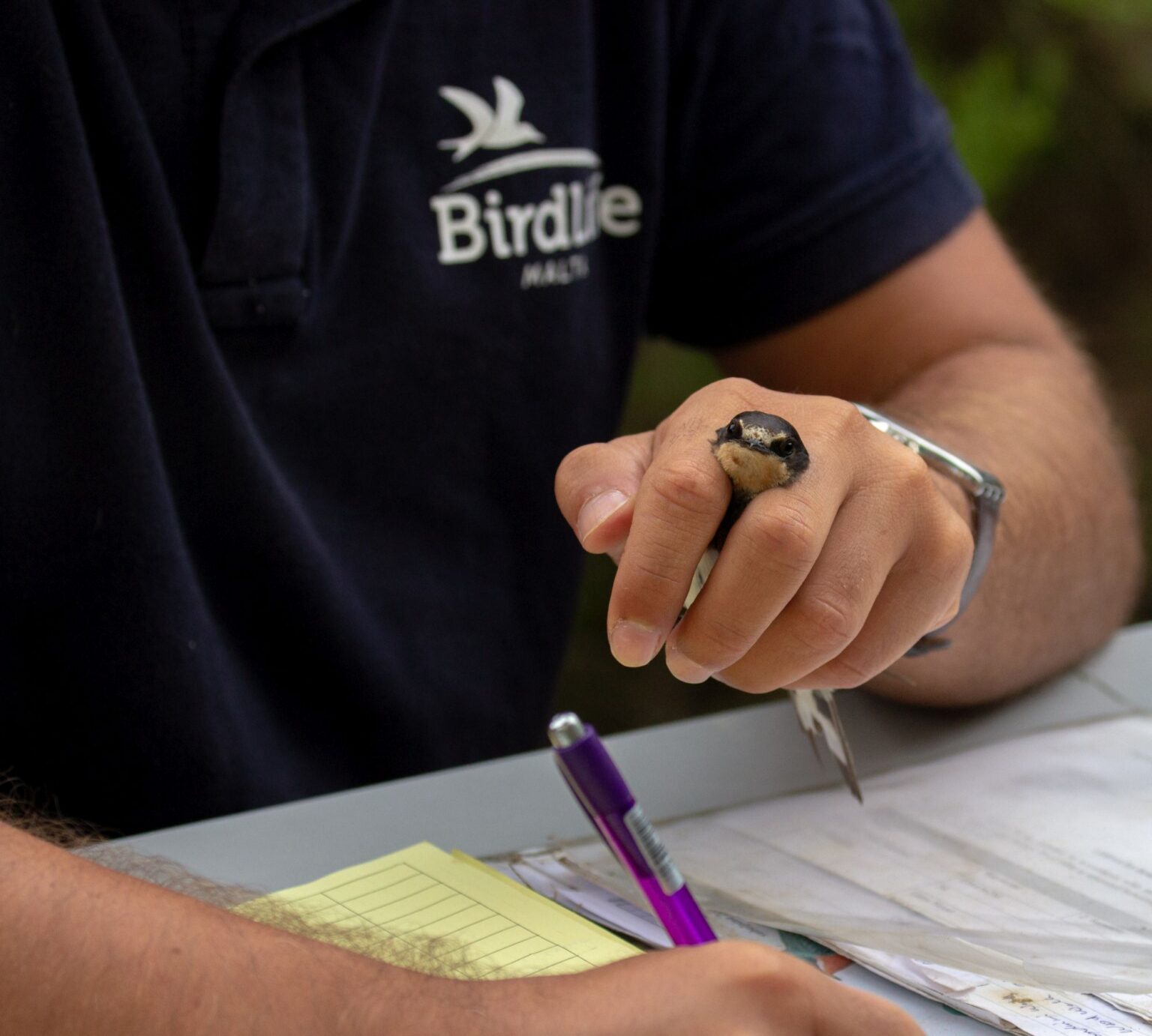
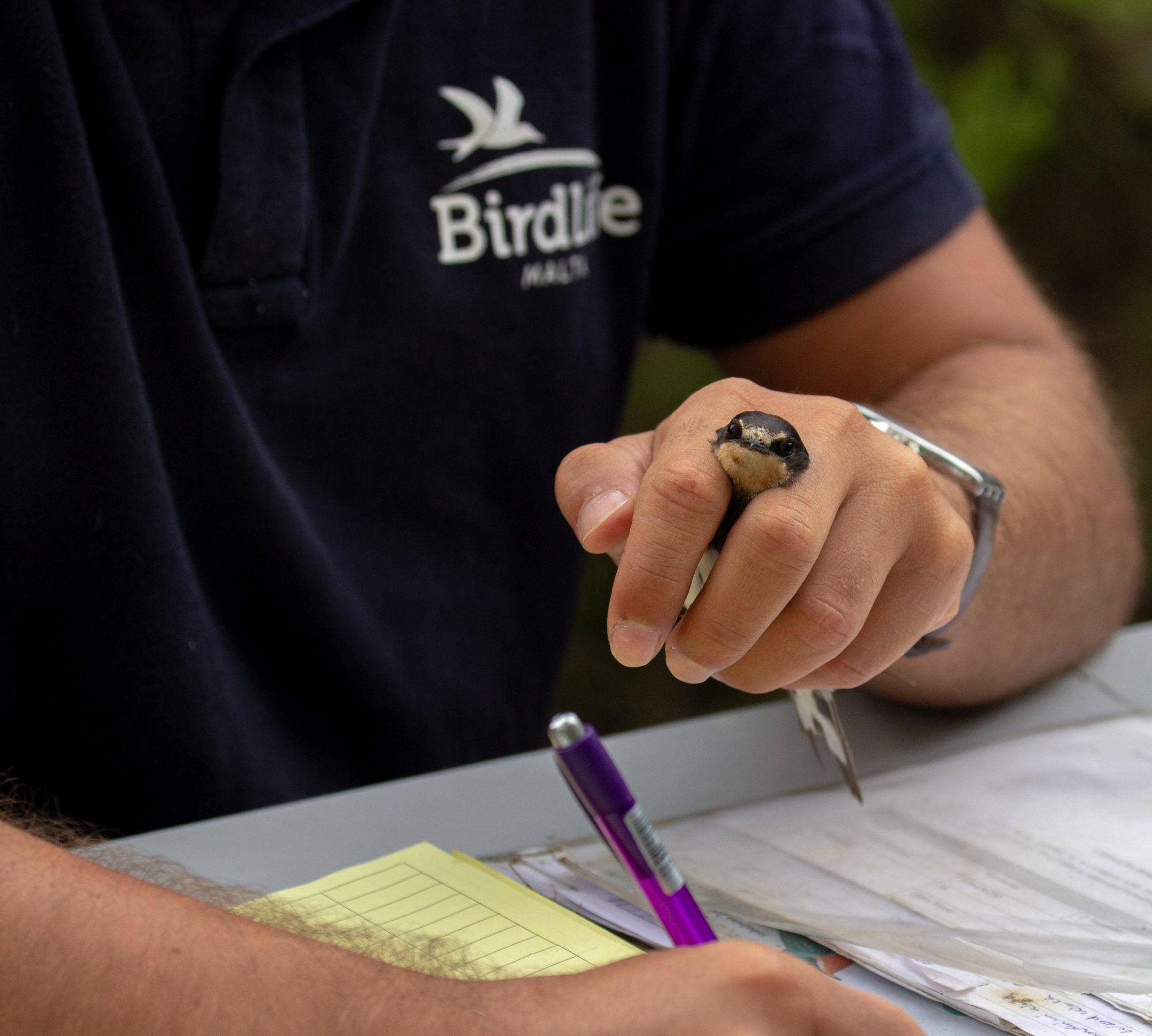
 Photo: Antoine Monnier/BirdLife Malta
Malta’s latest ploy to allow the traditional – and potentially lucrative – trapping of songbirds under the guise of ‘research’ was predictably strongly condemned by BirdLife Malta, which warned that the ruse would not fool anyone in Brussels and expose Malta to further sanctions.
There is little to suggest that the “research” of the songbird species preferred by local trappers – whose trapping is prohibited within the EU – was ever pursued for legitimate aims, not least since it was only introduced when Malta was forced to ban the capture of the species being researched.
In this context, last year’s ruling by the Court of Justice of the European Union – which concluded that Malta was failing to fulfil its obligations under the Birds Directive – came as little surprise.
But the government is now seeking to capitalise on the details which the CJEU judgment did not specifically address, introducing a new “research” season with some token changes. This time round, there is actually a research question, albeit one seemingly designed with the sole aim of justifying the continued trapping of protected songbirds: “where do finches that migrate over Malta during post-nuptial migration come from?”
The government’s new gambit, however, also required weakening the country’s bird ringing regulations after it failed to obtain approval from EURING, the only recognised European framework for bird ringing.
The only bird ringing activities approved by EURING in Malta are BirdLife Malta’s own. The NGO – Malta’s oldest environmental organisation, founded as the Malta Ornithological Society in January 1962 – has been involved in bird ringing for 60 years, since September 1965.
The NGO stressed that its bird ringing activities “will continue to meet the highest scientific standards” and contribute to actual research.
‘Destined to fail’
The relaxed regulations were predictably welcomed by the FKNK hunters’ and trappers’ federation, but BirdLife Malta insisted that “this ill-conceived plan is destined to fail.”
“By eroding the scientific standards of bird ringing, the government is turning a respected conservation tool into a smokescreen for illegal trapping,” the NGO’s chief executive Mark Sultana said. “This cynical manipulation of the law will not fool anyone in Brussels – it will only further tarnish Malta’s reputation and harm genuine research efforts.”
The NGO warned that any attempt to operate outside of the EURING network “will produce meaningless data and expose Malta to further ridicule and sanctions.”
Abela willing to do anything to ‘suck up to the hunting lobby’
BirdLife Malta laid the blame firmly on prime minister Robert Abela, who it said undermined decades of credible ornithological research and harmed Malta’s longstanding reputation in ornithology “in a clear step to pacify the hunters’ lobby.”
It noted that none of his predecessors had dared break the understanding that bird ringing should be in the hands of a conservation body.
“With this decision Robert Abela has confirmed his superficial understanding of environmental conservation and his willingness to do anything to suck up to the hunting lobby,” Sultana said, as he appealed to ministers who understood the implications of these changes to break their silence and speak up.

