
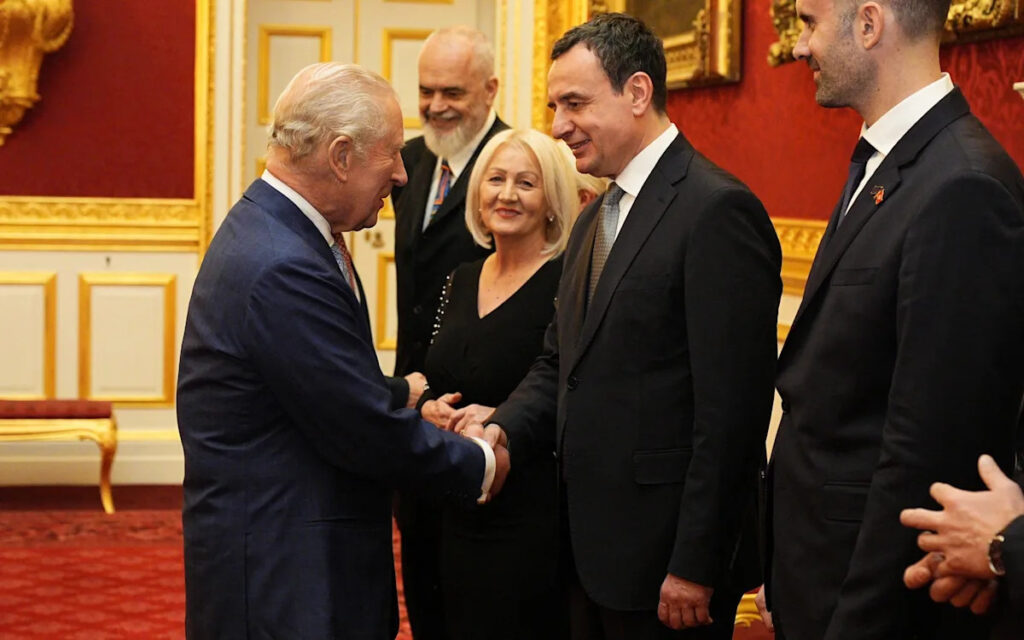
Kosovo has become the first country to publicly say it is considering hosting return hubs for Britain’s rejected asylum seekers.
Albin Kurti, the prime minister of Kosovo, said his country “wants to help” the UK fight illegal migration in return for more support against threats from Serbia and Russia.
Neither Serbia, from which Kosovo split in 2008, nor Russia accepts Kosovan independence.
Speaking before a summit of western Balkans leaders hosted by Sir Keir Starmer in London on Wednesday, Mr Kurti said talks were taking place between officials from Britain and Kosovo.
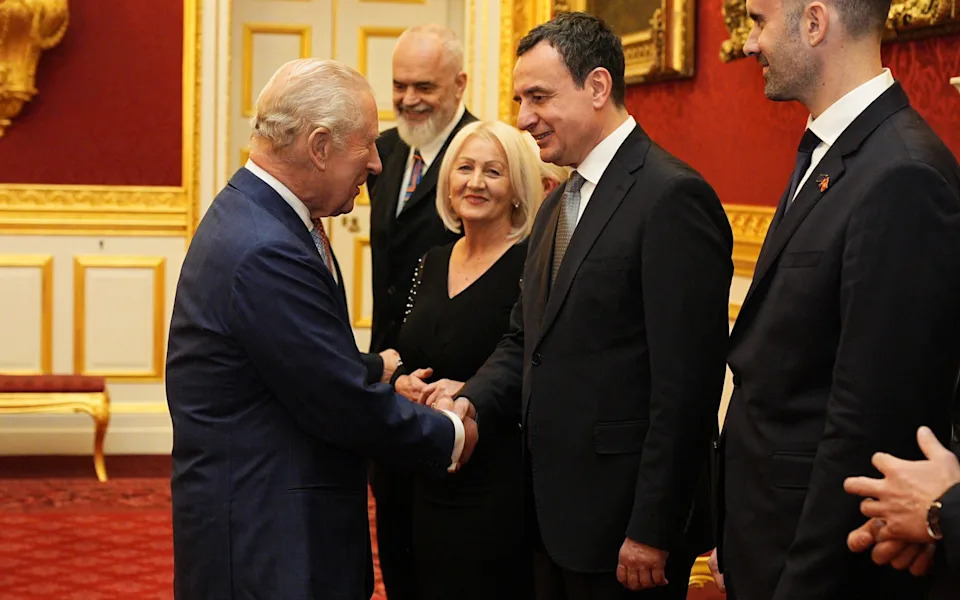
The King shakes hands with Albin Kurti, the Kosovan prime minister, at a reception at St James’s Palace on Tuesday night – Aaron Chown/Pool/AFP via Getty Images
Kosovo is the first country to confirm its interest in hosting return hubs, where rejected asylum seekers would be sent after they have exhausted all their avenues of appeal in the UK.
Asked if Kosovo was willing to consider accepting migrants from Britain, Mr Kurti told The Times: “We want to help the UK. We consider that that is our friendly and political duty.
“We have limited capacity but still we want to help, and as we speak there is regular communication between our teams of state officials from our ministry of internal affairs and lawyers about how to do this smoothly for mutual benefit.”
Three other Balkan nations have rejected Britain’s proposal for return hubs. Edi Rama, the Albanian prime minister, repeated his earlier dismissal of such an agreement.
“When it comes to the hubs, or whatever they are called, I’ve said it, and I repeat – never in Albania,” he said.
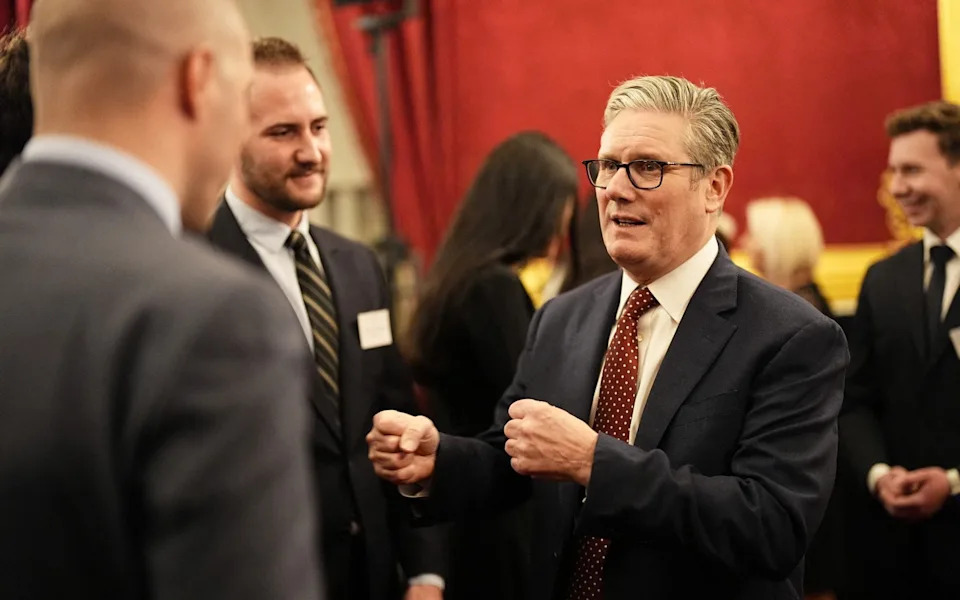
Sir Keir Starmer speaks to guests at the St James’s Palace reception on Tuesday, the eve of the Western Balkans leaders’ summit in London – Aaron Chown/Pool/AFP via Getty Images
Milojko Spajic, the prime minister of Montenegro, said his country was not part of the western Balkans smuggling route because the railway infrastructure is not developed enough.
“Montenegro is not part of the migrant routes through the Balkans,” he said.
Mr Rama asked him if he would host a hub if the UK built railways in his country, to which he replied: “We definitely accept it, if they would invest €10bn into building railways.”
The presidency of Bosnia and Herzegovina – a three-member body that serves as head of state – said that it had “no intention, nor any willingness, to enter into any arrangement that would involve accepting rejected asylum seekers” from the UK.
b’
‘
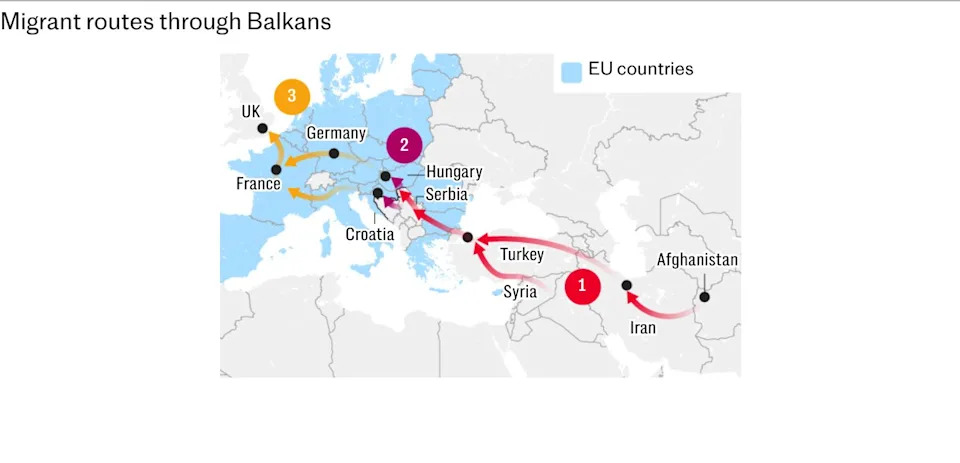
The UK is already working with partners in the region – which comprises North Macedonia, Montenegro, Serbia, Albania, Bosnia and Herzegovina, and Kosovo – as part of the Government’s pledge to target smuggling gangs and bring down the number of small boat arrivals across the Channel.
Some 22,000 migrants travelled through the region on their way to Northern France to attempt the small boat crossings to the UK last year. They are estimated to account for a quarter of all arrivals.
A total of 37,000 migrants have crossed the Channel so far this year, up 30 per cent on last and on a par with the record year of 2022.