
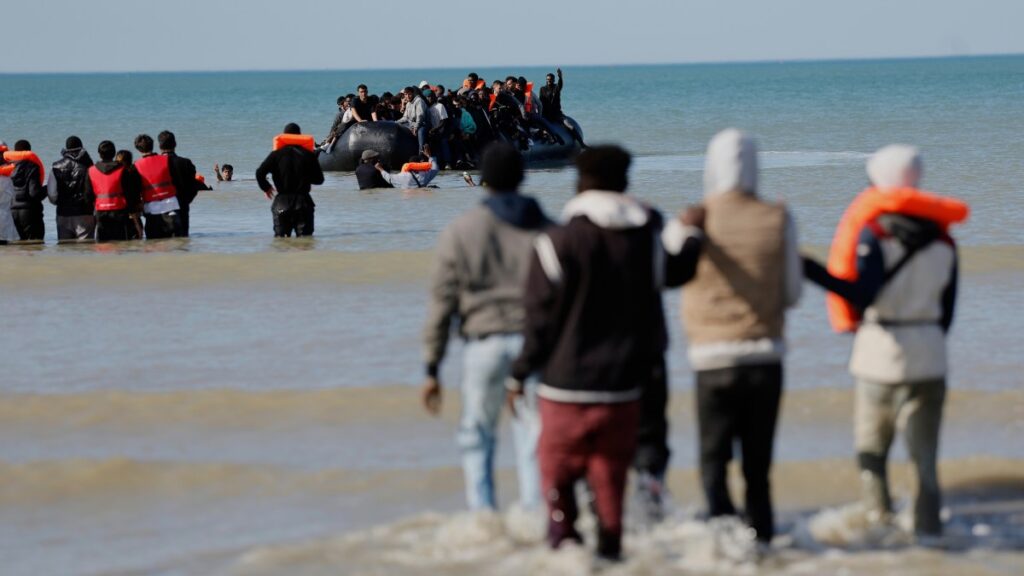
Kosovo has become the first country to offer to accept Britain’s rejected asylum seekers as part of Sir Keir Starmer’s plan for migrant “return hubs”.
Albin Kurti, the prime minister of Kosovo, said that his country “wants to help the UK” with its efforts to combat illegal immigration in return for more support to bolster its national security against threats from Serbia and Russia.
Speaking before a summit of western Balkans leaders hosted by Starmer in London on Wednesday, Kurti said talks were taking place between officials from the UK and Kosovo.
It makes Kosovo the first country to confirm its interest in Starmer’s plan to create a series of return hubs where rejected asylum seekers would be sent after they have exhausted all their avenues of appeal in the UK.
• British border officers sent to Balkans to stem flow of migrants
While the topic of return hubs is not on the summit’s formal agenda, Starmer hopes to make progress on talks with some of the countries attending.
Milojko Spajic, Montenegro’s prime minister, said his country would be open to negotiating a return hub agreement but only if Britain invested significantly in its infrastructure.
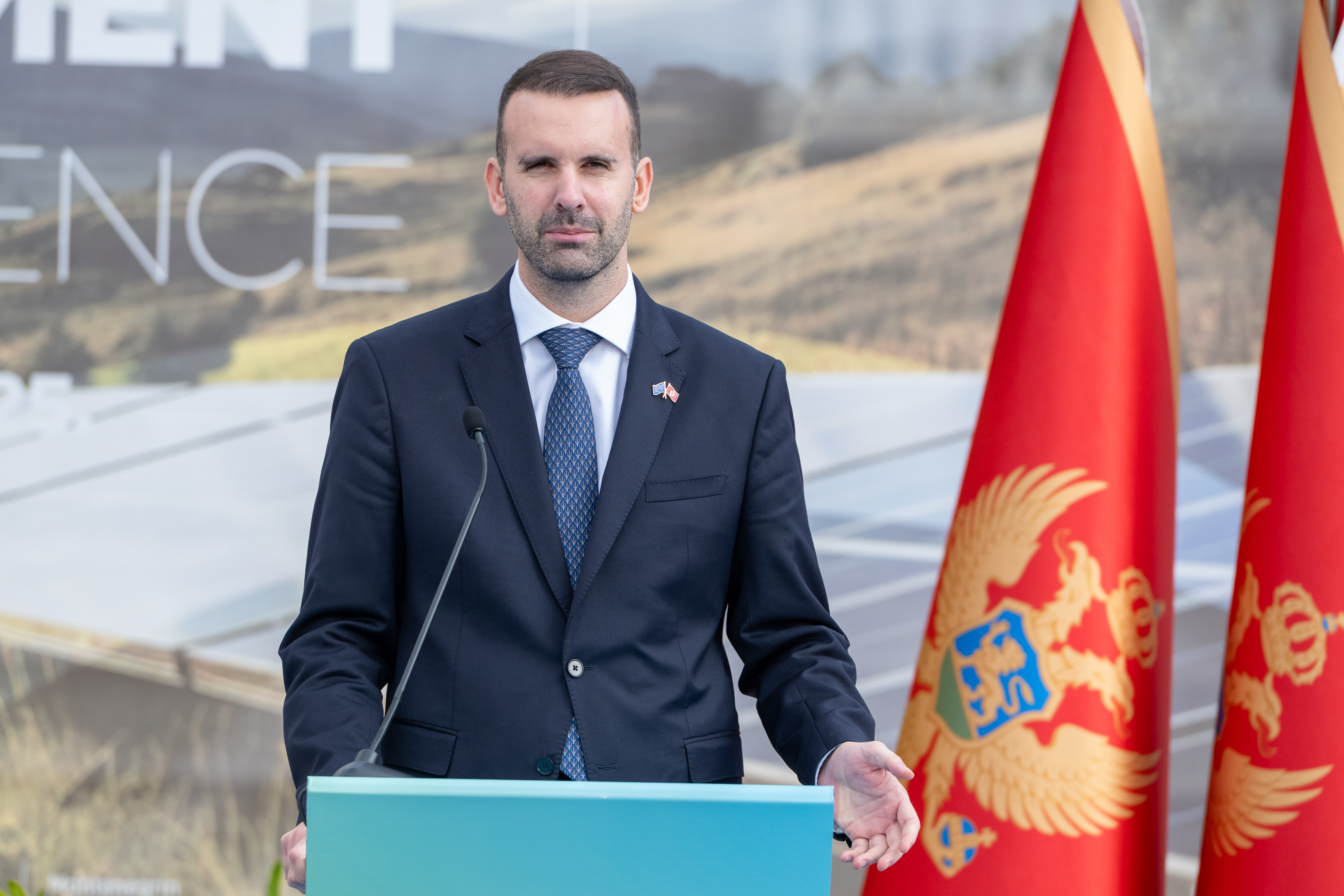
Milojko Spajic, Montenegro’s prime minister
RUSMIN RADIC/ANADOLU VIA GETTY IMAGES
However, the presidency of Bosnia and Herzegovina — a three-member body that serves as head of state — said that it had “no intention, nor any willingness, to enter into any arrangement that would involve accepting rejected asylum seekers” from the UK.
• UK to ask Kosovo to take migrants as part of ‘return hubs’ plan
Edi Rama, the prime minister of Albania, reiterated his opposition to Britain’s attempts to create return hubs, saying: “When it comes to the hubs, or whatever they are called, I have said it and I repeat it: never in Albania.”
The Times previously revealed that Britain had approached Kosovo and North Macedonia as well as several countries outside Europe about the prospect of opening return hubs. North Macedonia has not responded to The Times’s request for an interview.

Edi Rama ruled out opening hubs in Albania
FLORION GOGA/REUTERS
But Kurti said the Kosovan government had offered to take migrants from Britain because it had an “obligation” to return the favour for Britain’s leading role in the peacekeeping force that protected Kosovo against Slobodan Milosevic’s regime in the 1990s.
He was speaking to a small group of journalists, including The Times, ahead of Wednesday’s Western Balkans summit in London.
Asked whether Kosovo was willing to consider accepting migrants from Britain, Kurti said: “We want to help the UK. We consider that that is our friendly and political duty. We have limited capacity but still we want to help and as we speak there is regular communication between our teams of state officials from our ministry of internal affairs and lawyers about how to do this smoothly for mutual benefit.”
He said Kosovo would expect extra support from Britain in terms of security equipment and intelligence-sharing in order to combat threats it was facing from Serbian and Russian aggression. There have been reports of violations of Kosovo airspace by Serbian drones, triggering it to buy thousands of military drones from Turkey, risking an escalation of tensions between the two nations.
Kurti said: “We would like mainly to get support in security — be that through strategic agreements or through equipment and projects we might do. Our two teams are working on this, but I think this will have a successful result.
“Of course, we want, as a country, to benefit but we consider it first and foremost our obligation to help you because you helped us a great deal and will never forget that.”
Spajic, speaking on a panel alongside Rama at Chatham House in London, said Montenegro was not in discussions with the UK about setting up a return hub, as his country was in a different situation to others in the region in not being “part of the migrant routes through the Balkans”.
After he was pressed by Rama on whether Montenegro would be open to the idea if Britain offered to invest in its transport infrastructure, Spajic said: “Yeah, I would definitely accept it if they would invest €10 billion into building railways.”
Rama also revealed that he was planning to host Nigel Farage in Albania, later this year or early next year, after the pair became embroiled in a spat over the number of Albanian criminals in UK jails. He disputed Farage’s claim that one in 50 Albanians in the UK were in jail and promised to “personally commit to taking them all back” if the figure proved correct.
The Reform UK leader said he had proposed to visit on November 28 but Rama said that would be inappropriate timing, as it coincides with Albania’s independence day.
The outspoken Albanian prime minister, the leader of the Socialist Party of Albania, claimed immigration had become one of the main topics in the UK because people were blaming immigration for the “disaster” of Brexit.
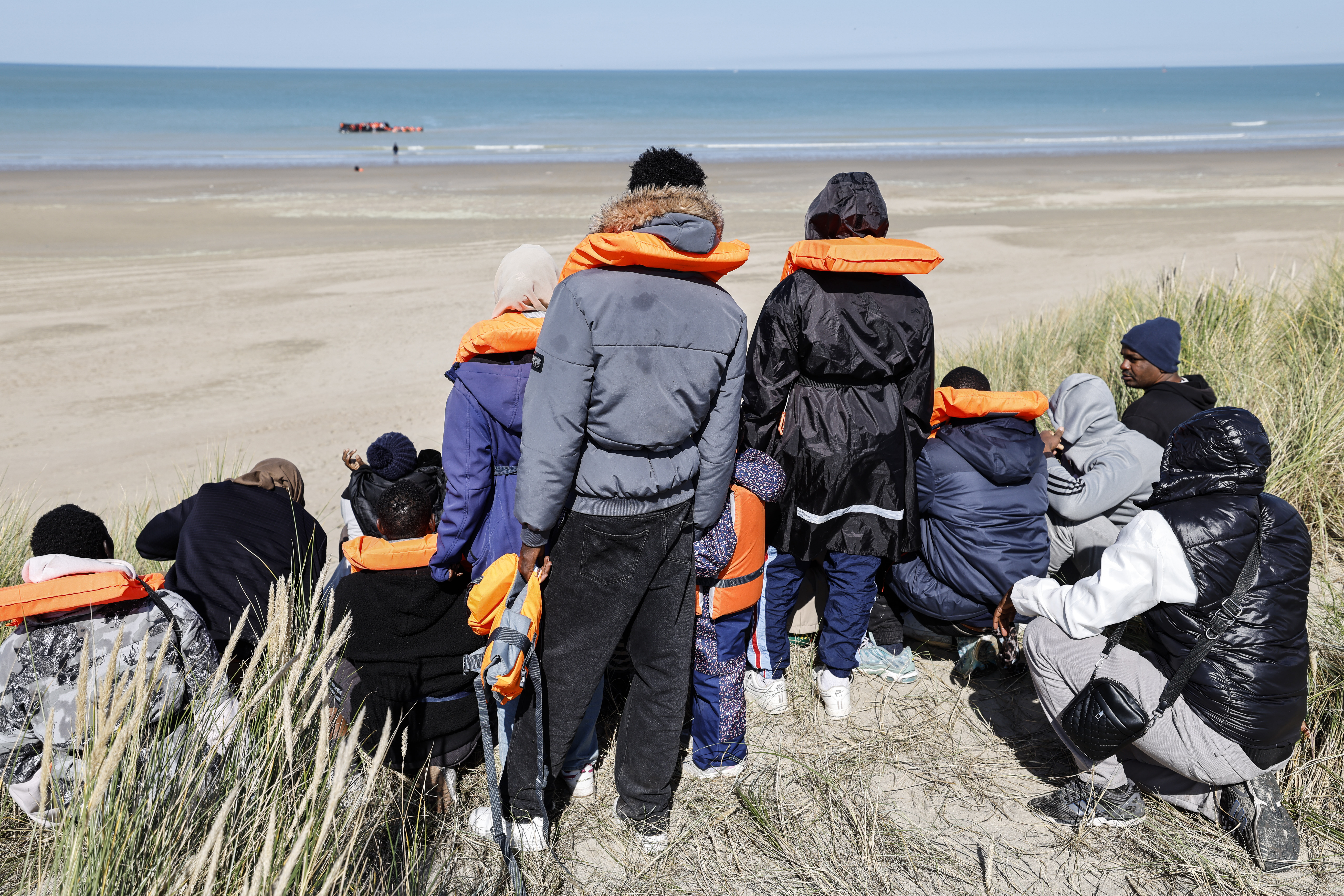
Migrants in Gravelines, northern France
JEAN-FRANCOIS BADIAS/AP PHOTO
Asked whether he was frustrated by Britain’s decision to leave the EU, which Albania is attempting to join, Rama said: “The problem is not the Albanians, the foreigners, the migrants. The problem is how to find the scapegoats for this disastrous decision to leave Europe. It’s a disaster. So I don’t feel frustrated. I feel sorry, very sorry.”
Rama said he would be happy to work with Farage if he was elected prime minister, saying: “I don’t see any problems when it comes to co-operating with whoever. I don’t believe Farage is the problem. He is the mirror of a problem, which has some theatrical capacity to be attractive but the problems are elsewhere.”
Zeljko Komsic, the chairman of the presidency of Bosnia and Herzegovina, said that while his country was not open to accepting migrants from the UK, it was willing to help the UK in other ways.
He said: “Such a proposal is incompatible with our national interests, legal framework and migration policy objectives. Bosnia and Herzegovina is working on tackling illegal migration at the roots, which requires an all-of-the-state approach through established practices, co-ordination between law enforcement agencies and in accordance with international and domestic law. We already employ a range of measures, from border protection to repatriation agreements to countries of origin.”