
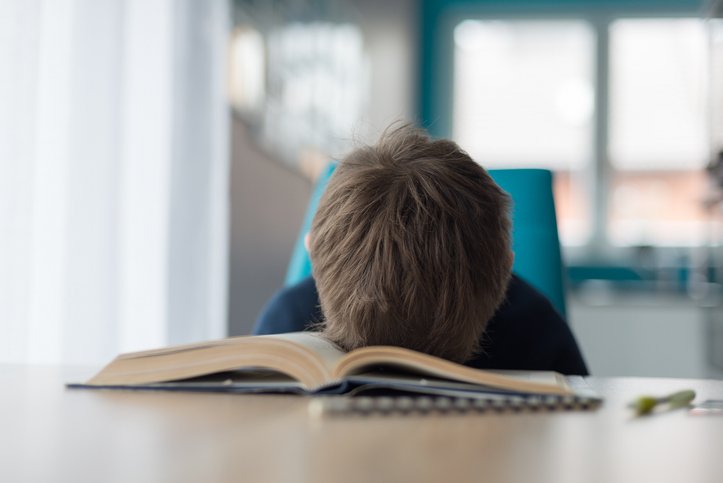
The 10th of October is World Mental Health Day. It was also an opportunity to face a reality we too often ignore – that the mental health of children and young people in Serbia is in serious crisis.
At the very moment we speak of the importance of psychological stability, 807 schools in Serbia simultaneously received bomb threats. False, yet deeply disturbing events. In a country where even basic safety and mental health networks are not secured, such incidents further expose how difficult it is to protect the most vulnerable.
In this atmosphere of fear, we are presented with the preliminary findings of the study “Prevalence of Psychiatric Disorders among Children and Adolescents in the Republic of Serbia,” conducted by the Institute of Mental Health in Palmotićeva Street, Belgrade, which will soon be publicly available. The research was carried out between 2024 and 2025 on a sample of 2,342 pupils from 39 primary and secondary schools across 17 Serbian cities, with an average age of 14.7 years. The results? They are not good.
Girls at greater risk
Almost one fifth of the children (19.7%) included in the study meet at least one diagnostic criterion for a mental disorder – a result that demands serious attention. When incomplete responses are taken into account, the percentage rises to a worrying 20.5%.
The study used the internationally recognised diagnostic tool MINI-Kid, which accurately maps the presence of ten categories of psychological disorders in children aged 6 to 17. Analysis of the data collected in Serbia shows that girls are more at risk than boys, children from divorced families are more vulnerable than those from intact families, and older adolescents show more difficulties than younger ones. Nevertheless, regardless of these group differences, it is alarming that the overall number of at-risk children in Serbia is high, placing the country among those with a significant percentage of children in need of professional help and support.
Besides genetic factors and family circumstances, we cannot help but wonder to what extent the wider social climate – which can be described as negative – contributes to this situation. Can the mental health of Serbian children be any different from the state of Serbia itself?
To better understand the significance of these findings, it is useful to compare them with global data. According to the World Health Organization, the global rate of mental disorders among children of similar age is around 14%, while in EU countries it is estimated that about 13% of primary and secondary school pupils experience some form of psychological problem. One of the most detailed instruments used in such studies is precisely the MINI-Kid, also employed by the Serbian institute. In countries where this mechanism has been used – for instance, in a joint study titled “Comparison of the Prevalence of Mental Health Problems among Children Aged 6 to 11” (Italy, Germany, the Netherlands, Lithuania, Bulgaria, Romania, and Turkey) – the findings vary: on average, 12.8% of children experience some form of psychological disorder, with prevalence ranging from 15.5% in Lithuania to a significantly lower 7.8% in Italy.
More likely to seek professional help
What is encouraging and gives hope amid this bleak analysis, according to the research conducted by the Institute of Mental Health in Belgrade, is that today’s adolescents with mental disorders are significantly more likely to seek professional help (69.8%) than previous generations were.
In this respect, the establishment of CEZAM – founded by the Working Group of the Government of the Republic of Serbia for the Support of Mental Health and Safety of Youth, in cooperation with the Institute of Mental Health – is a positive development. CEZAM was created in response to the need for psychosocial support for young people after the tragic events at Vladislav Ribnikar Elementary School in May 2023. No referral is required to visit CEZAM, but appointments fill up quickly.
While Generation Z adolescents appear to have developed an awareness of the importance of mental health, it seems that their parents and families are often less willing to face such problems and seek professional help in time. The tragic example from our recent past demonstrates how parents, teachers, and the entire school system failed to recognise the severe psychological disturbances in the boy who took the lives of his classmates and a school security guard.
Topics such as anxiety, self-care, depression, and mindfulness have all become part of the public discourse, particularly among young people. Yet reality resists optimism: the rates of depression, anxiety, and emotional distress among adolescents are not declining – they are rising. How can this be explained? The paradox of the situation is that while awareness is increasing, the systems of support – primarily within families, but also within education – are lagging behind.
One counsellor for about 288 children
According to data from the Ministry of Education for the 2025/26 school year, Serbia has 1,766 primary and secondary schools attended by around 750,000 pupils. The total number of school psychologists and pedagogues is 2,605. Statistically, this amounts to fewer than 1.5 qualified professionals per school. The situation is further complicated by the fact that fewer than 50 child psychiatry specialists currently work in Serbia – only one of many serious public health issues.
But let us return to the field of primary and secondary education. One of the few adequate government responses since 2023 was the amendment to the Rulebook on the Funding of Services in Primary and Secondary Schools, originally adopted in 2015, which had caused significant harm to schools throughout Serbia. Before the amendment, the rulebook stipulated that only schools with 32 or more classes could simultaneously employ both a psychologist and a pedagogue – two entirely different professions.
Unfortunately, in practice, there are still schools where a single psychologist is responsible for hundreds of students, while in smaller towns, there is often not a single professional of this kind. Teachers who notice behavioural changes, children who are suffering, and parents seeking help are often left to fend for themselves. School psychologists, when present, are typically overburdened – juggling administrative duties, crisis interventions, counselling, and therapeutic support. In all this, it seems that the only role they have not yet been asked to fill is that of a cleaner on sick leave. Turned into “jacks of all trades,” school psychologists and pedagogues rarely have time for what is truly at the heart of their profession – preventive work with children.
None of this is new. Generations growing up in Serbia have lived through wars and the collapse of values in the 1990s, the instability of the 2000s’ transition period, the global pandemic of 2015, and today’s youth now face digital violence, hate speech in the media and politics, and a social atmosphere that normalises what was once unthinkable.
When a society normalises aggression, discrimination, scandal, and threats – children absorb it. When a schoolyard is marked by a vulgar, politically charged image of a raised middle finger painted on the wall, and pupils receive bomb threats while solving maths problems – the message is clear: “you do not matter.” This same message can also be read in the words of lawyer Vladimir Đukanović, a prominent government official, who, commenting on student protests in Serbia, stated that “children are the property of the state.” In that statement lies the essence of an authoritarian attitude towards young people: they are not seen as free, thinking individuals, but as tools to be controlled, shaped, and silenced when necessary. For if, as Đuka claims, children are the “property of the state,” then that state is not a mother – but a stepmother.
To end on a less sombre note, let us recall the words of the great writer Duško Radović, who once commented on school life by saying, “a teacher should be more concerned with the child than with the subject.”
(Radar, 22.10.2025)
https://radar.nova.rs/drustvo/mentalno-zdravlje-dece-u-srbiji/