

With waves lapping at the shore and umbrellas flapping vigorously in the wind, Zikim beach seemed the picture of serenity on Tuesday.
From speakers at a nearby bar, shoegaze music serenaded the few vacationers lounging on fresh green astroturf as others sat under pristine white sunshades newly installed on the wide expanse of sand and a few families frolicked in the foaming surf rolling onto the reopened beach.
There was nothing about the postcard-perfect scene to betray the horrors that had been visited upon Zikim’s sands just over two years earlier, when Hamas terrorists came ashore and massacred 18 people, 17 of them civilians.
But for those whiling away a few hours at the beach, the trauma of October 7, 2023, remained as inescapable as the incoming tide.
“I was excited, but I’m feeling really mixed emotions, coming back here after two years,” said Sderot resident Itzik Abergel, plucking the strings of his acoustic guitar with a cigarette hanging from his mouth. “It’s surreal.”
Shut down since October 7, 2023, when it was declared a closed military zone, the reopening of the beach this week marked a major milestone in the recovery of the Gaza border region, devastated by the attack.
The closest sea access point for those living in Sderot and hard-hit communities adjacent to the Strip, Zikim’s comeback was hailed by many visiting the beach Tuesday as an important step in breaking through the traumas of two years prior, alongside the apparent end of the war and return of all living hostages, even if tensions have yet to fully wash away.

Visitors at Zikim Beach, near the border with the Gaza Strip, after it was reopened to the public on October 16, 2025. (Liron Moldovan/Flash90)
Lying on the sand near Abergel, who was celebrating his 49th birthday, surfer Oren Weizmann said his return to this piece of shoreline after two years away was an “act of defiance” to bring himself back from post-traumatic stress suffered in the wake of the attack.
“I’m back on this beach to make myself stronger… that’s what I told my Ministry of Defense psychologist,” he told The Times of Israel.
On October 7, the 50-year-old Sderot native had seen Hamas lay waste to his hometown, and he has struggled to return to normal life ever since.
Even before the onslaught, he was in treatment for post-traumatic stress, having served as an infantry soldier during Operation Protective Edge over a decade ago. His insomnia and panic attacks came back with a vengeance after the massacre.
On one hand, Weizmann was relieved to come back to his stomping ground, “I love this place, it’s given me air to breathe again,” he said.
At the same time, he felt pangs of worry being so close to the border from which Hamas gunmen burst forth. He tried to reassure himself, noting the abundance of soldiers in the area.

Sderot residents Oren Weizmann (left) and Itzik Abergel (right) while visiting Zikim Beach within a week after the site’s reopening, two years after the October 7, 2023, massacre, on October 21, 2025. (Charlie Summers/Times of Israel)
Behind him, less than two kilometers (1.2 miles), the Gaza border fence could be seen stretching into the sea.
On October 7, thousands of heavily armed Hamas-led terrorists stormed across other parts of the fence and into Israel, making their way into communities, to kill, maim, rape and kidnap. In some places, terrorists on motorized hang gliders infiltrated Israel by air.
On that same morning, 38 Hamas terrorists set out in speedboats from the Gaza Strip. At around 6:45 a.m., two of the speedboats, each carrying five gunmen, reached Zikim, where 32 civilians were sheltering from a massive barrage of rocket fire.
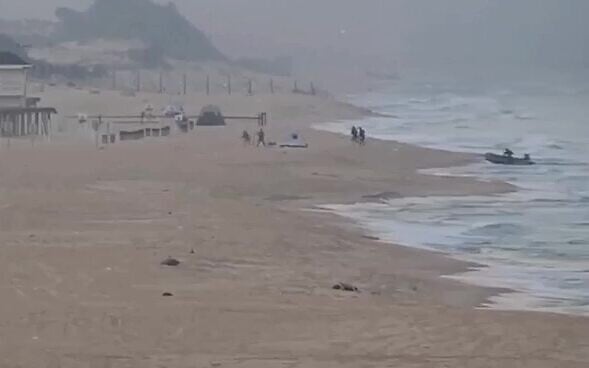
Hamas terrorists arrive by speedboat at the Zikim beach on October 7, 2023. (Screenshot: Israel Defense Forces)
As troops responding to the seaborne attack retreated to the bathroom and bomb shelter, where 20 civilians were sheltering, Hamas gunmen murdered two fishermen on the beach and a 26-year-old trucker in the parking lot.
When troops moved further inland toward the parking lot and sand dunes, where some others were hiding, the terrorists attacked the bathrooms and bomb shelter, killing 14 more. A soldier who rushed back to the bathroom alone to try to stop the attack was also killed.
Four of the terrorists managed to bypass the soldiers and hijack their army jeep, proceeding to Kibbutz Zikim. Six others advanced on foot, however soldiers were able to repel the invaders before they reached the kibbutz.
On October 8, two terrorists were killed by Navy shelling and ground troops near Zikim Beach. Some of the bodies were not recovered from the bathroom or bomb shelter until October 13, according to an IDF probe of its response to the attacks around Zikim.
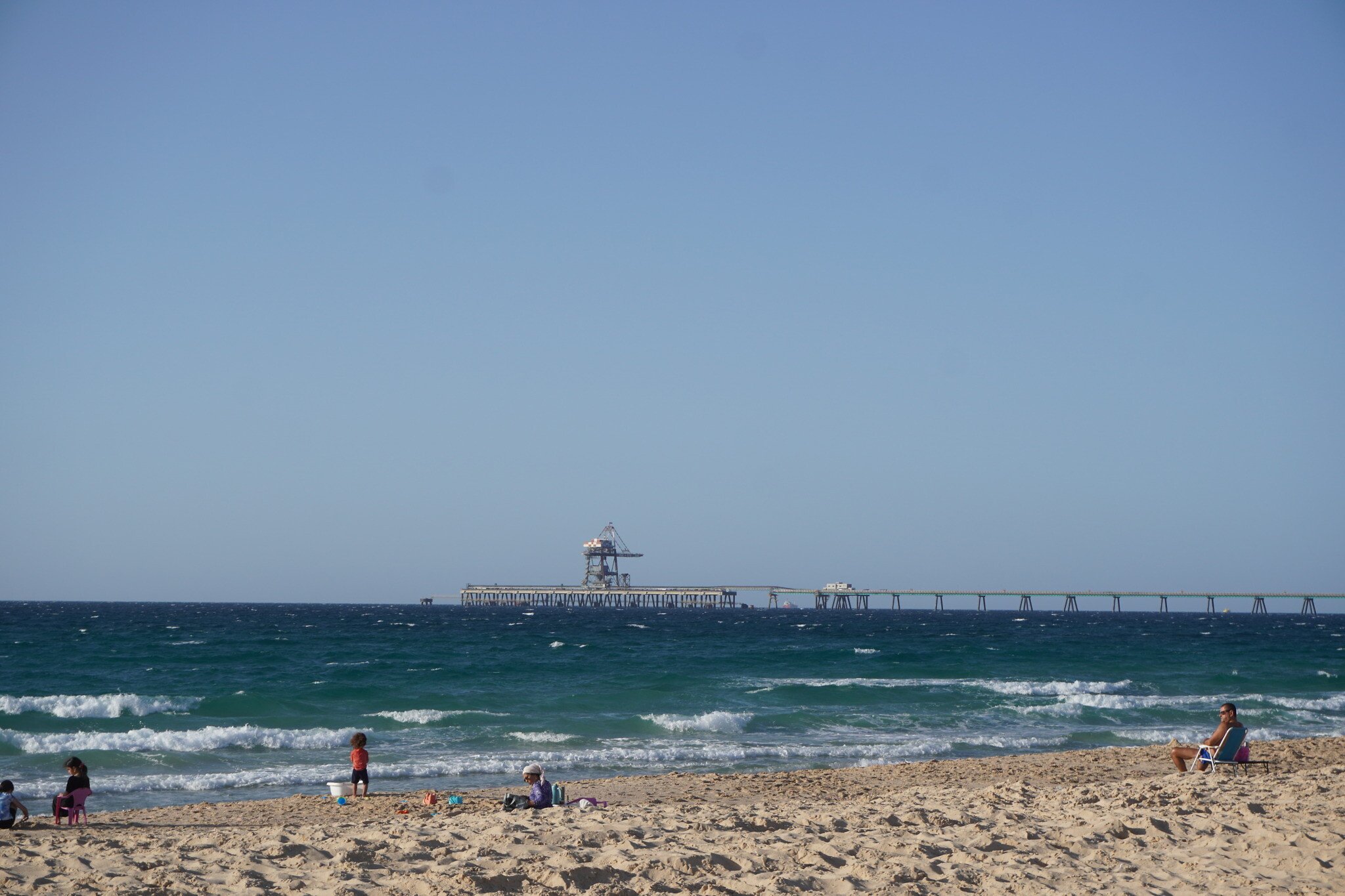
Beachgoers pass time at Zikim Beach in southern Israel, the site of a massacre during Hamas’s October 7, 2023, days after reopening to visitors, on October 21, 2025. (Charlie Summers/Times of Israel)
Following the attack, the army swiftly declared the area a closed military zone. It remained closed until Thursday of last week, when the military approved a recommendation by the Southern Command to reopen Zikim Beach.
During the intervening two years, the beach underwent a NIS 20 million ($6 million) renovation by the Hof Ashkelon Regional Council, which rebuilt a bar at the beach, installed new areas with fake grass, and put up a series of sunshades stretching across the strip of sand.
A large parking lot was also redone, though it remained mostly empty on Tuesday.
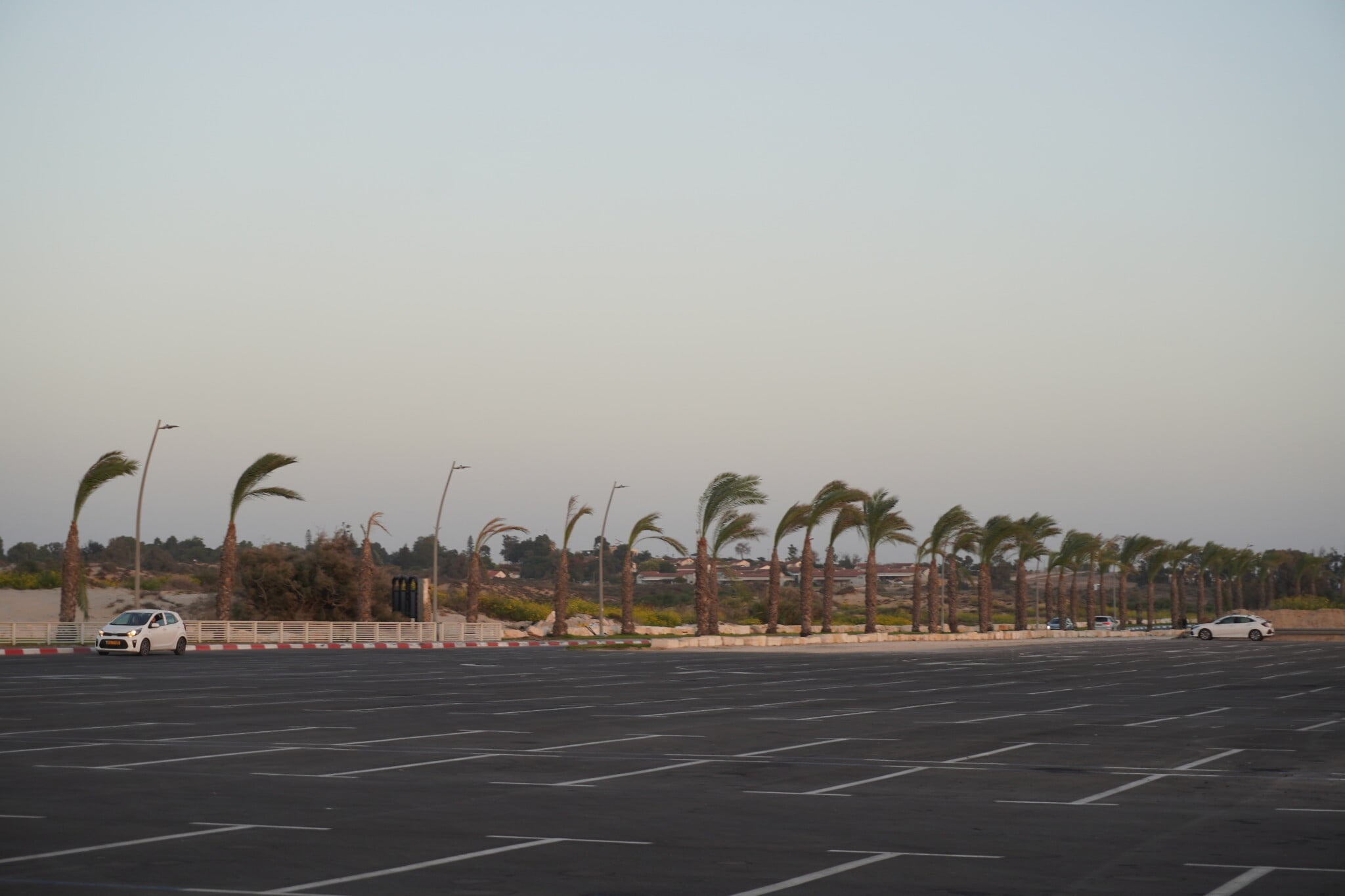
The renovated parking lot at Zikim Beach in southern Israel on October 21, 2025. (Charlie Summers/Times of Israel)
An official opening ceremony had been set to take place Tuesday afternoon, but the regional council postponed it at the request of bereaved families who lost their loved ones in the massacre, a spokesperson said.
A new date for the ceremony has not yet been announced.
‘A long time to heal’
Getting to the beach involves passing by a military training base enclosed with barbed wire fencing and traveling down a road flanked by palm trees on either side until reaching the massive repaved parking lot.
Like the parking lot, the beach was largely empty on Tuesday afternoon, with only a few dozen people scattered around. At the bar, located right next to a bomb shelter, several soldiers from the nearby base were hanging out.
Young men played soccer on the sand and families sat on beach chairs, eating watermelon slices and drinking lemonade.
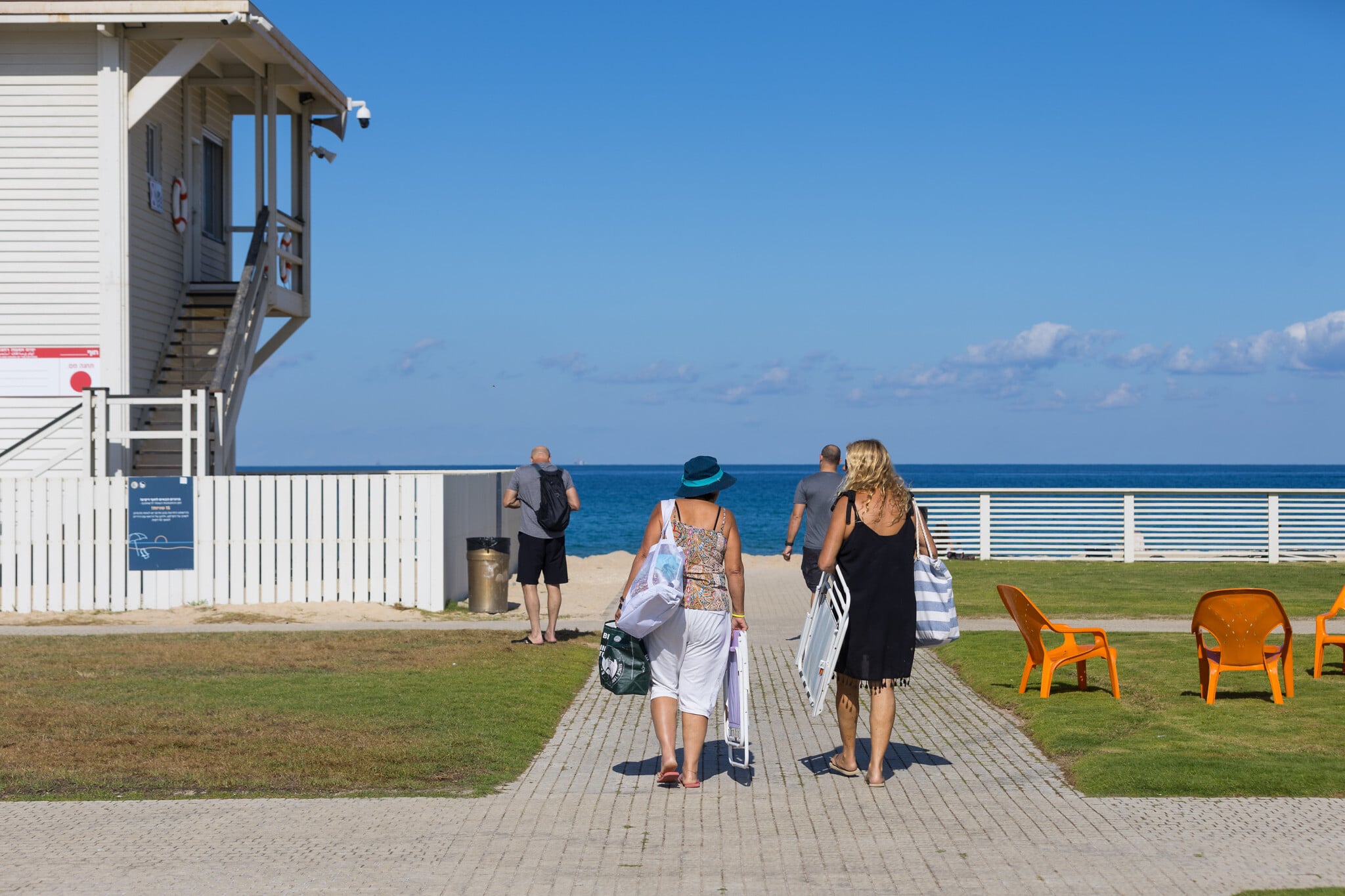
Visitors at Zikim Beach, near the border with the Gaza Strip, on October 16, 2025. (Liron Moldovan/Flash90)
Sporting a shirt from the Hostages and Missing Families Forum and a blue-and-white diving cap, Mike Rudolph was at the beach for the since-canceled opening ceremony.
The Chicagoan, on a seven-week vacation to Israel, said he had hopped on the first flight he could manage after a ceasefire deal was announced earlier this month, followed by the return of the last 20 living hostages. He is now staying in Tel Aviv.
Zikim Beach was his last stop in a day-long circuit throughout the recovering Gaza border communities. He began at the funeral of slain hostage Ronen Engel in Nir Oz, visited the site of the Nova massacre, and made his way to Zikim when he realized he had time to make it for the beach’s official reopening ceremony.
After finding out that the event had been canceled, Rudolph decided to stay put and watch the sunset. He pitched an Israeli flag in the sand and a lawn chair under himself.
“I love Israel… I look like a meshugana with this on, but I don’t care,” he said, gesturing to his diving cap with a smile. “I’m 70 years old. They can think what they want.”
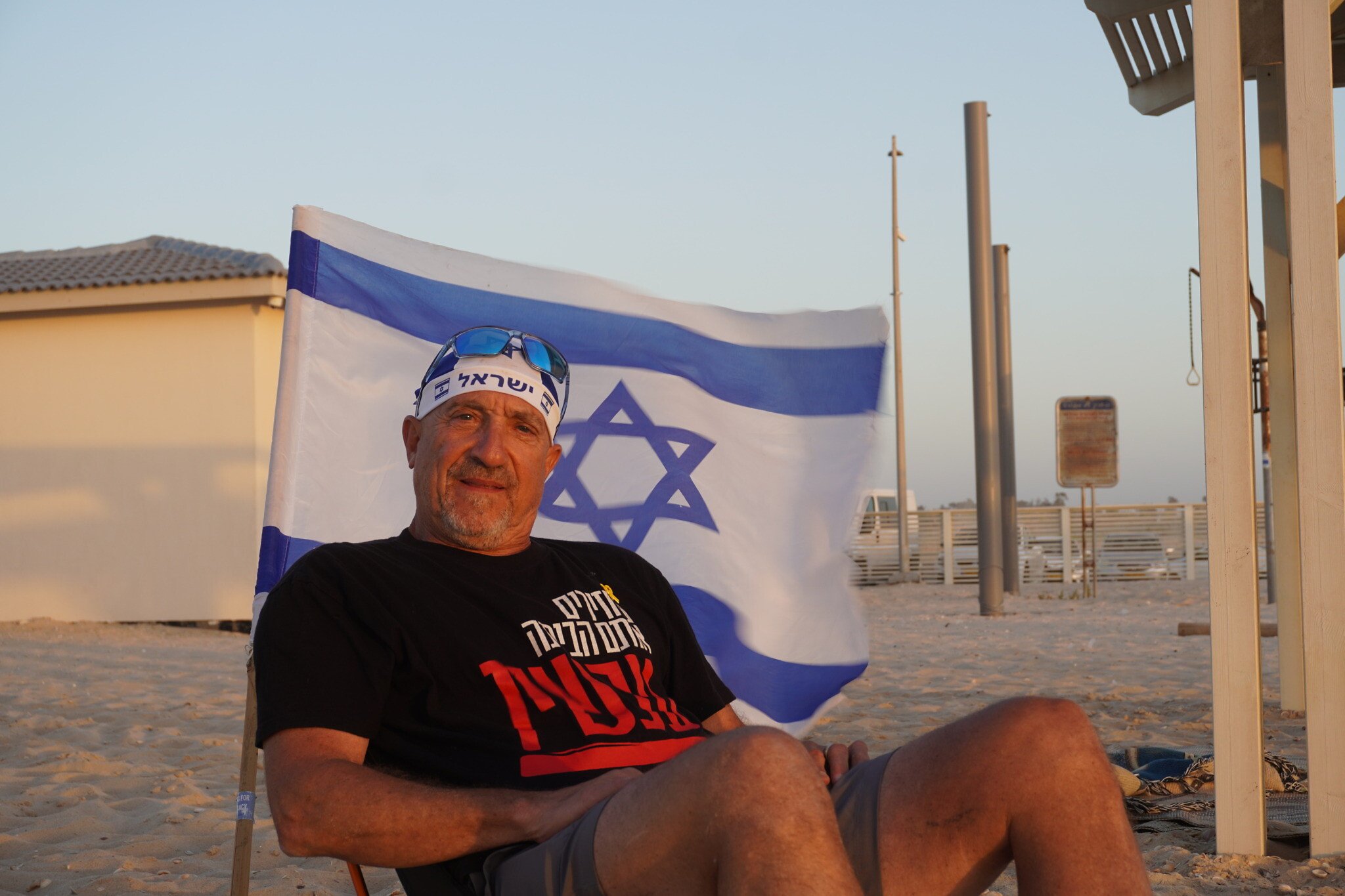
Mike Rudolph, an American Jew from Chicago, visits Zikim Beach within a week after the site’s reopening after two years of closure, October 21, 2025. (Charlie Summers/Times of Israel)
The retiree is a serial volunteer. He first came to the country after the 1973 Yom Kippur War, where he labored for three weeks on Kibbutz Ein Harod. He returned several times since then, including in November 2023, helping out on 23 different kibbutzim and moshavim in the wake of the attack.
“It’s very emotional, very powerful to be here, to know what happened on this beach,” Rudolph told The Times of Israel.
He confessed that he had expected to come back to a livelier country in light of the return of the hostages.
“I don’t feel the happiness like I thought I would,” he said. “This is going to take a long time to heal; this country is broken.”
‘As if we’ve been kidnapped’ for two decades
Since the war began, Abergel had been living in Tel Aviv apart from his wife and four children, finding it too painful to remain close to the Gaza border after witnessing the massacre in his hometown. “It’s like looking into a black mirror,” he said.
Sitting on the sand with his dog sleeping at his side, the guitarist recounted fleeing Hamas terrorists as the attack unfolded on October 7.
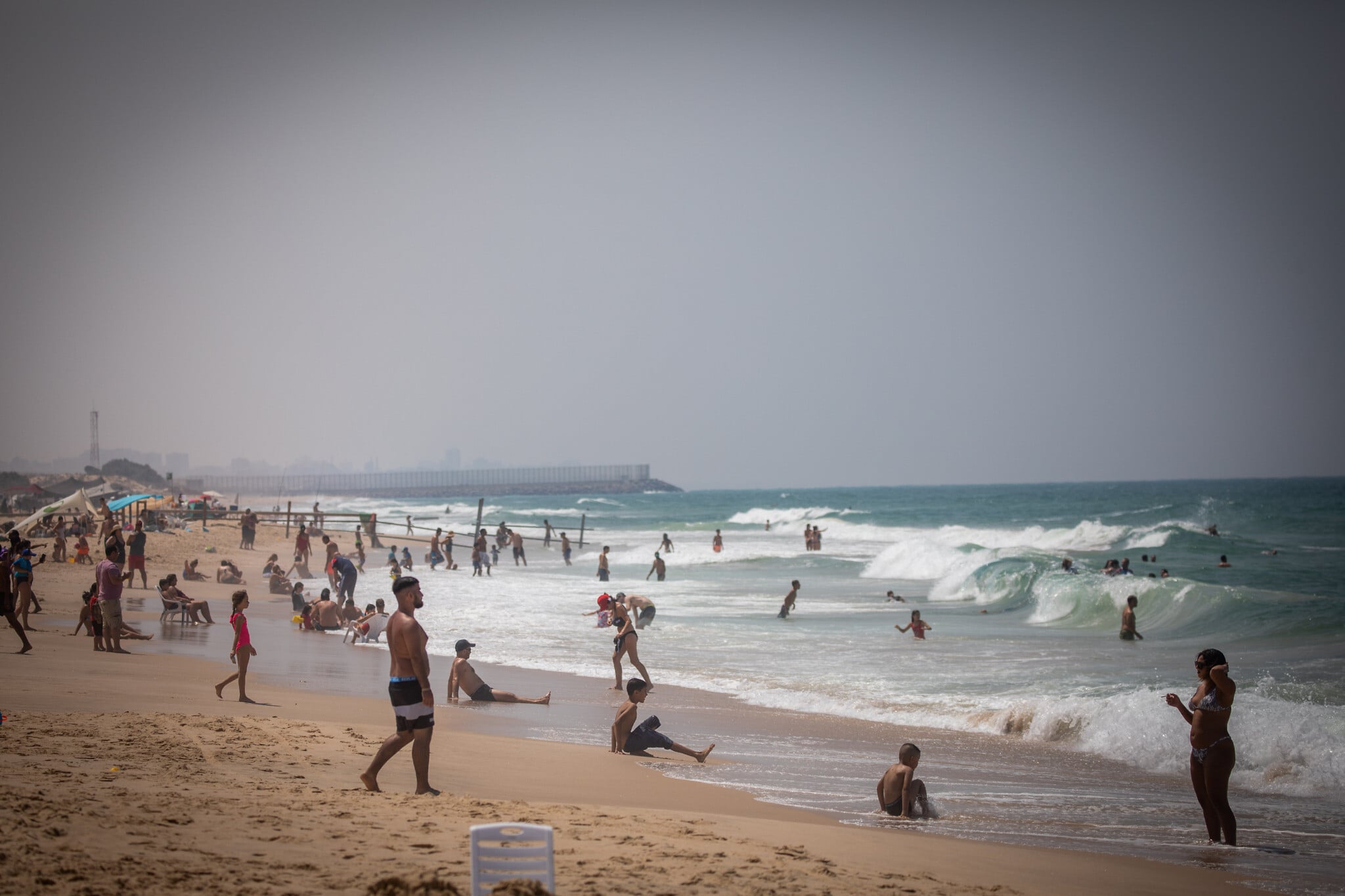
People at Zikim beach, southern Israel, on August 29, 2020. (Yonatan Sindel/Flash90)
He recalled grabbing his wife and kids and driving to Beit Kama, a kibbutz some 17 kilometers (10.5 miles) away. From there, he continued north to Kfar Yona, outside Netanya, where they found sanctuary with a family kind enough to host them for the night. The next morning, they drove to Tel Aviv.
Abergel said that the threat of an incursion had been looming over Israel’s south for years before October 7.
“For the past twenty years in Sderot, it’s as if we’ve been kidnapped. There have been hostages for the past two years, but the entire Gaza periphery has been held hostage for much longer,” he said.
Abergel goes by the stage name “Zitzik” in his musical endeavors, a nickname bestowed upon him by his childhood friend David Ben Dayan, one of the policemen slain in Hamas’s brutal onslaught in Sderot, in which over 50 people were killed.
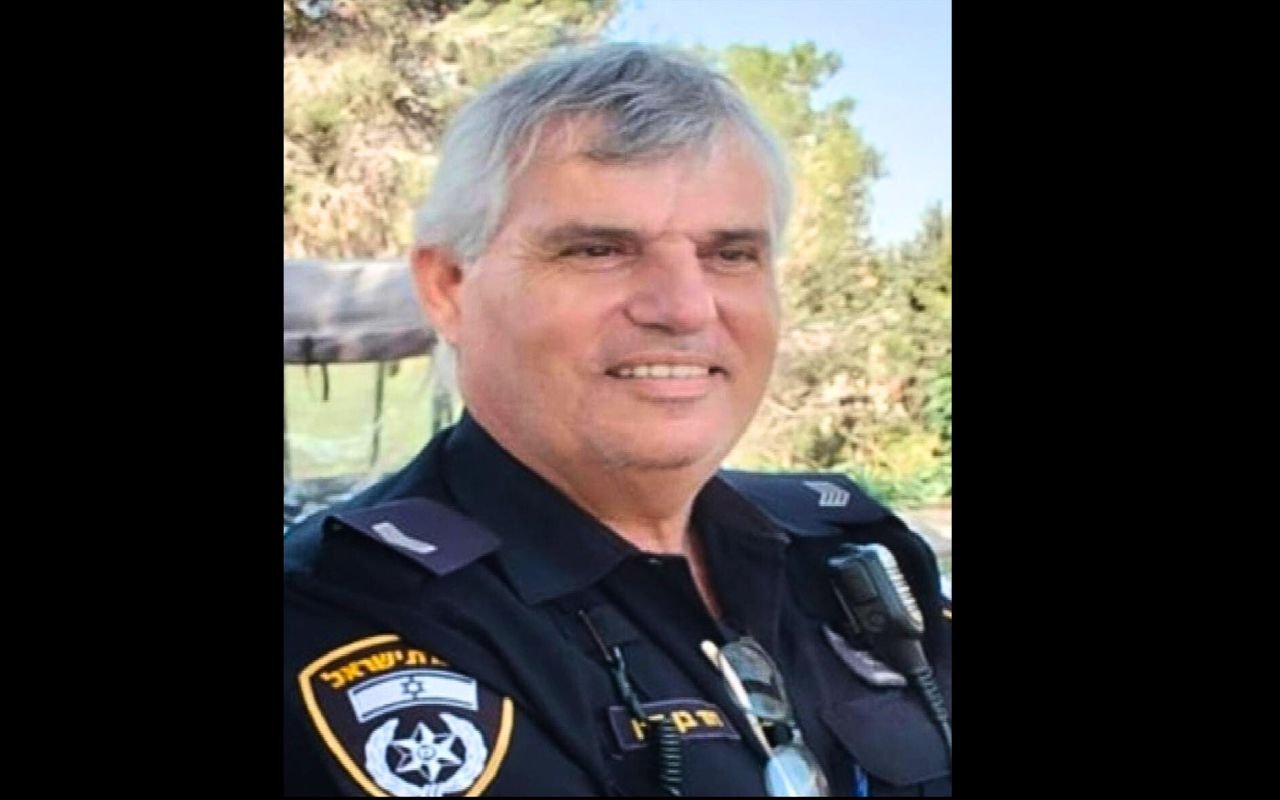
Command Sgt. Maj. David Ben Dayan (Israel Police)
The two shared a fervent passion for music. “I grew up with him, he was like an older brother to me. He gave me nicknames all the time and ‘Zitzik’ caught on, it was the one I instantly connected with,” he said.
Though still based in Tel Aviv, the musician is trying to slowly ease himself back into living in Sderot alongside his family, with the help of time, countless therapy sessions and his guitar.
“We have a crazy vibe here, lots of peace and quiet, full of love and warmth,” he said of the Gaza border area. “I want to live, I’m dying to live and will fight for it, as long as it takes.”