
Published on
October 25, 2025

The Rebranding of the Netherlands
The Netherlands’ strategic rebranding campaign, which began in 2020, sought to transform the international perception of the country by shifting from the term “Holland,” which refers only to two of the twelve provinces, to the country’s full and official name, “The Netherlands.” This move was designed to more accurately represent the nation’s diversity and cultural richness. The rebranding aimed to showcase all regions of the country, not just the well-known areas of North and South Holland, to present a more inclusive, comprehensive, and sustainable national image on the global stage.
Global Impact and Recognition
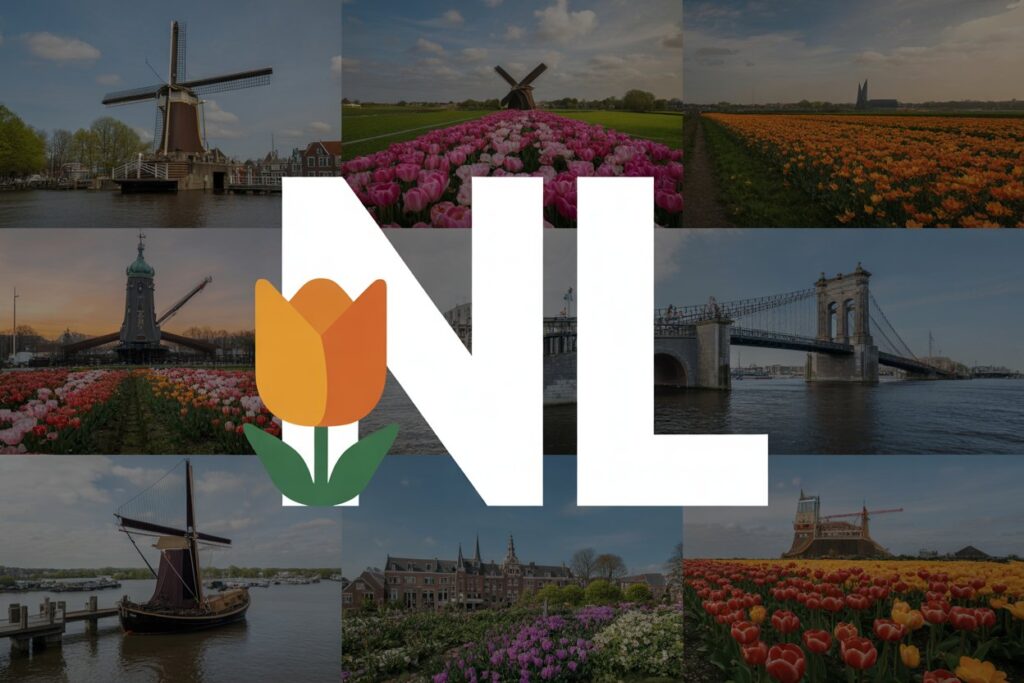
Since its initiation, the rebranding campaign has attracted significant international attention, helping to redefine the Netherlands’ global image. The country’s new logo, which features the initials “NL” and an orange tulip, has become a symbol of national pride and is now widely associated with the Netherlands. This stylized tulip serves not only as a national emblem but also reflects the country’s heritage, its connection to nature, and its global recognition.
The new logo and branding efforts have been prominently displayed at major global events, such as the Eurovision Song Contest and the Tokyo 2020 Olympics. These high-profile platforms have allowed the Netherlands to reinforce its commitment to a unified, modern national identity. By prominently showcasing its new brand at such events, the Netherlands has ensured that its rebranding resonates across international audiences, positioning the country as forward-thinking, innovative, and unified.
In addition to the global visibility gained through events, the Netherlands Board of Tourism and Conventions (NBTC) launched a number of initiatives aimed at solidifying the new brand and reinforcing the country’s broader image. One such campaign is the “New Dutch” initiative, which highlights the Netherlands’ role in global innovation, sustainability, and cultural development. This campaign emphasizes various themes, including health, technology, and the arts, as a way to present the country as a global leader in tackling modern challenges.
Domestic Reception and Regional Perception
Internally, the shift from “Holland” to “The Netherlands” has been met with mixed reactions. While the change has been embraced by many, particularly those in the tourism and international business sectors, there has been some resistance among those who feel that the rebranding undermines the distinctiveness of the individual provinces within the country. For years, “Holland” has been synonymous with the Netherlands in international discourse, so for some, abandoning the name represents a loss of historical identity.
Some regional leaders and residents feel that the rebranding effort could marginalize the cultural significance of North and South Holland. The provinces of North and South Holland are home to the country’s major cities, including Amsterdam and Rotterdam, and have historically been the main drivers of the nation’s economy and tourism. These regions have long been the face of the Netherlands in international tourism and trade, and as such, some locals feel that this shift could dilute their contribution to the country’s identity.
However, there is growing acceptance of the rebranding within the younger generations, who are more globally connected and less attached to traditional regional identities. Platforms like Reddit have shown that while “Holland” remains widely used in casual conversation, the official name “The Netherlands” is increasingly recognized, especially among people involved in international affairs and tourism. This generational shift represents a gradual but inevitable change in how the country is perceived both domestically and abroad.
Tourism Trends and Economic Considerations
The rebranding has had a significant impact on tourism trends within the Netherlands. Before the rebranding, tourism was heavily concentrated in Amsterdam and Rotterdam, with much of the country’s international tourism focused on these two cities. While these cities remain popular, the rebranding campaign has successfully broadened the appeal of lesser-known regions, encouraging tourists to explore a more diverse range of destinations across the country.
The Netherlands Board of Tourism and Conventions (NBTC) launched the “Perspective 2030” plan to manage the growth of tourism across the entire country. The plan’s primary goal is to distribute tourism more evenly, reducing the pressure on major tourist hotspots while also promoting sustainable travel practices. This plan encourages visitors to discover the Netherlands’ less-explored regions, such as Friesland, Limburg, and Drenthe, where the unique culture and stunning natural landscapes offer a different but equally enriching experience.
The promotion of regional tourism is not just a cultural initiative—it’s an economic one. By encouraging tourists to visit a wider variety of destinations, the Dutch government aims to spread the economic benefits of tourism more equitably across the country. This also helps alleviate issues associated with overtourism, which has been a growing concern in major cities like Amsterdam, where the local population often struggles with the influx of international visitors.
The government’s emphasis on sustainable tourism is also reflected in various initiatives designed to reduce the environmental impact of travel. The Netherlands has long been a leader in sustainability efforts, and the rebranding is aligned with these principles. The country’s innovative solutions to issues like public transportation, energy efficiency, and waste management make it an ideal destination for eco-conscious travelers.
The Road Ahead for Dutch Tourism
The Netherlands’ rebranding campaign has achieved considerable success in raising awareness about the country’s full identity. The shift from “Holland” to “The Netherlands” was more than just a name change; it was a strategic move to reflect the country’s rich regional diversity and its commitment to sustainable development. The rebranding has been well received internationally, with the new “NL” logo gaining prominence at global events, and initiatives like the “New Dutch” campaign helping to reinforce the Netherlands’ image as a forward-thinking and progressive nation.
However, the rebranding has not been without its challenges. Domestically, there remains some resistance to the idea of abandoning “Holland,” and the shift could potentially alienate some regional identities. Despite this, the growing recognition of “The Netherlands” among younger generations and within the tourism sector suggests that the rebranding is on track to achieve its goals.
Tourism trends following the rebranding indicate a gradual shift in visitor behavior, with an increasing number of tourists exploring regions beyond Amsterdam and Rotterdam. This shift not only helps alleviate overtourism in the major cities but also brings economic benefits to less-visited areas of the country.
In the long term, the Netherlands’ rebranding will likely continue to position the country as a global leader in sustainable tourism, innovation, and cultural development. The challenge now lies in ensuring that the benefits of this new identity are distributed evenly across all regions of the country, allowing the Netherlands to grow as a unified, sustainable, and inclusive destination for travelers from all corners of the world.
