

26.10.2025. 19:56h
Ažurirano: 26.10.2025. 20:43h
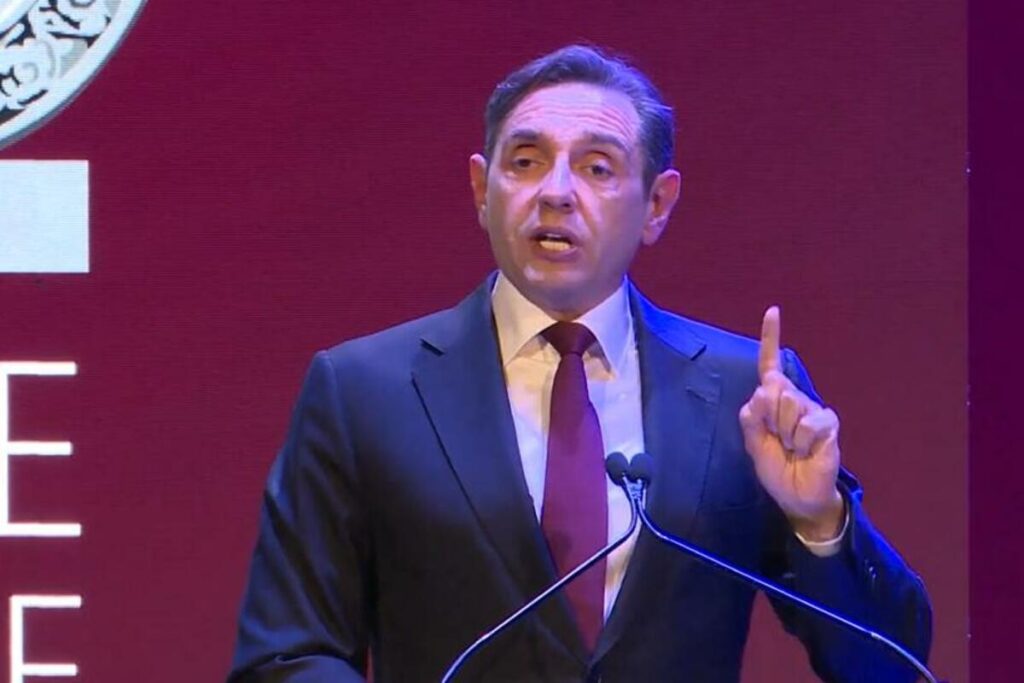
The Founding Assembly of the Russian Historical Society was held in Belgrade today, and the leader of the Socialist Movement, Aleksandar Vulin, was elected president of the council of the Belgrade branch of this society.
As reported by Sputnik Serbia, the founding assembly began with the singing of the anthems of Russia, Serbia, and Republika Srpska, and a minute of silence was observed in honor of General Nebojša Pavković.
The event was attended by Minister of Internal Affairs Ivica Dačić, Patriarch of the Serbian Orthodox Church (SPC) Porfirije, Metropolitan Irinej of Bačka, Metropolitan Metodije of Budimlje-Niksic, Russian Ambassador to Belgrade Aleksandar Bocan-Kharchenko, Deputy Minister of Science and Higher Education of Russia Konstantin Mogilevsky, and others.
In his speech, Vulin assessed that “history teaches us that where there are Serbs and Russians, there is justice,” and also greeted “both the Serbian and Russian worlds.”
“If you don’t know where justice and victory are, look for where the Serbs and Russians are… The closeness between two peoples can be measured solely by the closeness of the values that both peoples stand for. We at the Russian Historical Society fight against any revision of history about the Serbian and Russian peoples,” Vulin said.
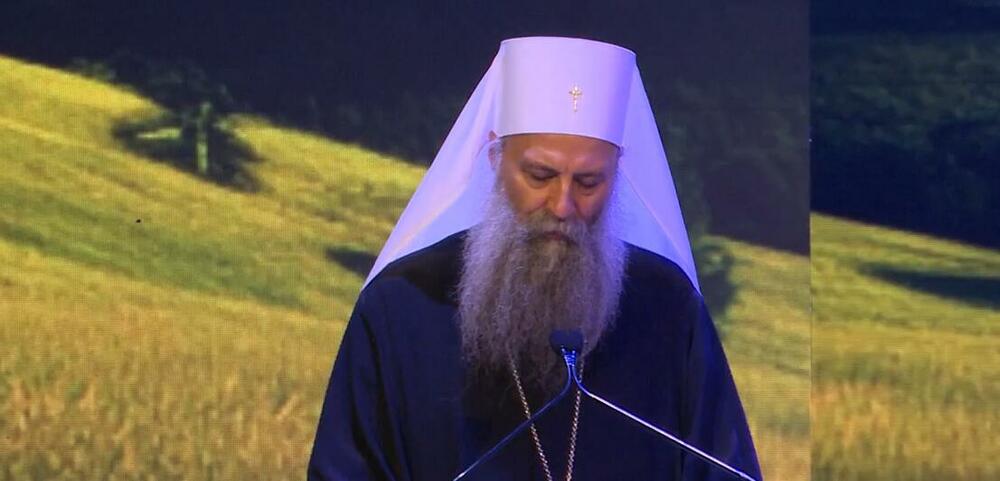
Patriarch Porfiry, addressing those present, said that the opening of the Russian Historical Society in Serbia represents confirmation of “the continuous mutual spiritual connection of the Serbian and Russian peoples, Serbian and Russian, who live harmoniously and akin throughout history”, and that the opening of this organization is “crucial in the era of historical revisionism”.
Porphyryphoto: Screenshot/Youtube/RTV Vojvodina
“We have gathered here today, not only to affirm true friendship and brotherly relations, but to confirm and seal the vow left to us by our ancestors,” said Patriarch Porphyrios.
Russian Ambassador to Serbia Alexander Botsan-Kharchenko, in his address to the attendees, assessed that the opening of the Russian Historical Society in Serbia is “an important political and scientific message”.
“One of the most important tasks of Russia and Serbia is to strengthen the sovereignty and independence of our peoples and states. And without knowing one’s history, there is neither sovereignty nor future,” said Botsan-Kharchenko.
Sergei Naryshkin, Director of the Foreign Intelligence Service of the Russian Federation, who heads the Society, addressed the audience in a video message, Sputnik adds.
Naryshkin emphasized the historical ties between Russia and Serbia, as well as the “principled similarities of our traditional values.”
“The NATO bloc ignited a civil war in the Balkans, and then, despite international law, committed real aggression against Serbia, real war crimes. Our state responded to that,” said Naryshkin.
The “Russian Historical Society in the Republic of Serbia” was officially founded in August 2025, and was registered with the Business Registration Agency as a citizens’ association.
The legal representative of the association since September 2025 is Aleksandar Vulin, according to data from the APR.
What does the “Serbian world” mean, which was first promoted by Vulin?
The term “Serbian world” was first officially promoted in Serbian state addresses by Aleksandar Vulin while he was head of the Ministry of Defense, Radio Free Europe (RFE) reports.
“Vučić needs to create a Serbian world. Belgrade must gather all Serbs within and around itself, and the president of Serbia is the president of all Serbs,” Vulin said on September 26, 2020.
Vulin, from his position as Minister of Internal Affairs of Serbia, explained (TV Happy, April 9) that the current geopolitical circumstances “do not favor” the unification of all areas inhabited by Serbs, but that he believes that this will happen in ten, twenty or fifty years.
“Everywhere they live, in Serbia, Montenegro, Republika Srpska. We need the care of the entire Serbian people to be led from one center, and that is Belgrade, and I don’t see what’s controversial about that.”
Aleksandar Vučić, the President of Serbia, also sees nothing controversial, and has described the negative reactions to Vulin’s ideas as a campaign against Serbia, according to RFE/RL.

News