
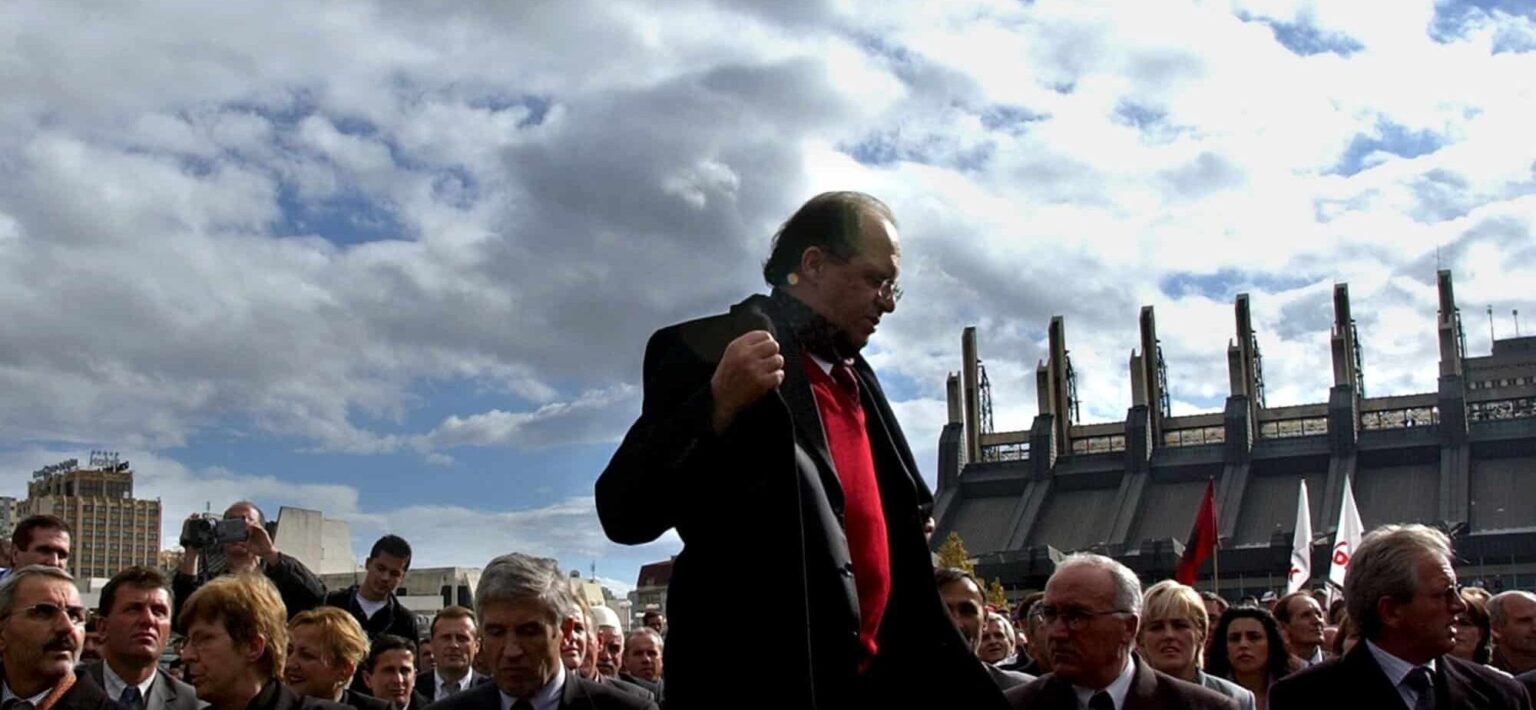
But with the Serbs out of Kosovo, Albanian voters – much to the surprise of foreign commentators – declined to hand all authority to their self-appointed, khaki-clad liberators in the KLA. In elections in October 2000, they gave 58 per cent of their votes to Rugova’s LDK. Some 18 months later, in March 2002, Rugova was elected first president of a free, though not yet independent, Kosovo.
As head of the territory, he was frequently criticised as unfocused and lacking direction, and when ill health began to overtake him, it was apparent that his role in the forthcoming talks on Kosovo’s final status would only be nominal. Last September, his staff admitted he had cancer.
Nevertheless, his death still came as a great shock to Kosovo Albanians, for whom he represented stability and the longing for a more normal life, free from gunmen and paramilitaries.
With his studied indifference to flummery and presidential protocol, the air of an absent-minded professor still very much about him, he had become in the eyes of Kosovars a generally civilising influence – a symbol of their aspiration to be part of the European mainstream. To that extent, he fully warranted his “father of the nation” tag.
He was survived by his wife and three children.
This article was originally published on January 22, 2006. At the time of publication, Marcus Tanner was BIRN’s English-language editor – a position he still holds.
If a pedestrian walks for less than 15 minutes down Pristina’s main street, they’ll see three major tributes to the man who most Kosovo Albanians perceive as the ‘father of the nation’. A mid-size statue can be seen in front of the modern cathedral, for which Ibrahim Rugova set the founding stone in 2005, days before he would communicate to the public the news that he had cancer, which caused his death four months afterwards.
No more than 200 metres further on, there’s a giant poster of Rugova that was put up in February 2008, days before Kosovo declared independence – a move that Rugova strongly advocated but never got to experience for himself. And finally, just in front of the parliament building, there’s a huge statue of Rugova in the square named after him. The monument has become the protocollary venue for newcoming ambassadors to lay wreaths the day they present their credentials to the president’s office just across the square.
Rugova was widely admired for pursuing a policy of non-violent resistance to Serbian rule – at the time when the break-up of Yugoslavia was triggering bloody wars in Croatia and Bosnia and Herzegovina in the early 1990s. Decades later, his policy is getting increasing retrospective recognition both at home and abroad. His grave in a neighbourhood above Pristina, not far from the residence where he lived and worked during the difficult 1990s, has become an important shrine for politicians and others to visit on the anniversaries of his birth and death.
Perparim Isufi