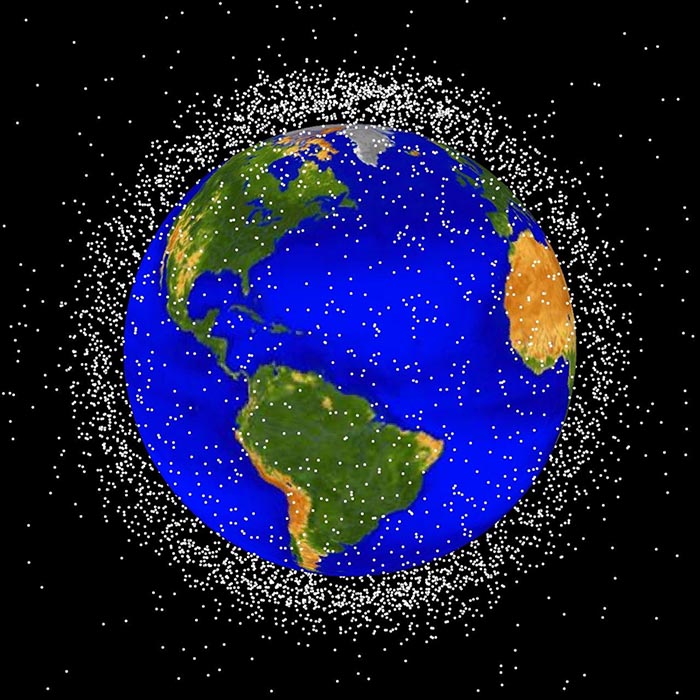
France has ordered the new Aurore space surveillance radar from Thales, expanding its national capability to track spacecraft and debris in Low Earth Orbit. The contract, confirmed by the French Ministry of the Armed Forces, will introduce a dedicated ground-based sensor intended to support national monitoring and defence requirements as orbital congestion increases.
Aurore is being developed to provide continuous observation of resident space objects, adding a high-precision radar to France’s existing surveillance infrastructure. The system will contribute to collision-risk assessment, catalogue maintenance, and tracking of manoeuvring spacecraft, including those operated by foreign governments.
New Radar to Strengthen National Tracking Network
Thales says the radar will be capable of identifying and following satellites down to small object sizes, with a particular focus on Low Earth Orbit where most commercial and military activity takes place. The system will form part of France’s broader space domain awareness framework, which also draws on optical telescopes, space-based sensors, and international data-sharing arrangements.
The radar’s introduction comes as France increases its investment in space security and monitoring. The country has been expanding its surveillance network through the Space Command established in 2019, reflecting a shift toward treating space as a contested operational domain. Aurore will be integrated into that command structure and contribute data for operational planning and strategic assessments.
According to Janes, the radar will be part of a new generation of national capabilities designed to track potential threats, investigate suspicious proximity operations, and provide early warning of hazardous manoeuvres. It also supports France’s work within multilateral frameworks aimed at improving transparency and reducing the risk of unintended escalation in orbit.
Thales will deliver the system under a schedule that includes development, validation, and operational deployment phases. While technical details have not been disclosed, the company has stated that the design leverages experience from its existing radar portfolio, adapted for the demands of fast-moving objects in low Earth orbit.
French officials say the investment reflects the need for autonomous surveillance capacity as the number of satellites continues to rise. With more than 9,000 active spacecraft in orbit and frequent launches planned through the decade, European governments are seeking to strengthen their ability to identify, track, and classify objects without relying solely on external sources.
The Aurore radar is expected to become a core component of France’s monitoring network once operational, supporting both national defence priorities and civil spaceflight safety.