
Published on
October 31, 2025

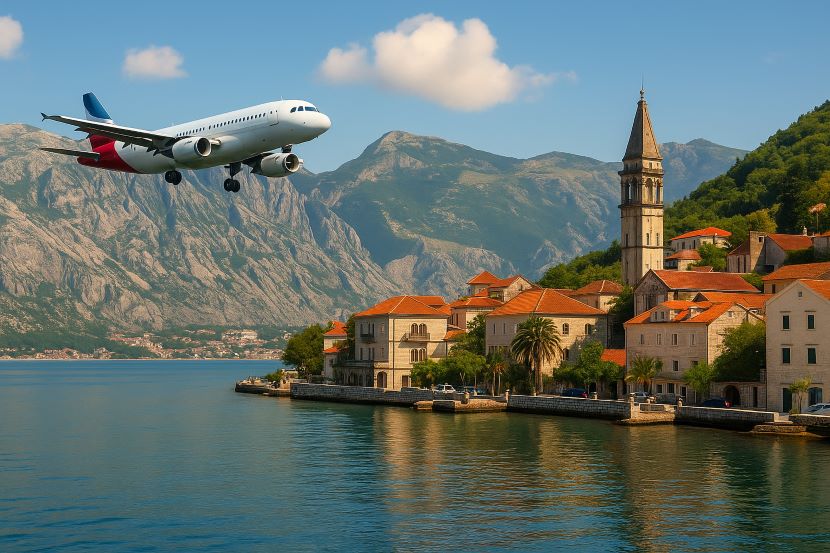
Montenegro is stepping into the travel spotlight with expanded flight options that make reaching the Adriatic easier than ever. The small Balkan nation, known for its mountain-meets-sea landscape and medieval charm, is seeing new and extended air routes to both Tivat and Podgorica in 2025. These growing connections are making the country’s most scenic destinations more accessible for global travellers.
According to Airports of Montenegro, passenger traffic rose by 7 % in early 2025, showing steady recovery and expansion. This reflects the government’s goal of diversifying flight networks and strengthening Montenegro’s position as a year-round destination.
Prime Minister Milojko Spajić recently discussed new airline partnerships and infrastructure improvements, aiming to lengthen the flight season and attract visitors beyond the traditional summer window.
Airlines bet on the Adriatic coast
Podgorica and Tivat airports remain Montenegro’s main gateways. In 2025, Podgorica Airport added routes to major European cities like Madrid and Amsterdam, while Tivat Airport, located near the country’s famous coastal resorts, reported stronger growth driven by summer tourism.
Budget carriers such as Ryanair and easyJet continue to operate seasonally, connecting Montenegro to key European hubs. However, the government is also working to expand year-round routes and attract more flag carriers. In January 2025, Montenegro launched a new concession process for both airports, aimed at modernising terminals, improving passenger capacity, and enhancing travel experience.
The Ministry of Transport stated that these efforts align with Montenegro’s long-term tourism strategy—to make travel seamless, sustainable, and accessible to international visitors all year round.
Tourism continues to climb
According to the Statistical Office of Montenegro (MONSTAT), tourist arrivals in 2024 reached 2.6 million, with over 15.59 million overnight stays. More than 96 % of overnight guests were international visitors.
By mid-2025, arrivals rose another 6 %, with travellers drawn by the country’s balance of untouched landscapes, historic towns, and easy coastal escapes. The Ministry of Economic Development and Tourism reported that tourism now contributes around 25 % of national GDP, showing just how vital the sector is for Montenegro’s economy.
The trend points to an interesting shift—visitors are coming in larger numbers but staying slightly fewer nights. Rising prices and infrastructure limits are part of the reason, but Montenegro’s authentic feel and natural beauty still make it one of Europe’s most alluring destinations.
Why travellers are choosing Montenegro
For global tourists, Montenegro offers a compact yet varied travel experience. From beaches to mountains, it packs in diversity that larger countries often spread across regions.
- For beach lovers: Tivat and the Budva Riviera offer golden sands, boutique resorts, and easy access to islands like Sveti Stefan.
- For adventurers: The north is home to Durmitor National Park, with glacier lakes, hiking trails, and rafting in the Tara Canyon, one of Europe’s deepest.
- For culture seekers: Kotor’s Old Town, a UNESCO World Heritage site, reveals Venetian walls, bell towers, and hidden courtyards.
- For nature lovers: Lake Skadar National Park offers boat rides, monastery islands, and rustic wine villages.
- For wellness and relaxation: The Bay of Kotor and Herceg Novi are growing spa and wellness hubs, known for thermal springs and sea-view retreats.
All of these experiences are within a few hours’ drive of each other—making Montenegro one of Europe’s most compact yet diverse travel destinations.
A practical travel hub for Europe and beyond
Flights to Tivat and Podgorica keep Montenegro connected to major European hubs like Frankfurt, Rome, and London. For travellers from North America or Asia, easy connections through Belgrade, Istanbul, or Vienna make the journey straightforward.
Once in Montenegro, transport is efficient. Tivat Airport serves the coastal region, while Podgorica connects to central and northern Montenegro. Buses and taxis are affordable, and most of the country’s scenic routes are easily drivable.
Travellers arriving off-season can enjoy lower prices, open roads, and quieter experiences in top attractions like Kotor Fortress or Lovćen National Park.
The challenge and the opportunity
While air access is improving, Montenegro faces the challenge of keeping up with rising demand. Airport modernisation projects are underway, but experts highlight the need for balanced growth that preserves the country’s natural charm.
Even as visitors shorten their stays, the appeal remains strong. Tourism officials note that authenticity, smaller crowds, and rich culture continue to draw those seeking something beyond Europe’s over-touristed destinations.
With careful planning, Montenegro has the chance to position itself as the Adriatic’s sustainable travel leader—combining accessibility, beauty, and cultural depth.
Why now is the right time to visit
With more flights, better access, and a clear tourism strategy, 2025 is shaping up as the year Montenegro truly opens up to the world. Whether you’re wandering through Kotor’s medieval lanes, sailing the Bay of Kotor, or hiking the northern peaks, this Adriatic nation rewards slow exploration and curiosity.
Montenegro flights now offer a direct link to one of Europe’s last hidden gems—an accessible yet unspoiled corner of the continent where mountains meet the sea and tradition meets adventure.
