
Published on
October 31, 2025

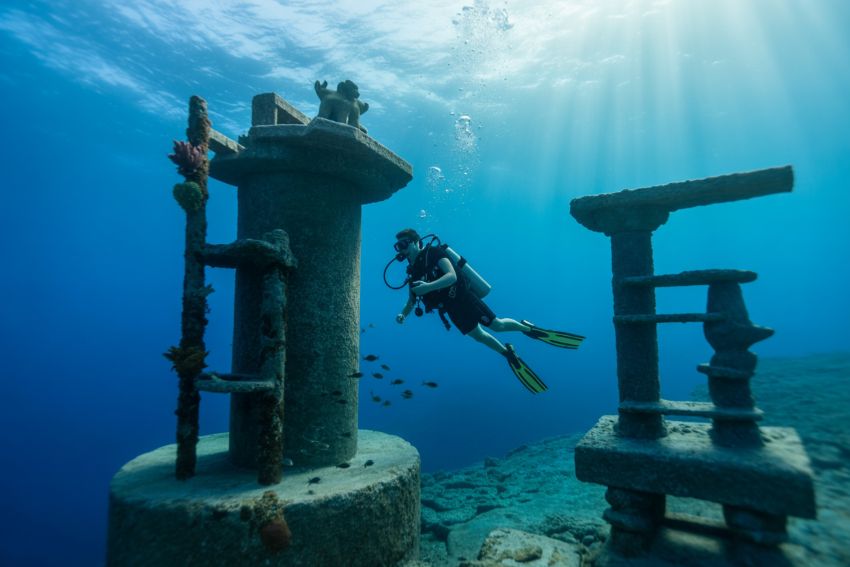
Greece is witnessing the emergence of a new tourism era that is taking place underwater rather than on land. The serene, azure waters that have traditionally encircled the nation’s islands and coastlines are now serving as entry points for new types of exploration. As part of a national initiative to boost diving tourism, ancient shipwrecks, coral gardens, and artificial underwater attractions are being unveiled beneath the surface.
This type of travel is being developed as a means of integrating environmental stewardship, culture, and sport. Visitors are being urged to see beyond Greece’s conventional image of sun and sand and explore an invisible realm that links the nation’s ecology and history. Once a specialized activity, diving tourism is now one of Greece’s most promising sustainable sectors.
Understanding diving tourism
Diving tourism is being defined as travel centred on underwater exploration. It allows visitors to experience coral reefs, shipwrecks, underwater museums, and purpose-built artificial reefs. Beyond adventure, it also supports education and conservation. By exploring under controlled conditions, divers are able to contribute to marine protection and gain awareness of ocean preservation.
In Greece, this approach is being supported by a unique mix of natural beauty and cultural wealth. The country has one of the longest coastlines in the world, stretching over 13,000 kilometres, and its waters are known for their clarity and calmness. Centuries of history rest beneath the surface — merchant vessels, ancient ports, and wartime wrecks that serve as underwater archives of Greek civilisation. Each dive is being designed to be more than a sport; it becomes an encounter with history and nature alike.
Greece’s seas are now being promoted as “living museums”. The intention is that every reef, every wreck, and every dive park will tell its own story. This perspective is being shaped to attract not only experienced divers but also newcomers who wish to experience the sea in a new way.
Government strategy and investments
The Greek Ministry of Tourism has made diving tourism a strategic priority. Twelve investment projects have been approved as part of a national initiative to build new underwater attractions, improve existing diving parks, and modernise marine sports facilities. These investments are being distributed across various municipalities and private enterprises, creating a foundation for diving tourism across several regions.
Among the most notable investments are those in Crete, Delphi, and Kos. In Crete, artificial underwater attractions are being developed in locations such as Tsoutsouros Bay, Bali Bay, and Agia Galini. Each site is being planned to combine safe diving experiences with ecological and cultural awareness. The projects in Apokoronas and Hersonissos are aimed at expanding established diving parks with upgraded equipment and guided routes.
Similar efforts are being applied in Delphi, where underwater attractions are being prepared in the coastal area of Genimakia, and in Kos, where private enterprises are enhancing diving infrastructure at Psalidi. Smaller municipalities, including Gortyna, Sitia, Viannos, Malevizi, and Agios Vasileios, are also participating in the initiative.
Together, these projects represent an investment of several million euros. They are designed to strengthen the country’s position as a year-round diving destination and to draw attention to less-visited coastal areas.
Sustainability and environmental balance
Sustainability is being placed at the core of Greece’s diving tourism plan. The government’s long-term tourism strategy emphasises eco-friendly development that protects marine ecosystems while supporting local economies. Artificial reefs and controlled diving parks are being established to guide visitors toward designated zones, reducing stress on natural habitats.
These artificial structures are being built from safe, durable materials designed to attract marine life. Over time, they become habitats for fish, coral, and other species, turning once-empty seabeds into thriving underwater ecosystems. The balance between preservation and recreation is being carefully maintained, ensuring that exploration does not come at the expense of environmental integrity.
In addition, the programme is creating opportunities for research and education. Marine biologists and archaeologists are being engaged to monitor the effects of diving activities and to document underwater heritage. Public awareness campaigns are being run to teach divers about responsible behaviour in marine environments, including waste reduction and respect for protected species.
Local and economic impact
Beyond environmental benefits, the expansion of diving tourism is being used as a tool for regional development. Many of the approved projects are located in coastal areas that rely heavily on seasonal visitors. By establishing diving facilities that can operate year-round, local economies are being given new life outside the summer months.
New businesses, from dive centres to eco-lodges, are being encouraged to open near the new attractions. Training programmes for diving instructors, guides, and boat operators are also being planned. Local communities are being drawn into the process, ensuring that the economic benefits are shared.
Restaurants, hotels, and transport services are expected to see steady growth as a result of these new activities. The inclusion of both public and private funding has made the initiative a shared effort, blending state planning with entrepreneurial participation.
Challenges and outlook
Although the strategy is ambitious, the implementation process carries challenges. Deadlines are tight for some municipalities, and careful coordination is being required to complete construction within the approved time frames. Maintenance of underwater attractions and ongoing monitoring of ecological impact are being recognised as essential for long-term success.
Still, the overall vision remains clear. Greece aims to place itself among the top diving destinations of the Mediterranean. With its combination of natural beauty, historical depth, and environmental responsibility, the country is positioning itself as a model for sustainable marine tourism.
A new perspective on Greece
Greece’s new underwater attractions promise visitors a whole new perspective on the nation. A new type of explorer is being drawn to the same seas that once carried heroes and merchants from antiquity. In Greece, diving is portrayed as a voyage through nature, culture, and time as well as a sport.
Greece is beginning a new chapter in its tourism history by making investments in the depths. Its coastlines are now gateways to a living world below, not merely places to be appreciated from above. Every dive offers guests the opportunity to observe the present, establish a connection with the past, and contribute to preserving the sea’s future.
