
Europe is navigating one of the most turbulent security environments since the end of the Cold War. In this context, Norway emerges as a key actor in the Northern Flank, as well as a relevant partner for European security, with policies that could be particularly interesting for Spain and other Southern European states (such as the idea of Total Defence) as well as notable convergences with Spain, like its stance on Gaza and Israel, and areas where priorities in security and defence could be better aligned.
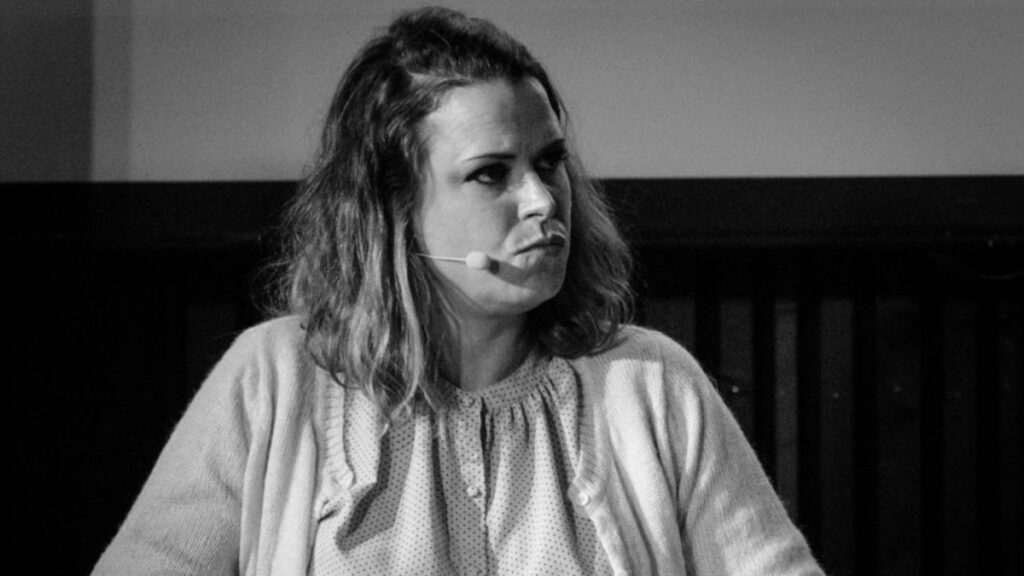
This conversation with Hedda Langemyr, Director of UTSYN – Centre for Security and Total Defence, the Norwegian think tank specialising in security and defence policy, took place on 17th September during the conference NATO in the Nordics, where I participated. A few days later, a series of drone incidents over Oslo raised once again questions about the resilience of Norwegian society and the country’s preparedness for this kind of threats, as it did for the rest of the European countries affected by this crisis.
From a Norwegian perspective, how would you assess Europe’s current security environment? How does Norway perceive its position within this shifting landscape?
Europe is in a long-term state of instability. The war in Ukraine, renewed great-power rivalry, and the spread of hybrid operations have reshaped our sense of security. For Norway, this means living as a frontline ally in the North: a NATO member bordering Russia, responsible for the North Atlantic Sea lanes and the early-warning zone around the Arctic. Our strategic posture is both deterrence and resilience: strengthening military capabilities through the new Long-Term Defence Plan, while scaling up civil preparedness at home. In short, Norway sees its role as a stabilising force in an increasingly unstable environment.
Much of today’s debate focuses on NATO’s Northern and Eastern flanks. How does Norway perceive the balance of threats and priorities between them?
For us, the Northern and Eastern flanks are deeply interconnected. The war in Ukraine shapes NATO’s tempo and cohesion, but the Northern flank —with the Arctic and North Atlantic— remains essential for strategic warning and deterrence.
En ese sentido, la postura militar de Rusia en la península de Kola, incluidos sus activos nucleares, mantiene al Alto Norte [nombre que se da a las regiones noruegas cercanas a rusia] como un elemento crítico para la seguridad europea. El Ártico vuelve a ser un teatro de interés estratégico. Al mismo tiempo, Svalbard [península noruega en el Ártico] es jurídicamente claro, pero políticamente sensible: cualquier paso en falso puede ser explotado. Noruega se mantiene comprometida con la estabilidad y el derecho internacional, pero observamos más actividad tanto de Rusia como de Estados Unidos en la región.
“U.S. ambitions in Greenland show how global powers are re-engaging in the Arctic: Norway’s role is supportive rather than operational, contributing with intelligence and Arctic expertise”
U.S. ambitions in Greenland show how global powers are re-engaging in the Arctic. Norway and Denmark maintain close defence and Arctic coordination within both NATO and the Nordic framework (NORDEFCO). While Norway doesn’t have direct military responsibilities or a bilateral defence agreement concerning Greenland, there is practical cooperation in Arctic surveillance, search and rescue, and maritime domain awareness through NATO and multilateral channels. For instance, Norwegian and Danish defence officials meet regularly in the Nordic defence cooperation and the Arctic forces roundtable, where Greenland and the North Atlantic are recurring agenda points. Norway’s role is supportive rather than operational, contributing intelligence, Arctic expertise, and coordination that indirectly strengthens Denmark’s situational awareness around Greenland.
For Norway, this reinforces the need for a balanced approach: presence, predictability, and diplomacy, backed by credible defence and close coordination with our Nordic neighbours. With Finland and Sweden now full NATO members, this entire region is being integrated into one operational framework. This is a posture that Norway has long advocated.

U.S. Vice President JD Vance and his wife during their visit to Greenland. Foto: JD Vance on Twitter
Norway has also long promoted the concept of “Total Defence.” What does it mean in practice today?
Total Defence is the coordinated interaction between civilian and military resources in peace, crisis, and war. It’s not just a doctrine, it’s a mindset. In practice, this means strong cooperation between the Armed Forces, national government, local municipalities, private companies, and citizens. Exercises, inter-sectoral planning, and communication strategies are all part of this. The goal is simple: to make society resilient enough to function even under stress. For instance, the Directorate for Civil Protection now recommends that every household be prepared for at least one week of self-sufficiency. This is a sign of how the concept is being translated into everyday life.
There is a strong political and expert consensus around Total Defence, but public understanding varies. The war in Ukraine and the pandemic have, however, increased awareness. People realise that security is not something abstract, but it affects energy, food, digital systems, and democracy itself. Government campaigns and civil-society initiatives are now helping to anchor this mindset more broadly across society. Resilience begins with trust, and that trust is still a national strength in Norway.
There is often talk of a trade-off between NATO’s Southern and Northern flanks. How can Spain contribute to strengthening security in the North?
It doesn’t have to be a trade-off. The challenges are different but complementary. Spain can contribute in three main ways, I think: Through maritime surveillance and anti-submarine operations in the North Atlantic, linking the southern and northern maritime domains; By sharing air and missile defence expertise, especially against drones and hybrid aerial threats; Through industrial and innovation cooperation, particularly in defence technology and ammunition production.
“Spain can contribute through maritime surveillance: a stronger northern flank benefits all allies, including those in the southern arc”
A stronger Northern Flank ultimately benefits all allies, including those on the southern rim. Norway’s security is not defined by geography alone. It is defined by our ability to stay cohesive, resilient, and credible. At home and within NATO. The North and South of Europe are not opposites; they are parts of the same “security fabric”.
And conversely, how could Norway and the Nordics support Spain and southern Europe regarding the Mediterranean and Sahel?
Norway and the Nordic countries can contribute with niche capabilities as well: maritime security, mine clearance, and crisis management. For example, Norwegian officers have contributed to Operation Irini (monitoring the arms embargo on Libya) and to MINUSMA in Mali before its closure. Another example is how, through the Norwegian Agency for Development Cooperation (NORAD) and the Ministry of Foreign Affairs, Norway has funded stabilization efforts, coastal security programs, and resilience projects in Tunisia and Morocco, often in coordination with the EU.
But perhaps even more relevant is our experience with hybrid resilience: protecting critical infrastructure, countering disinformation, and coordinating civil and military preparedness. These are transferable lessons that could be adapted to southern contexts, where the challenges blend security, migration, and governance.
And regarding this aforementioned “Total Defence” mindset, do you think it could be relevant or adaptable to Spain’s national security policy?
Absolutely. Civil preparedness is one of Norway’s strongest assets and one that could be highly relevant for Spain. This model could inspire Spanish resilience planning in areas such as crisis communication, critical infrastructure protection, and public awareness campaigns. Spain’s experience with civil-protection systems (for wildfires, migration flows, or health crises) gives a good foundation; integrating that into a broader national security framework — as Norway has done — would strengthen collective resilience against hybrid threats and emergencies.
On a global scale, the war in Gaza has shown a convergence between Spain and Norway. How is this issue, this conflict, perceived in Norway?
Norway’s approach is anchored in international law and humanitarian principles. Alongside Spain and Ireland, Norway recognised the State of Palestine in 2024; in our case, a decision rooted in decades of engagement in the peace process. The aim was not to take sides, but to reaffirm the need for a negotiated two-state solution and lasting peace. Domestically, the decision to recognise Palestine was debated. But the mainstream parties (Labour, Centre, Socialist Left, and the Christian Democrats) supported it, while the Conservatives and Progress Party expressed reservations about timing rather than principle.
“Public opinion largely backs Norway’s humanitarian line, seeing it as a continuation of Norway’s long-standing role as a peace facilitator”
Public opinion largely backs Norway’s humanitarian line, seeing it as a continuation of Norway’s long-standing role as a peace facilitator. So, while there’s nuance, the position is broadly supported and not as polarising in the way it can be elsewhere in Europe. The discourse however is very sharp, and the situation is also increasing the risk of terror and violent political actions both in Norway and abroad.
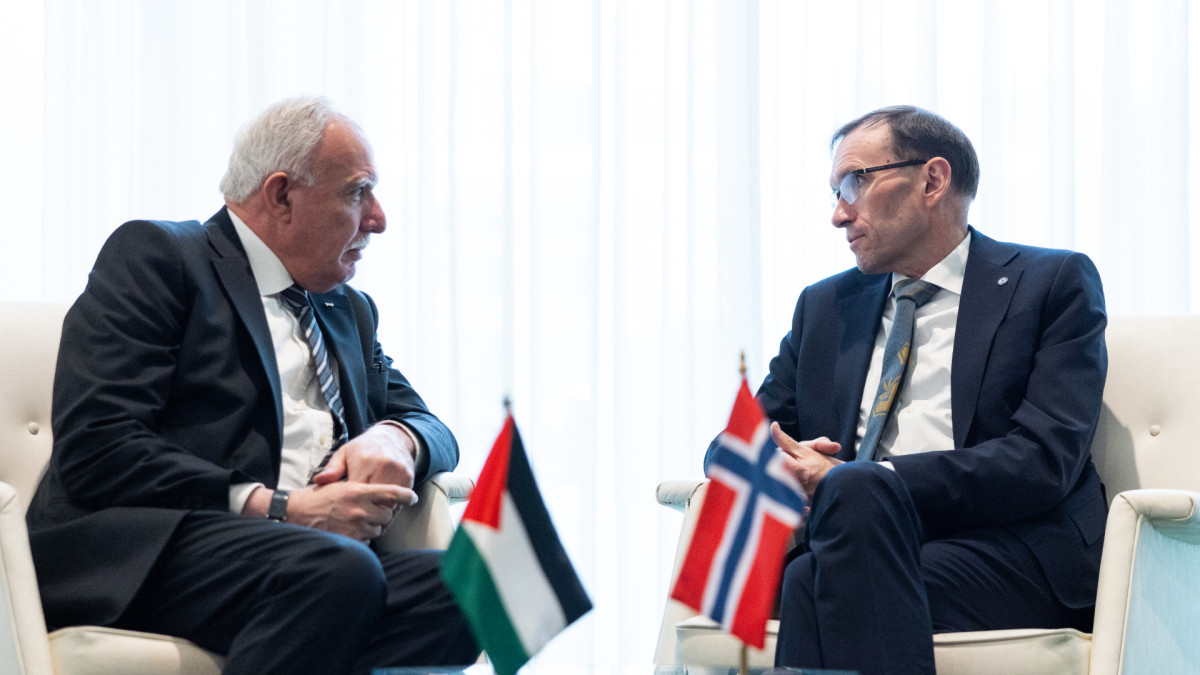
The foreign ministers of Norway (Espen Barth Eide) and Palestine (Riyad al-Maliki). Foto: Ministry of Foreign Affairs of Norway
UTSYN has done considerable work on disinformation. How serious is this problem in Norway?
It is serious and evolving. We see ongoing influence operations from Russia, China, and Iran using online manipulation, AI-generated content, and polarising narratives around energy, migration, and indigenous rights. Public institutions have responded with new strategies on information resilience, and the security services (National Security Authority —responsible for cyber and information security—, Police Security Service, Intelligence Service…) now highlight influence operations in their annual threat assessments.
Therefore, civil-society actors play a vital role in bridging the gap between analysis and public understanding. Fact-checking platforms like Faktisk and research environments like the Norwegian Defence Research Establishment or UTSYN are some examples.
Finally, what role do you envision for think tanks like UTSYN, and for analytical platforms such as Agenda Pública, in fostering a broader and more informed societal understanding of security and resilience?
In a time of overlapping crises (war, hybrid threats, political fragmentation…) societies need translation mechanisms between experts, policymakers, and citizens. That is where think tanks like UTSYN come in: we interpret complex security assessments into actionable knowledge for civil preparedness, local authorities, and media. We also build trust and foster informed dialogue, countering polarisation with facts and context.
Thank you. In these times, it is critical to maintain a North-South European dialogue.