
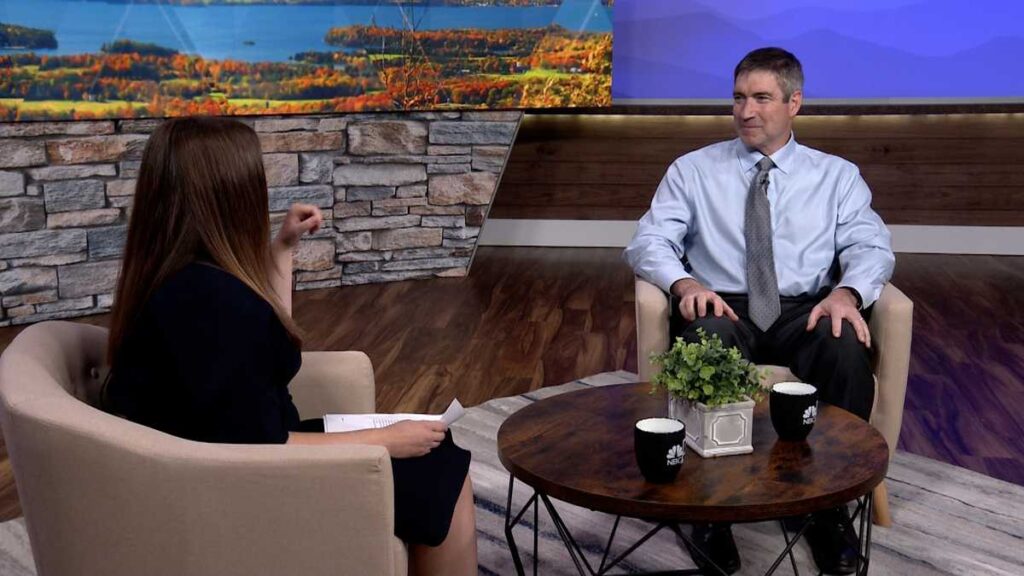
NBC5 In Depth: Interview with UVM Health Network’s new interim CEO, Dr. Stephen Leffler
Leffler took over his new role in October
Doctor Steven Leffler, thank you so much for taking the time to be with us this morning. I really appreciate it. Thanks, Liz. Happy to be here. So you have *** brand new job at the UVM Health Network, president and CEO. How are things going? I mean, I know it’s only been what, *** month or so? Yes, I actually officially started last Wednesday, so it’s been really busy. Um, it’s going pretty well. The important thing to remember is that. The important stuff patient care, patients coming to our clinics, our ERs, babies being born, that’s all going on normally this is behind the scenes changes that we’re managing, but it’s going really well. Good, yeah, I know you the health network has been in the news *** little bit this month just with *** little. Bit of restructuring that’s happening, especially at the executive level, can you talk *** little bit about that? I know obviously budgets cutting costs are *** big concern, so this is *** way that the health network is addressing that. Yes, we’re trying to be as lean, as efficient as we possibly can. The changes that we’re making will help. Make health care as affordable as possible so we’re making really tough decisions we made *** bunch of them over the past couple weeks, ways to try and make sure that we can have as much decision making as close to the bedside as possible. And make sure that we’re as affordable as we can be. Yeah, I know too over the summertime this is before you took over in this role. I think it was 77 staff members were laid off again as part of cost saving measures. Um, what is the, the mood at the hospital? Do you think that there are still *** lot of questions about what’s next, knowing that the health network needs to be budget conscious? I mean anytime you make *** leadership change like we’re making right now, it makes people anxious and so we have to do our best to reassure people um we’ve committed that for 2026 we’re gonna have no decrease in patient care services, um, but in the same line of thinking in 2026 we have to make sure that um every position that we have is adding value to patient care and so I think people are um. *** little anxious, excited for some change. I think people are ready to see something *** little different. We’ve taken *** slight course correction here and people are all working hard, taking care of patients and watching what comes, and we’re doing our best to keep people up to date with information as quick as we know it. Uh, on the topic of patient care too, I’ve been reading *** lot about the Health that we’re preparing for today. Um, it was talked about that the health network is gonna be *** little bit more efficient when it comes to patient care, just trying to get patients maybe discharged or, you know, like moving people along. Can you just talk about maybe some of that as an ER doctor you have experience working with patients so just. Talking about how to make sure the staff is being as efficient as possible as well. Yeah, so, um, it’s, it’s no surprise to anyone. We have significant challenges in access. We have access challenges for some of our clinics, our specialists, and oftentimes at the medical center, all of our beds are full. Um, we were completely full last night. Our ER had people unfortunately staying overnight in the ER that needed to go upstairs and so making sure people can get in the hospital when they need to. Get discharged as soon as they’re ready for the next stage of their care. Hopefully it’s back to home, but it’s not to *** nursing home or back to another hospital, and that makes sense. Make sure there’s access for other people. So in 25, the medical center did *** huge amount of work on making our length of stay, how long you stay in the hospital, um, exactly right, not too short because if it’s too short, you might have to come back and not too long. And at the medical center and across our network we’re really focused right now on making sure that people get in at the right time as best we can, opening up access where we can and then having people go to the next stage of care, whatever that may be as efficient as possible. There’s national benchmarks we use on that and we’re comparing ourselves to those benchmarks and in many areas doing as well as national in some places where we have challenges we’re working on it. I know it’s really hard to run *** hospital network really anywhere in the country, especially in Vermont we have an aging population, um, you know, when you think about where the health network is going in the next 5 years from now, um, what are some of the challenges that you see? What are some things you’re excited about? Yeah, so if you walked around the hospital with me today or any of our clinics, the first thing they would tell you is we don’t have enough space, we’re really space constrained and that has *** big impact on how quickly we can get people in. And so we’re gonna really, really focus on 3 big things for the next year and probably for all the years I’m in this role. First off is high quality care. High quality care is what we commit to. We’re gonna do our very best for every single patient that means, um, preventing every complication we possibly can and that everyone should expect to get the best possible care. So that’s gonna lead everything that we do. Next is access. We just talked about this. We have access challenges across Vermont and actually across the United States, but we’re doing *** lot of work right now within the network within our doctors and clinics and staff to make sure that we can improve access and over this year you’re gonna see more opportunity to see *** primary care doctor or maybe get your mammogram *** little quicker or new ways to try and get imaging or labs that’ll make it so people can get in *** little quicker. We know how important that is and actually getting people timely care. Actually it’s better for them, keeps them healthier, and keeps them maybe out of the ER or needing an admission. And the last, the third thing we’re really gonna be focused on is affordability. How can we deliver care as cheaply as possible? How can we keep people as healthy as possible out of the ER when they don’t need to be there, not admitted in their homes and and thriving, because that’s really what Vermont needs. We need to have his people be *** little healthier than they are right now. Um, so that they need less admissions to the hospital, less readmissions, *** little less ER visits will really make *** big difference for the crisis that Vermont’s in right now around affordability of health care. Yeah, absolutely. I know *** lot of people because of the cost of health care, you know, *** lot of people maybe don’t get to the doctor as often as they should. It’s *** complex situation. It’s obviously not the health network’s role to. You know, name those prices for insurance rates or anything, but um I guess in terms of *** message to patients about maybe getting to the doctor, being proactive with your care, what’s your message to people? Yeah, so we want people to get timely care. We want everybody to have *** primary care provider. We opened up about 3000 new primary care openings in 25. We have more coming in 26. The challenge is as fast as we open up more spots, there’s even more people who need them. So we’re sort of always playing catch up, um, but. I want people to hear this. Our goal is to get you good access to care, to have you seen when you need to be seen, to get you in with specialists, and we’re doing so much right now to make it better. Um, it’s not going as fast as people would like, including me, but we are very focused on that right now. Yeah, I know in terms of um being budget conscious and you said, you know, space is tight at the hospital, you’ve had to maybe press pause on some infrastructure projects just to address more urgent needs, um, but. When you can resume maybe in the future, what are some infrastructure projects that you’d like to address at some of your facilities? So in the last couple of years we’ve done *** number of projects in the hospital to make spaces bigger. So the current ER that we use at the medical center was opened in 2006. I was running the ER when it opened, and that ER opened with 43 beds and we were seeing about 36,000 patients. And in the same size space, it’s not really bigger, we’re seeing 75,000 patients now. And so over the past year with some philanthropy with some from donation money, we’ve actually made *** pediatric space and carved out some other space and done some growth in the ER. It’s not enough, but that’s helped. We’ve done some work this year on the NICU, also *** very small space that we really would love to be bigger. And we’ve done some work at some of our clinics basically to add patient capacity. Our ask of our clinics this year was what can we do in the space that you have to see more patients every day? We have some bigger projects right now that um we know Vermont needs or put on hold right now we’re pausing on our outpatient surgery center. We know we ultimately need *** solution for to offer more outpatient surgery, um, but right now with our pressures on the budget and affordability and capital, the dollars that we put aside for big projects like that. We need to pause that right now. Yeah, absolutely. I do wanna ask *** little bit about the Green Mountain Care board um this year they were very critical with how money was being spent between Vermont and New York hospitals can you just talk *** little bit more about that? Obviously our New York hospitals are very important resources and they’re important to the health network as well. I think first off it’s important to say that the Green Mountain Care Board and UM Health have the same objectives. We all want high quality care. We want good access to care for Vermonters and patients in our region, and we want to have care be as affordable as possible. So it’s, I think it’s important to ground ourselves and that we’re trying for the same goals and what I would say is patients don’t recognize *** lake as *** barrier to where they’re gonna to get care. So people from upstate New York who need complex care. We are coming to Burlington to get that care. We need to be able to offer that to them. The network really functions as *** family and inside the network we occasionally have dollars move around um that’s good inside the family. I understand the Greenmount Care Board’s concerns and I’m very confident that we’re addressing them this year in *** way that’ll help um them understand that better and uh take some of that pressure off OK. I also wanted to ask you about recruitment and retention efforts. I know that um it’s an ongoing struggle again not just at UVM Health Network across the state in the country getting nurses nurses hiring nurses is it’s difficult, um, but in our region. And you know, with housing concerns, the health networks even built some housing for workforce, um, can you just talk about where we’re at and efforts to bring in more permanent workers? Yeah, so it’s important to remember that before the pandemic. For nursing, for example, we had an under 5% vacancy rate. We were doing really well, um, that was *** mixture of full-time employees and people that might work part time and we had *** very stable workforce and then when the pandemic hit across the country, um, many people decided to retire if their timing was right for that and then other people decided to be travelers because there was an opportunity to make more money and travel during that time. And at that time our vacancy rate went up almost to 20% for nursing. It was really difficult and we needed to use *** lot of travelers to make sure we could provide care. I’m very grateful they came here. It was expensive, but that’s what we needed to care for our patients. Um, as the pandemic has started to be in our rearview mirror, our, um. Vacancy rate for nursing has gone way down. We’re doing much better. Our turnover is back down well below national benchmarks and so we’re getting back. I don’t know if we’ll ever get totally back to where we were before the pandemic just because Vermonters are getting older and um so we have people that have retired and aren’t gonna come back, but in general we’re getting pretty close, so we’re proud of where we’re at right now for um. Our vacancy rate for our retention rates, it always could be better. We’re extremely focused on that right now. We have big programs to make sure that we’re uh um an attractive employer that we have housing for people who might need it. We have some childcare now we know some of our um. uh providers or patients I’m sorry, parents, and so having that ability to have *** daycare that kind of makes uh works for *** health care provider is different than some other ones and we’re very focused right now on how to make sure that we can provide what people need to work in *** difficult job, work in healthcare, yeah, odd hours and all those things. Yes, well, I do wanna ask you, we have time for one more question. Some big news, uh, this week for the Health Network, uh, biggest donation yet. Talk *** little bit about what’s happened. This is so exciting. So, uh, we have been chosen to be one of the Galasano Children’s Hospitals, the UVM Health. Network UI Health received *** $25 million donation from the Gaizano Foundation. We’re one of 8 hospitals that received an award, and this award’s gonna improve the care we deliver in Burlington and across our region. It’s gonna improve access clinic space. It’s gonna be able to fund programs that are um essential to our children and families. We’re so excited. Yeah, it’s not. Every day that something like this happens, so just to understand the magnitude of *** donation of this size, it’s incredible. It’s so incredible. It’s, as you said, it’s our biggest donation ever. We’re so proud to be *** Galassa Children’s Hospital, and we’ll be going, we’ll be receiving the award with 8 other hospitals, and that network is gonna work together to improve the care of children in our region. OK, exciting news. Thank you, Doctor Loeffler, for being here and for your time. Thank you Liz.
NBC5 In Depth: Interview with UVM Health Network’s new interim CEO, Dr. Stephen Leffler
Leffler took over his new role in October

There are some big changes coming to our region’s largest hospital system, which is the University of Vermont Health Network.Just a few weeks ago, Dr. Stephen Leffler took over as interim President & CEO. It comes after Dr. Sunny Eappen told the board in September that he no longer believed he was the right fit in the role.Eappen oversaw a year of layoffs and other cuts in an effort to save money. NBC5’s Liz Strzepa sat down with Dr. Leffler as he takes over in his new role.He’s already made a number of changes to cut costs and make the network more efficient. Learn more by watching the full interview above.
There are some big changes coming to our region’s largest hospital system, which is the University of Vermont Health Network.
Just a few weeks ago, Dr. Stephen Leffler took over as interim President & CEO.
It comes after Dr. Sunny Eappen told the board in September that he no longer believed he was the right fit in the role.
Eappen oversaw a year of layoffs and other cuts in an effort to save money.
NBC5’s Liz Strzepa sat down with Dr. Leffler as he takes over in his new role.
He’s already made a number of changes to cut costs and make the network more efficient. Learn more by watching the full interview above.