
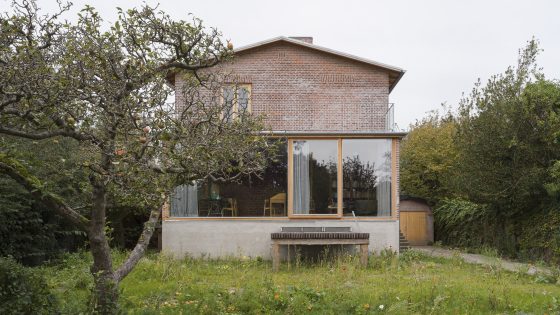
You might think that Denmark is well ahead of the game when it comes to material reuse. And in many ways, it is. Yet this is a remarkably recent trend. As Ellen Peirson notes in her review of Realdania, despite a strong national commitment to circular economy, it is only since 2023 that mandatory policies for sustainable construction have come in, requiring life-cycle assessments and promoting reuse.
And while it is being performatively platformed, it’s also hardly a uniquely Danish story. Across Europe, similar conversations have been unfolding for years. But what distinguishes the Danish approach is how rapidly it has been formalised and publicised – and with such ‘Japandi’ levels of aesthetics.
What’s happening in Denmark is a recalibration. Architects have much more value than in the UK (‘big ideas’ are more respected) and there is a larger emphasis on collaboration across disciplines and throughout the entire construction process – whether it’s using ‘biogenic’ materials or questioning whether a new building is needed at all.
The ‘no-build’ movement gaining ground in the country may not easily translate to the UK, where the housing crisis demands continued construction (unlike Denmark, where 95 per cent of its required housing is already built), but it points to a culture willing to pause, slow down and rethink process (see Copenhagen Architecture Biennial review). For them, it’s all about less waste, more repair and more maintenance. By contrast, our own procurement models, slow policy uptake and lack of infrastructure for change, as well as conservatism, too often inhibit the collaboration required for reuse.
A prime example is Thoravej 29 by pihlmann architects – a practice that is certainly having a moment following the success of its Venice Biennale national pavilion earlier this year. This transformation of a 1960s factory has achieved a 90 per cent reduction in waste, and recycled 95 per cent of its materials. It refreshingly shows what can happen when reuse is taken seriously and is worked to that level of detail.
Meanwhile, practices such as Lendager – long advocates of material reuse, salvage and reclamation – demonstrate what can happen when architecture engages early with constructional realities rather than staying purely experimental. And they are bringing clients with them – clients open to learning and taking risks.
Denmark may not have led the reuse conversation initially, but it is certainly making up for lost time, and this is demonstrated by many of the projects showcased below. And all of them, whether still on the drawing board or recently completed, new-build or retrofit, show how existing materials we have to hand, in current building stock or bio-based, can be beautiful.
The Denmark issue is out now. Subscribers can read the digital edition here, or copies of the printed magazine can be purchased here. An AJ subscription is better value – click here to view our packages.
Green infrastructure
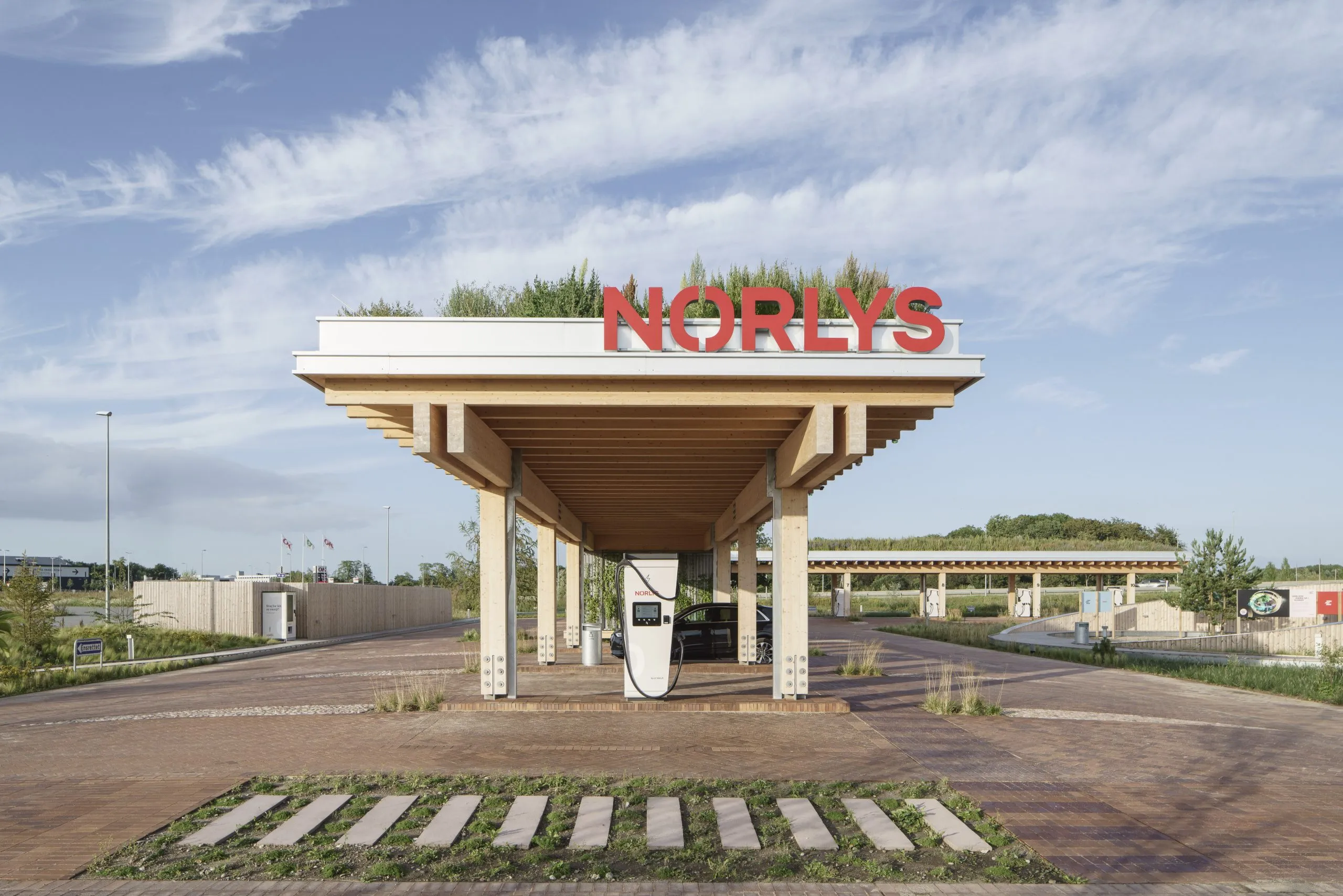
Norlys Charging Parks by ADEPT
Credit: Morten Aagaard Krogh
Designed for Danish energy giant Norlys, this EV charging ‘park’ is the first of a network that is opening around the country. The structure is designed for disassembly and flexibility so it can be customised to different locations. It consists of simple easily recognisable forms, details and elements: a timber frame with expressed construction detailing, and a green biodiverse roof. The latter, together with landscaping, makes up over 60 per cent of the site in area, while brick is used instead of asphalt for the driving surface. Specific charging parks will also incorporate self-service cafés and playgrounds.
Location Odense and various other locations | Start on site May 2023 (Odense) | Completion May 2024 (Odense), 2026 (rest) | Client Norlys | Construction cost Undisclosed
Retrofit
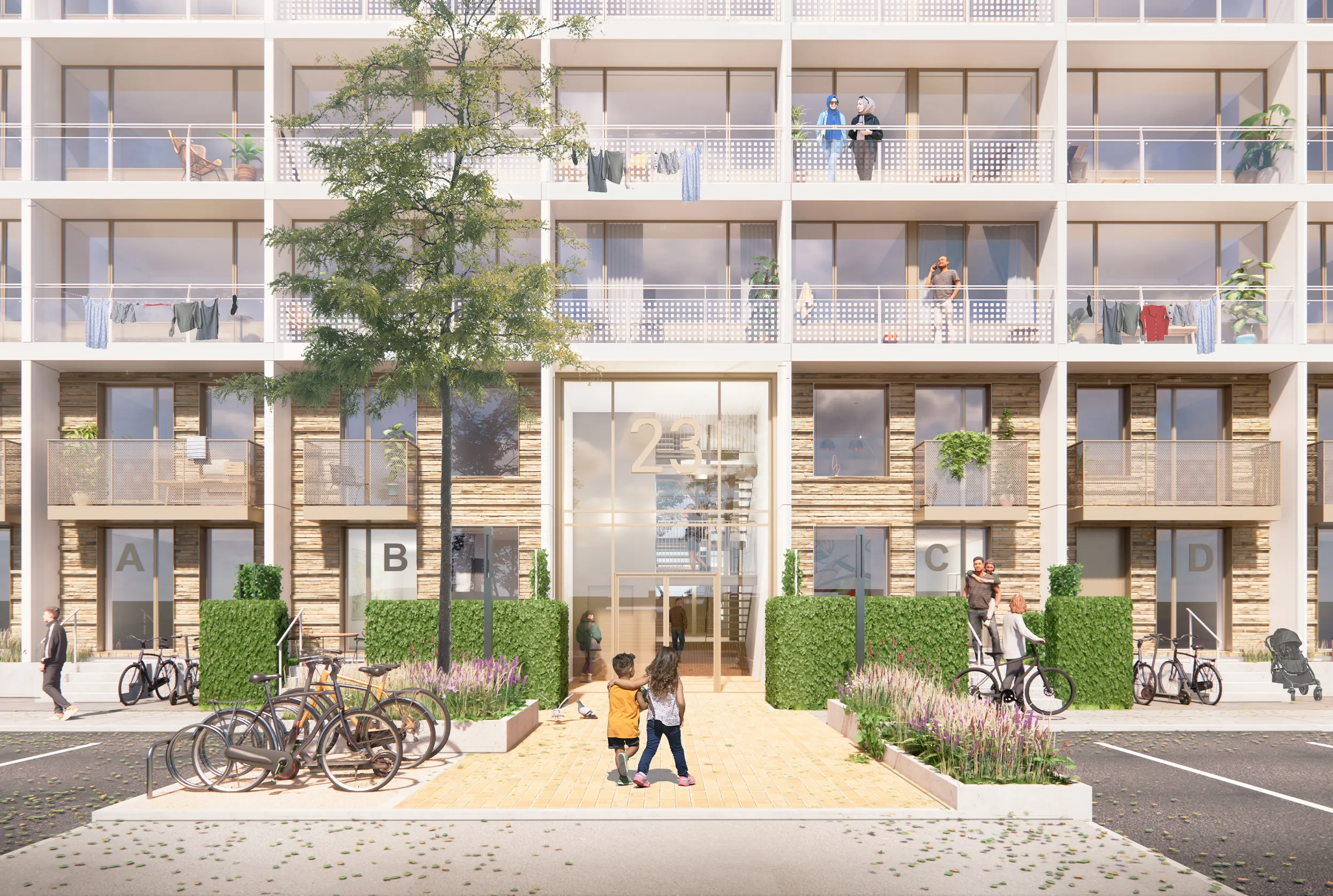
Brabrand Housing Association’s Department 4 by CF Møller Architects with TRANSFORM
Credit: CF Møller Architects
This ongoing project is upgrading and converting the existing apartments of Braband Housing Association’s Department 4 in Gellerup Park in Aarhus. Originally designed by Knud Blach Petersen between 1968 and 1972, Gellerupparken is Denmark’s largest and most well-known housing estate. It was initially perceived as having spacious intervals between buildings and facilities aimed at both residents and locals as part of the Gellerup Plan. Two of the high-rise blocks have already been transformed and now the final five blocks – containing 600 homes – will be increased to 750 homes.
Location Braband, Aarhus | Start on site 2024 | Predicted completion 2029 | Client Brabrand Boligforening (Braband Housing Association) | Construction cost Undisclosed
Masterplan
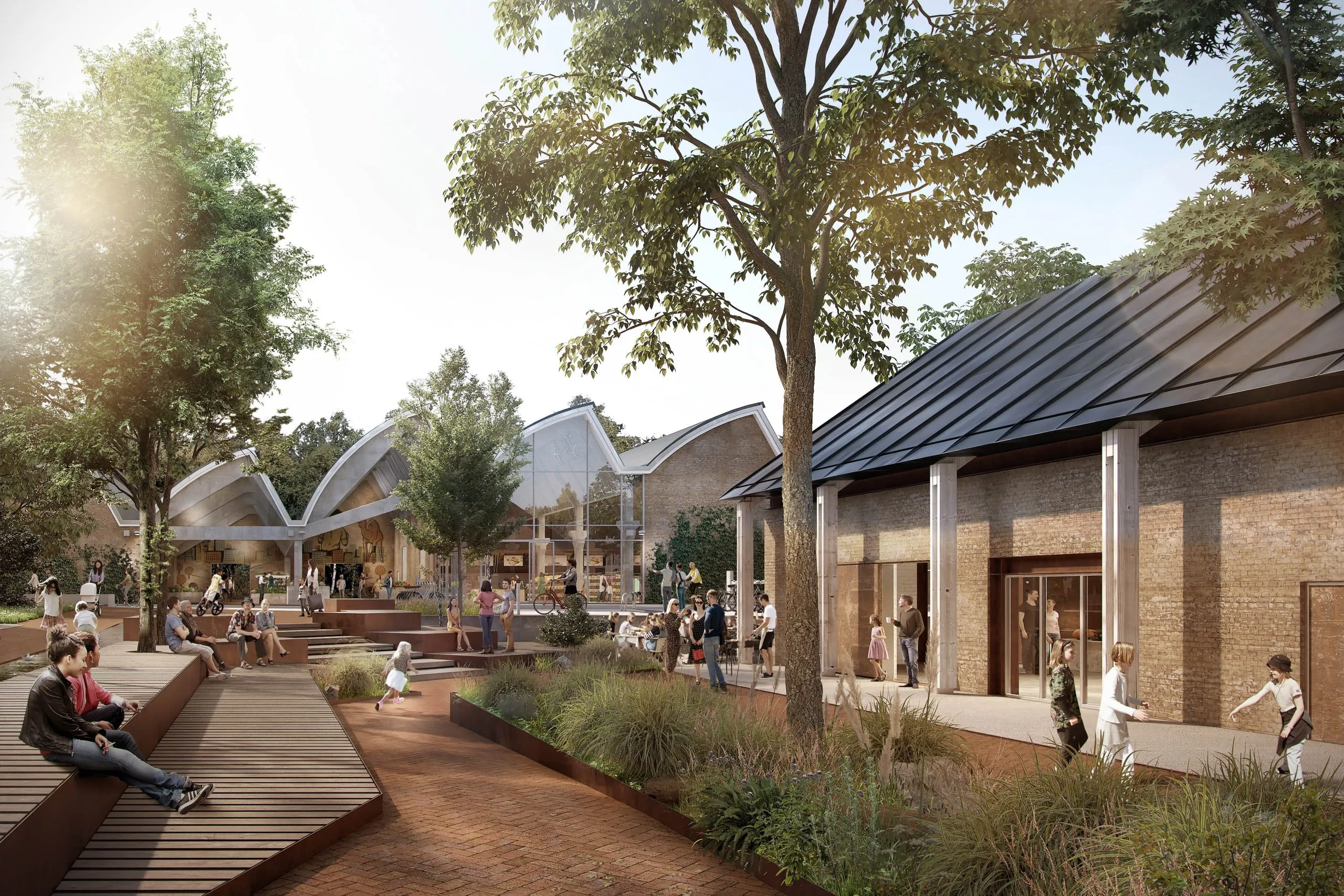
Dalum Paper Mill Masterplan by CF Møller Architects
Credit: Kumulus
This is a masterplan for the transformation of the historic Dalum Paper Mill in Odense. The new district is being built on the site of the former industrial plant that the paper factory once occupied, and, when completed, will be a convergence between picturesque landscapes and cultural heritage. The masterplan includes 450 homes of different typologies, including some apartments in the existing factory buildings. The oldest paper machine hall is being transformed into a community hub and orangery, while others will become a supermarket and later-living homes.
Location Odense | Start on site 2019 | Predicted completion 2026 | Client MT Højgaard | Construction cost £75.5 million
Local community
Horsevænget by Christensen & Co
Credit: Edit Studio
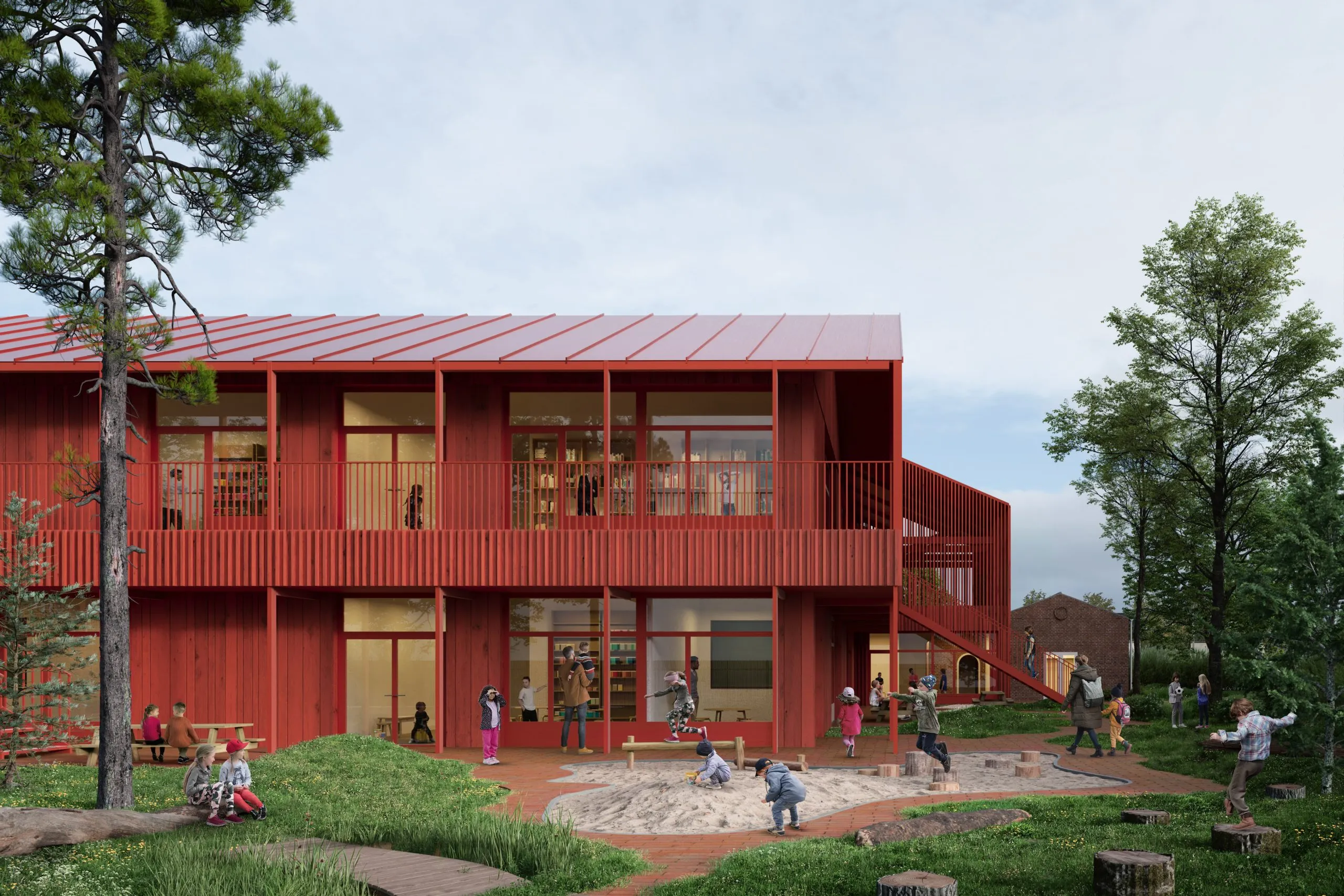
The retrofit of this daycare centre will update it with a series of new flexible spaces, intended to create a functional, adaptable and welcoming environment for its local community. The building will accommodate 128 children (48 infants and 80 preschoolers) along with 40 staff members. The overall structure is laid out along the L-shaped boundary of the site. Staff areas are housed in the existing building, while the new structure serves as the main space for children’s activities. Outdoor spaces combine grass, organically shaped sandboxes and wild biodiversity zones. Bricks from the demolished building are repurposed and integrated into the landscaping.
Location Rødovre | Predicted start on site February 2026 | Predicted completion March 2027 | Client Rødovre Municipality | Construction cost £6.6 million
Neighbourhood
Nordhavn by Cobe, Sleth and Polyform Architecture
Credit: Cobe
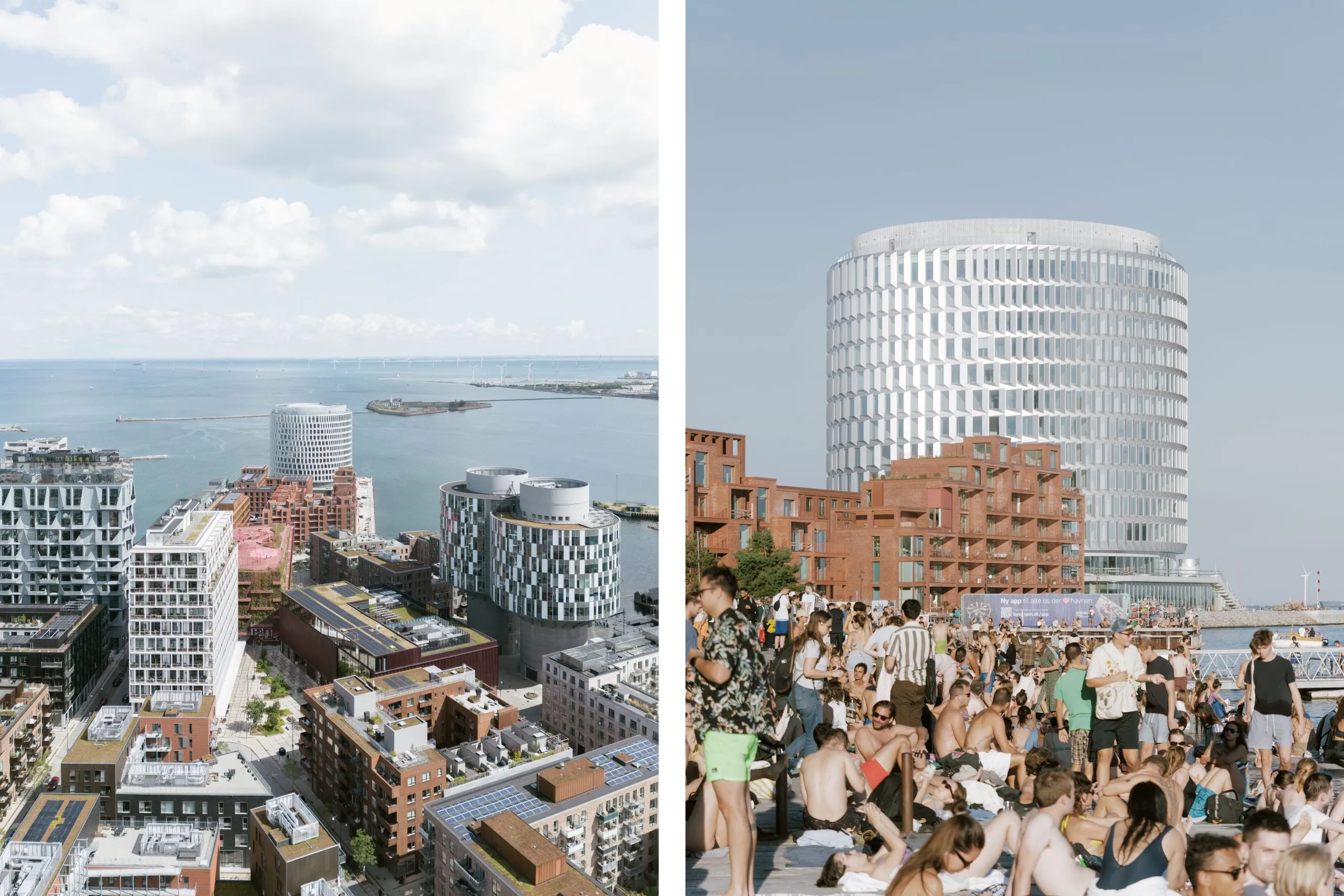
The largest regeneration plan in Scandinavia, Nordhavn is a 50-year development project transforming a former industrial harbour into an urban district. Once completed, it will accommodate 40,000 residents and provide workspace for another 40,000. Located on the Øresund coast, it has direct access to the water and offers recreational space and public facilities across a series of small islets linked by promenades and blue-green infrastructure. Existing industrial buildings have been repurposed and the whole development will be a five-minute city. So far, the inner harbour area (the red city), with 6,000 homes, has been completed.
Location Copenhagen | Start on site 2012 | Predicted completion 2058 | Client CPH City and Port Development | Construction cost Undisclosed
Local community
Our Place by Cobe, Reværk, Archival Studies, pihlmann architects, Rumgehør and Studio XYZ
Credit: Francisco Tirado
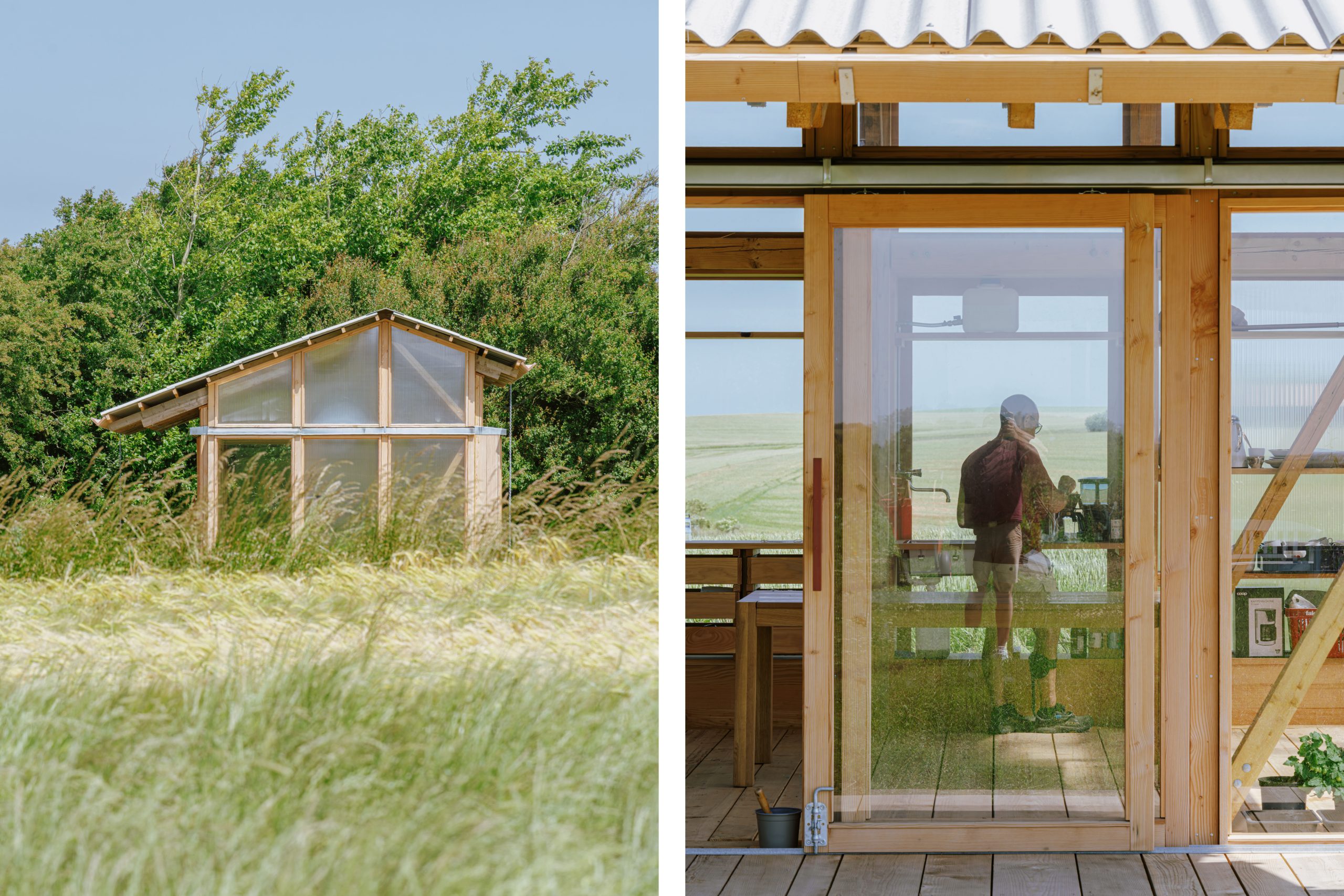
To celebrate the 25th anniversary of Danish philanthropic foundation Realdania, 150 social gathering spaces are being designed and offered free of charge to communities and associations across Denmark. The gathering spaces are all being conceived as simple pavilions designed to foster community while minimizing environmental impact by being constructed from recycled wood and biogenic materials. All feature distinctive gabled roofs – archetypal of Denmark’s vernacular – and are designed to serve a diverse range of communities offering four types with varied functions to suit different needs. These variations are expressed through a choice of cladding options, seating and storage elements. The pictured pavilion supports a local community centered around a shared kitchen garden in northern Denmark, creating space for growing and gathering.
Location Various locations | Start on site 2025 | Predicted completion 2026 | Client Realdania | Construction cost Undisclosed
Local community and health
Centre for Health by Dorte Mandrup
Credit: Adam Mørk
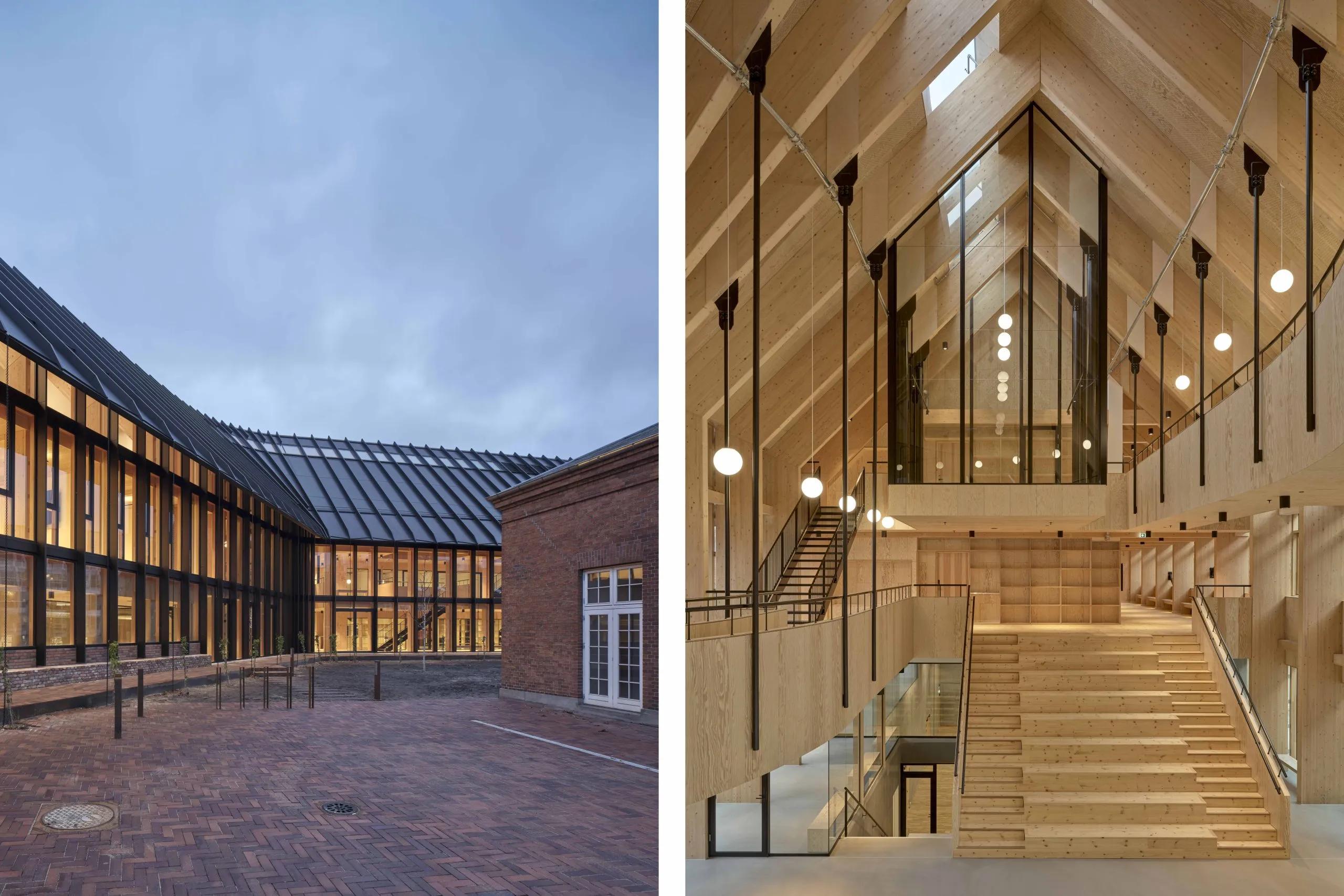
This new health centre in the neighbourhood De Gamles By (City of the Elderly) has been designed to promote physical activity, rehabilitation and improve quality of life for people struggling with lifestyle-related diseases. The building features a large central space formed by sculptural 15m-high timber arches. Here, exposed wooden cladding lines all walls and ceilings – some perforated for acoustic regulation – to provide comfort, enhance air quality and reduce stress. Other spaces include classrooms, areas for physical training, consultation rooms, meeting spaces and a kitchen for healthy cooking workshops. A large wooden staircase with integrated seating forms a meeting place in the central atrium where people can gather and interact.
Location Copenhagen | Start on site November 2022 | Completion November 2024 | Client Copenhagen Municipality | Construction cost Undisclosed
New build
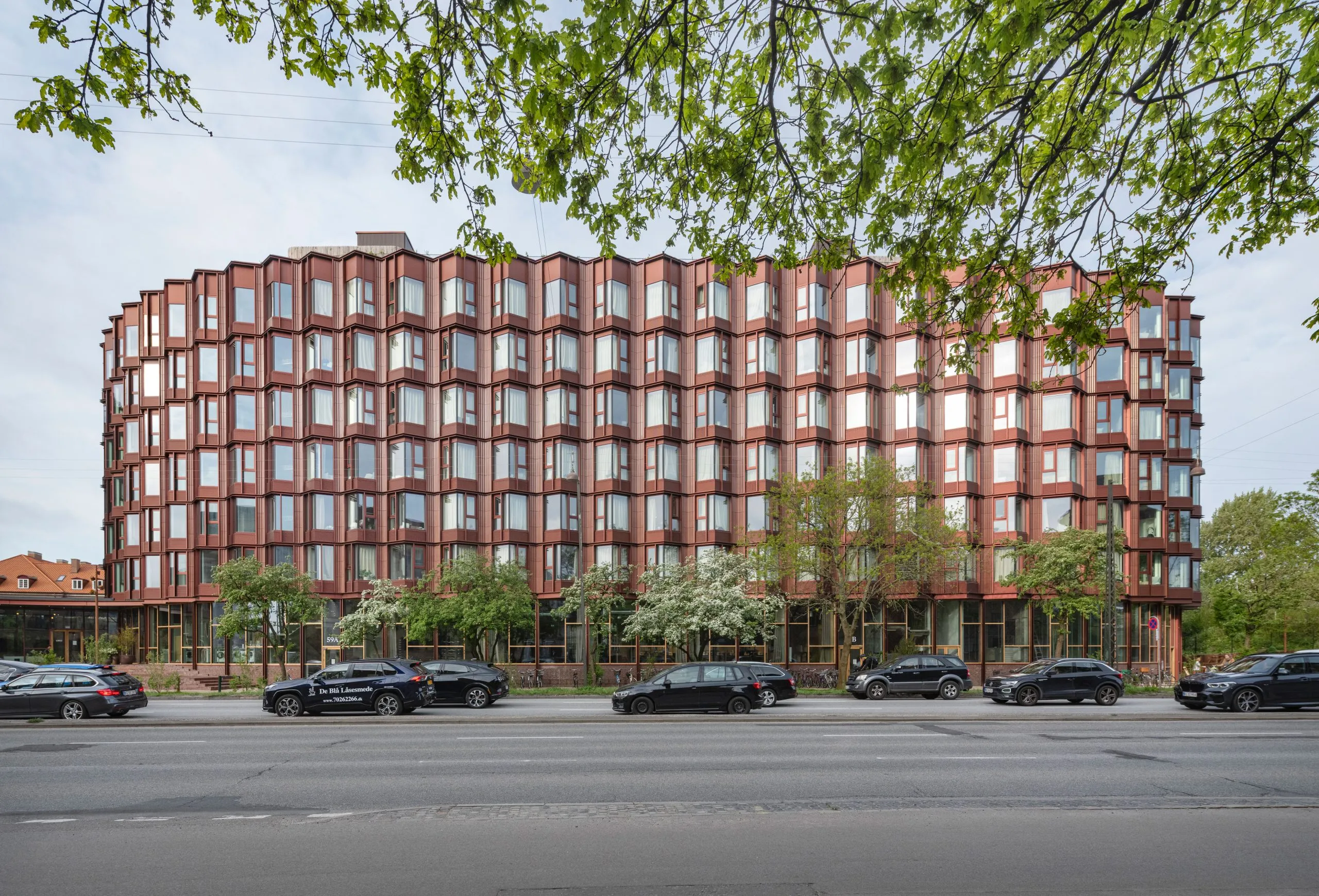
Harmonikahusene by EFFEKT Architects
Credit: Niels Nygaard
Nicknamed Harmonikahusene – which means accordion homes – this Umeus Noli student housing demonstrates how micro-living can be combined with higher architectural quality. Community is prioritised through courtyards, rooftop gardens, publicly accessible ground-floor amenities and surrounding green space to enhance connection to both the city and nature. Custom bay windows with integrated benches allow for social interaction in the compact units. The 700-student development is clad in red ceramic tiles, inspired by Frederiksberg’s urban fabric.
Location Copenhagen | Start on site 2017 | Completion 2024 | Client Nrep | Construction cost £58 million
Adaptive reuse
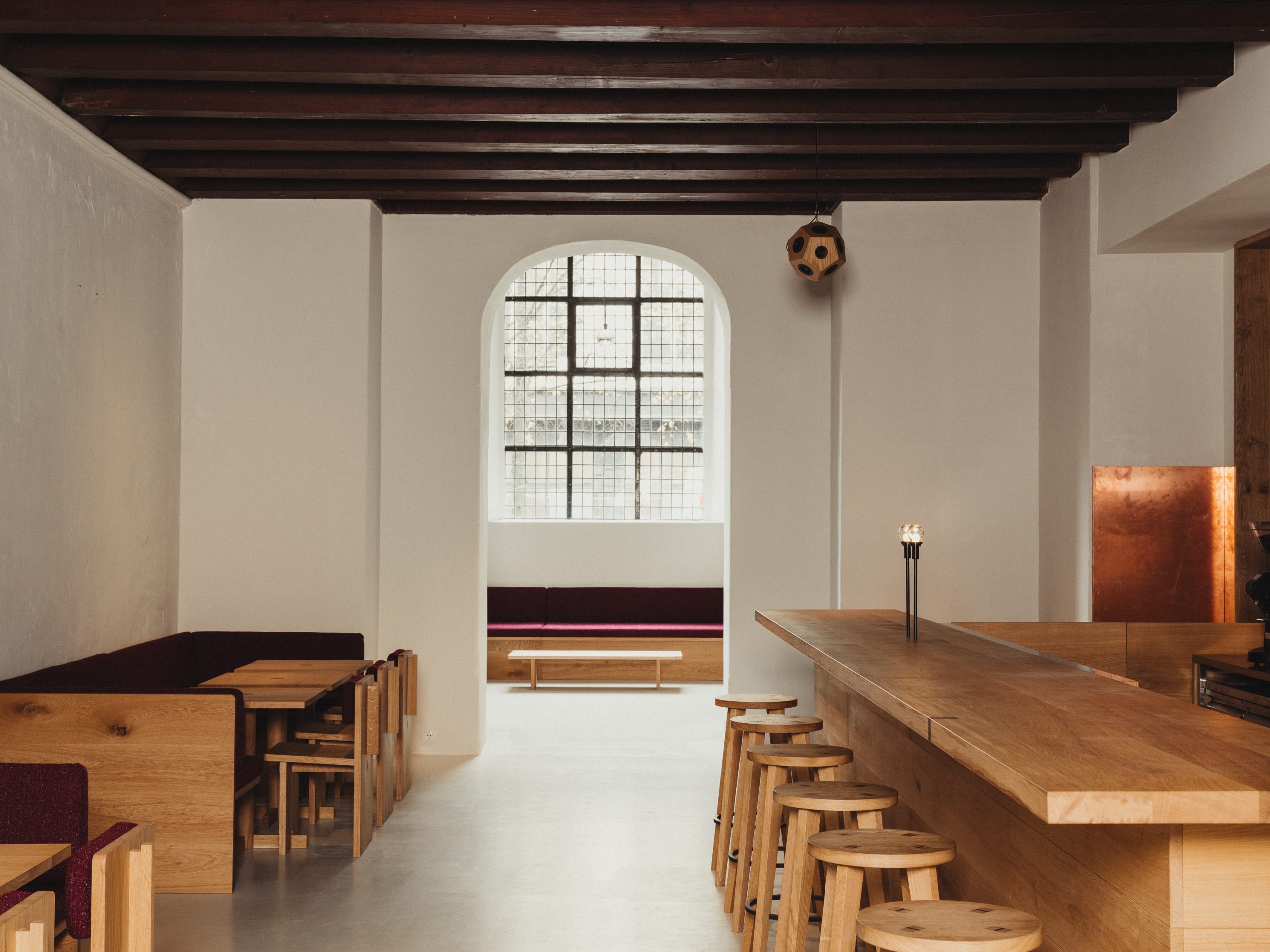
Nikolaj Kunsthal by ENGEL ARCHITECTS
Credit: Paolo Galgani
In 2022, Engel Architects transformed part of a former church in Nikolaj Kunsthal into a café and shop to complement three galleries in the main part of the church. The practice started the project by stripping away ad-hoc alterations to reveal the building’s original character before adding interventions that reference its heritage through robust materials such as copper, oak and lime plaster. Bespoke furniture, inspired by church benches and traditional craftsmanship, has visible joints of contrasting wood as a feature detail, and natural finishes.
Location Copenhagen | Start on site May 2022 | Completion September 2022 | Client Copenhagen Municipality | Construction cost £280,000
Local community and faith
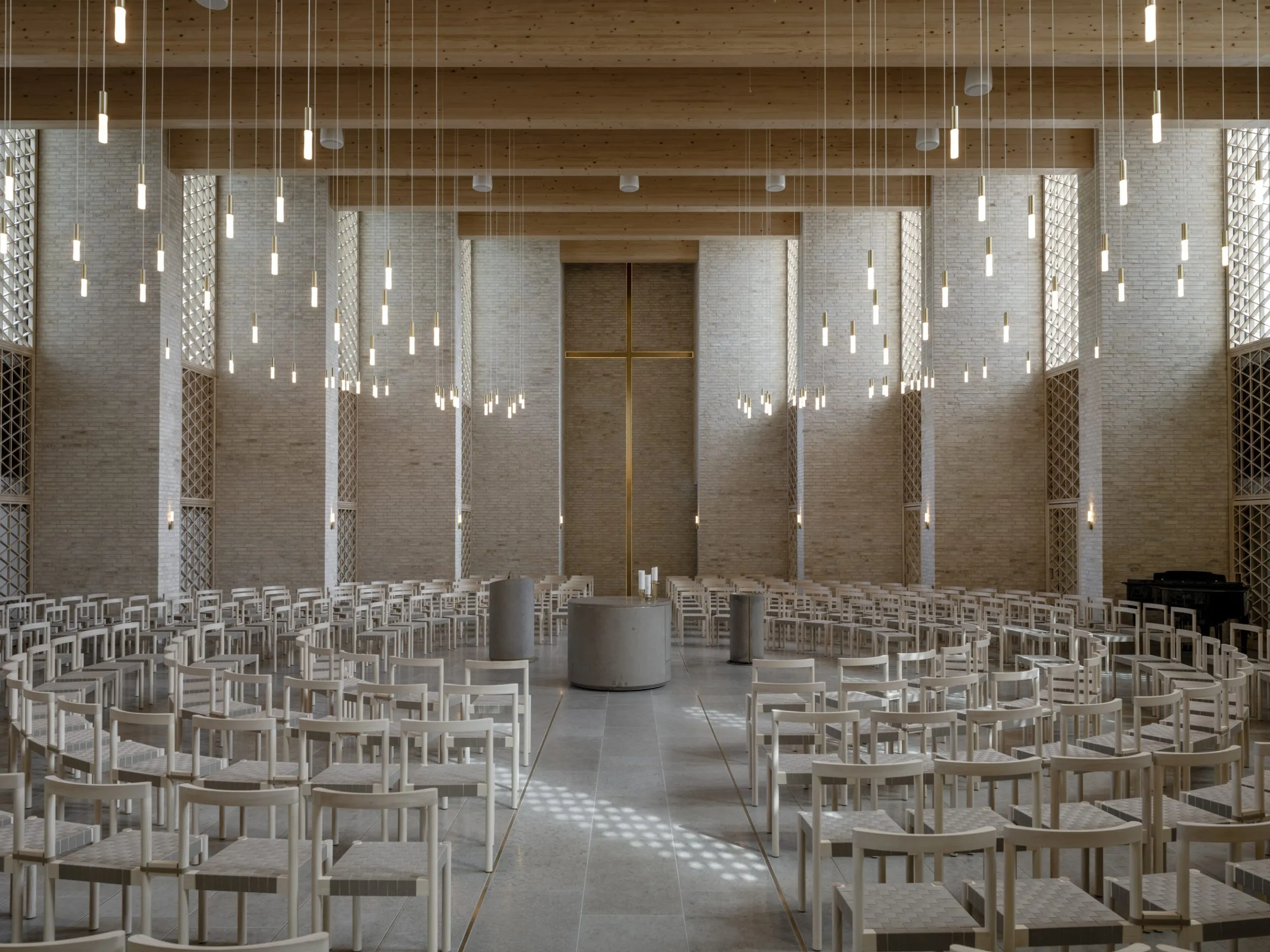
Højvangen Church by Henning Larsen and Espen Surnevik
Credit: Rasmus Hjortshøj
Højvangen Church reinterprets the Danish church for a modern, secular age. The 1,500m² building is the first new church in Skanderborg Parish in more than 500 years. Set on the town’s edge, it appears as a sculpted pavilion in the landscape, open in every direction and centred on its only fixed element: a baptismal font that anchors the space. Crafted from brick, oak and brass, the church balances tradition and contemporary community life, offering flexible spaces for worship, reflection and everyday gatherings in an atmosphere shaped by light, material, and calm.
Location Skanderborg | Start on site 2021 | Completion December 2024 | Client Skanderborg Parish | Construction cost Undisclosed
Small project
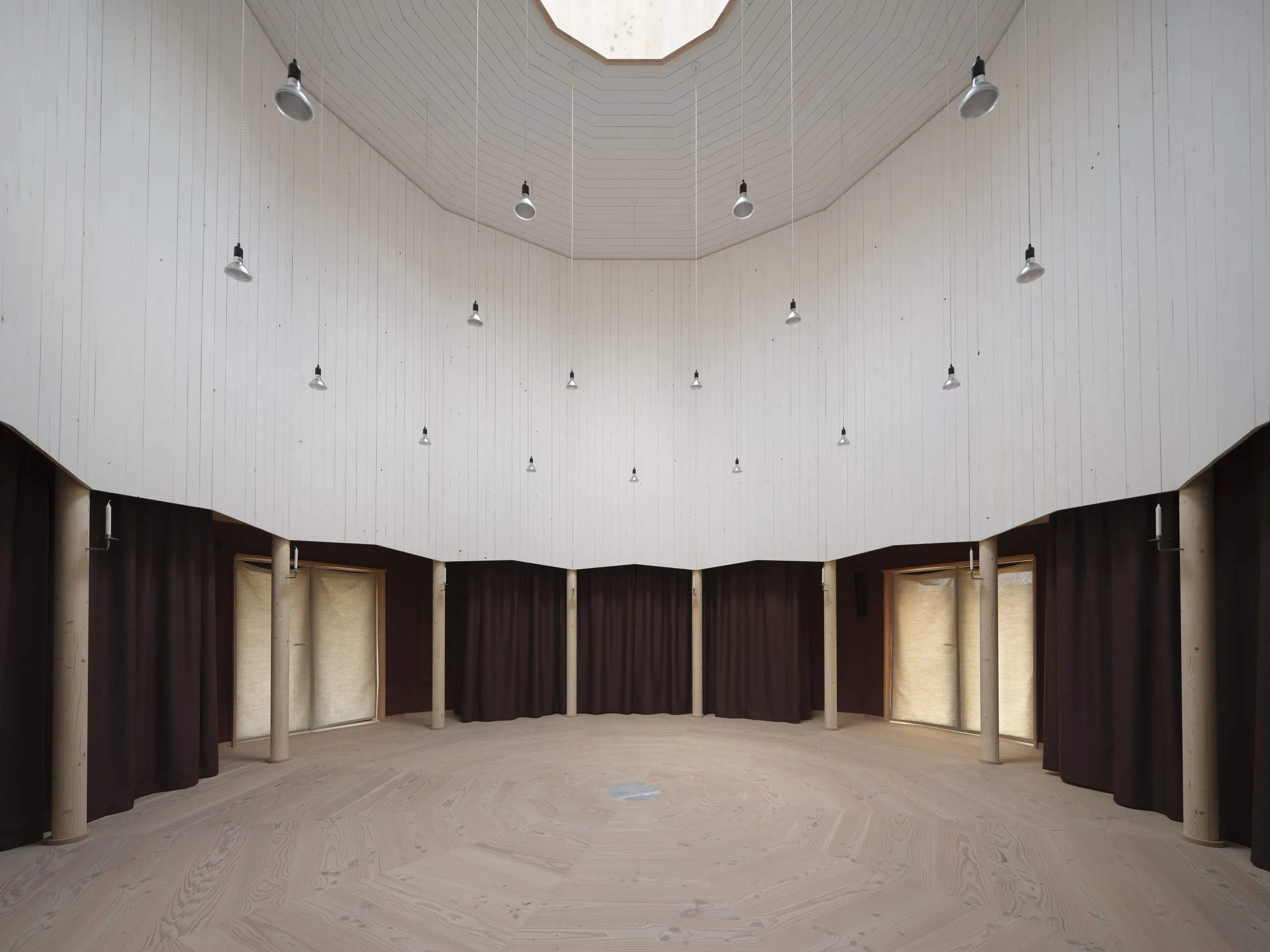
Tiny Church Tolvkanten by Julius Nielsen Office
Credit: Hampus Berndtson
This 75m² 12-sided timber sanctuary in Copenhagen’s North Harbour is modest in scale yet monumental in atmosphere. Throughout, it features Douglas fir from Danish wooden flooring manufacturer Dinesen, including floor, altar and font. Planks of varying widths optimise material use while offcuts have been repurposed for skirtings and door reveals. Unlike traditional stone churches, the church’s entirely biobased-construction results in an LCA of just 2.8 kgCO2/m²/yr. The project was the result of a 2023 design competition initiated by Hans Egedes Parish and the Church Foundation.
Location Copenhagen | Start on site 2023 | Completion June 2025 | Client Hans Egedes Sogn | Construction cost £523,000
Optoppen/retrofit/reuse
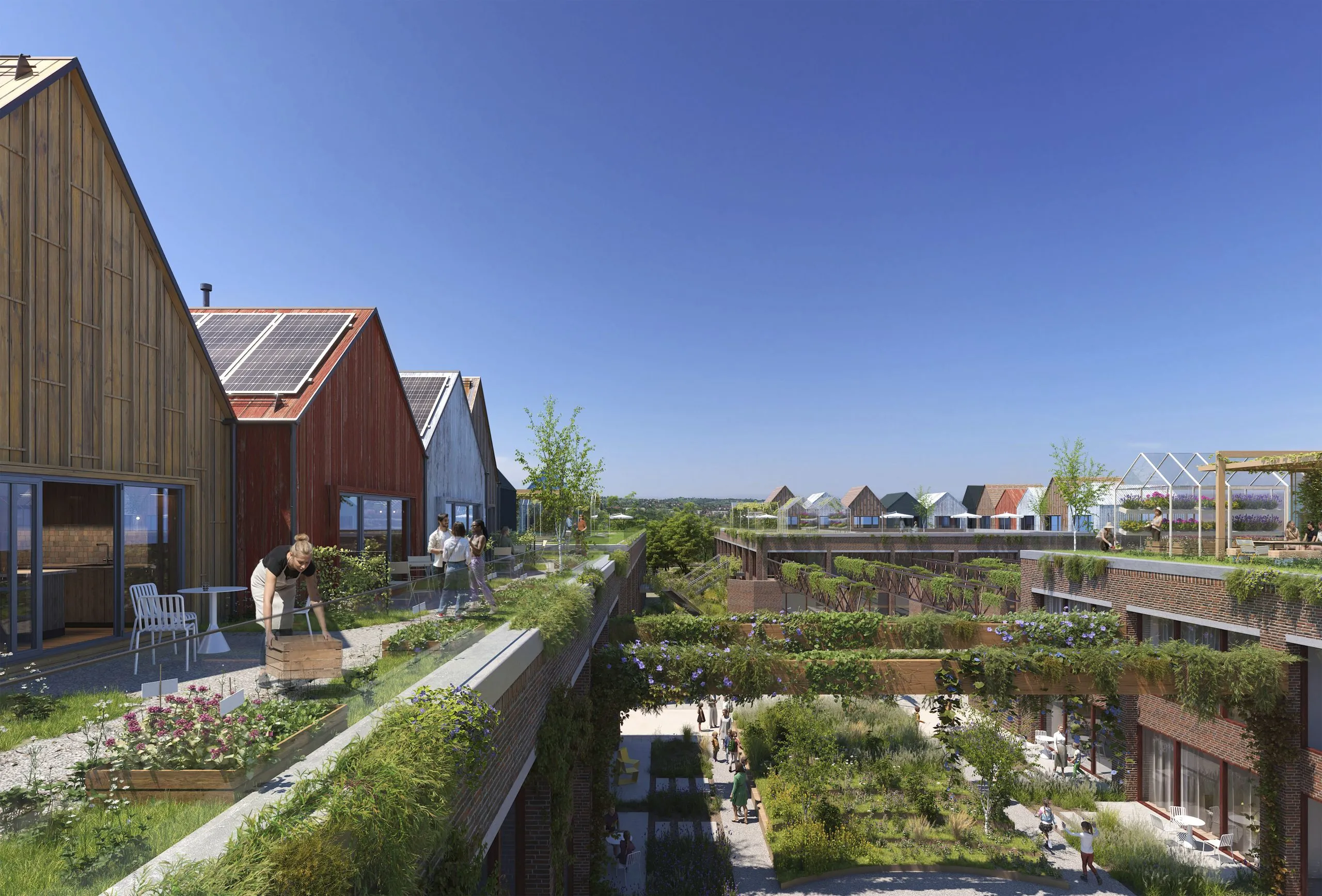
Høje-Taastrup Town Hall by Lendager
Credit: Lendager
The adaptation of Høje-Taastrup Town Hall will be one of the largest adaptive reuse projects of its kind in Denmark. Instead of being demolished, the 1980s town hall building will be adapted into 200 homes, including 125 town houses, a roofscape and an added floor of optoppen-style maisonettes. A 1,500m² supermarket is also being added to the development. The new district will reuse existing structures, construction materials and landscapes, preserving all mature trees as well as the existing architectural character.
Location Høje-Taastrup | Start on site 2028 | Predicted completion TBC | Client Ikano Bolig | Construction cost £31.4 million
Reuse
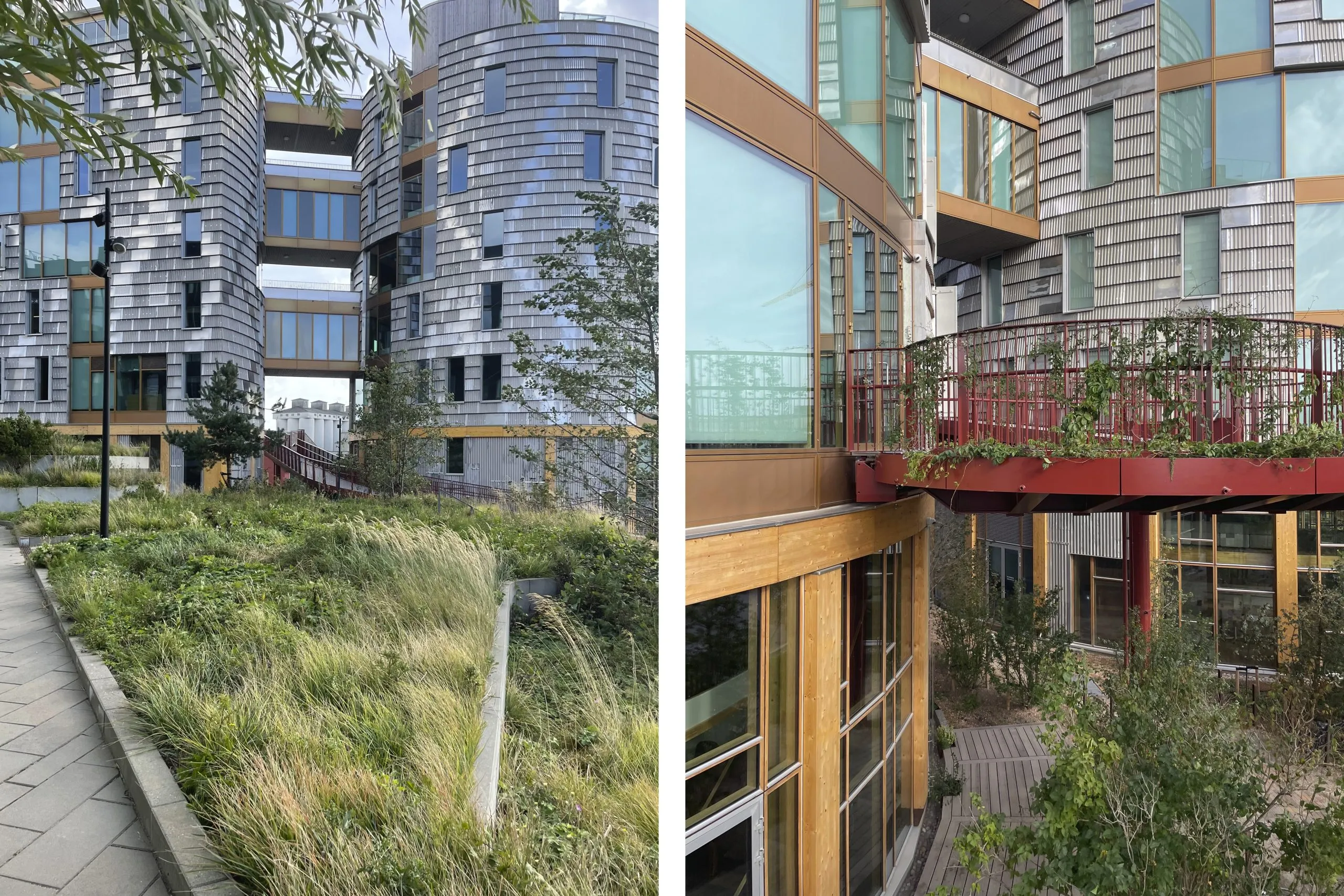
TRÆ by Lendager
Credit: Fran Williams
Reaching 80m, TRÆ is Denmark’s tallest timber building. The project combines a load-bearing timber structure with reused materials, including upcycled windows, wood and locally sourced façades. As well as its 20-storey tower, TRÆ features two six-storey buildings, all integrating timber with concrete cores for efficiency. A publicly accessible green space and pedestrian bridge connect the buildings to the city centre and Aarhus’s Coal Bridge. Lendager collaborated on the project with engineer Artelia, Aarhus Municipality, Realdania and contractor Kaj Ove Madsen.
Location Aarhus | Start on site 2022 | Completion May 2025 | Client PFA, Kilden & Hindby | Construction cost £43 million
(Not a) second home
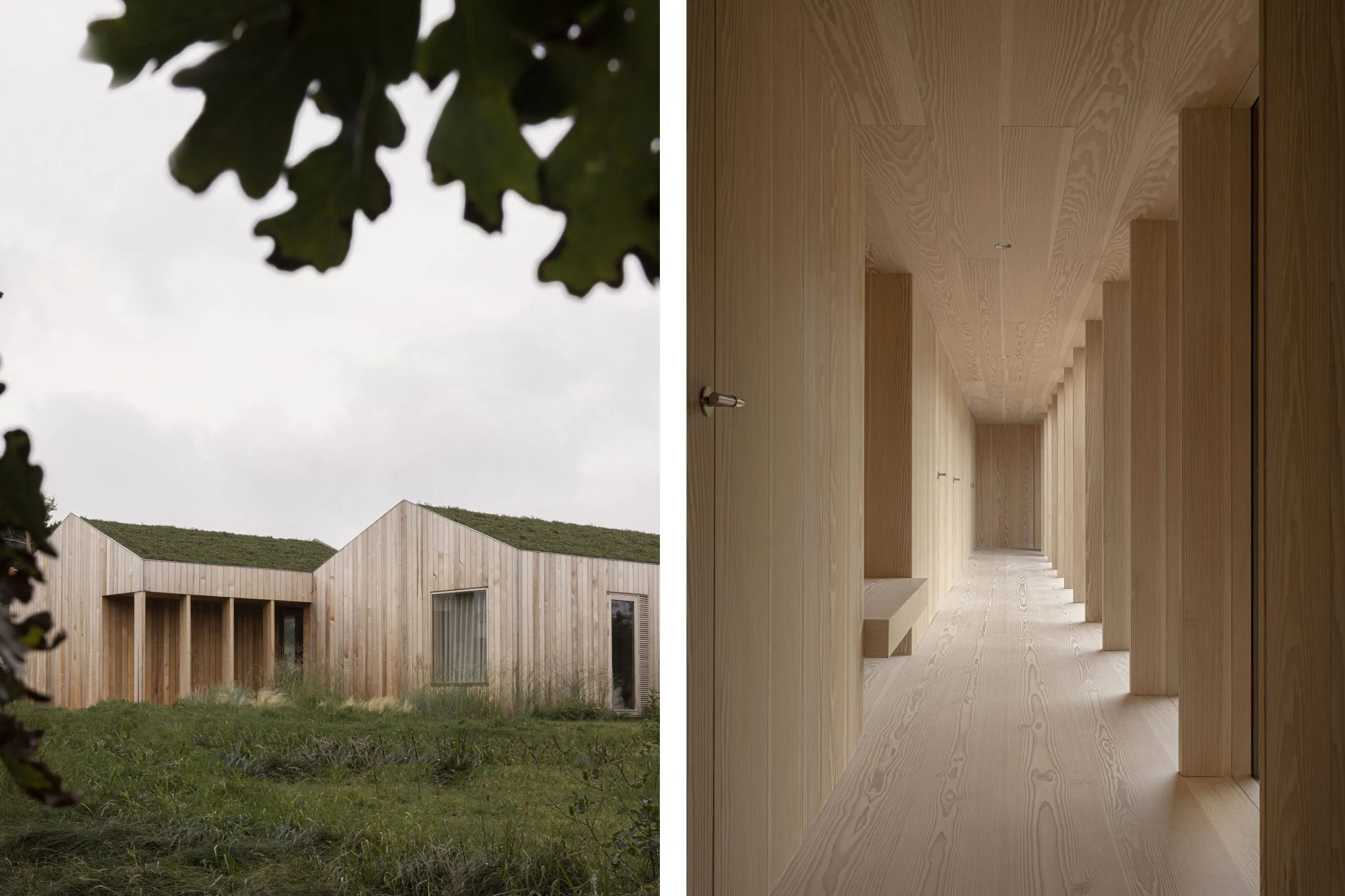
Heatherhill Beach House by Norm Architects
Credit: Jonas Bjerre-Poulsen
This contemporary interpretation of the traditional Danish ‘summer cottage’ – a holiday house that, under Danish law, can only be used for recreational purposes – is situated near the Baltic Sea north of Copenhagen. Designed to have a barn-like profile, its cedar cladding will patinate over time to a silvery colour, blending in with the surrounding landscape. At its heart is a sunken living room leading through to a minimalist kitchen space. Internally, the finishes were chosen for their tactility with lye-treated Douglas fir plank flooring, exposed natural bricks and travertine.
Location Vejby | Start on site June 2022 | Completion 2023 | Client Private | Construction cost Undisclosed
Retrofit/reuse
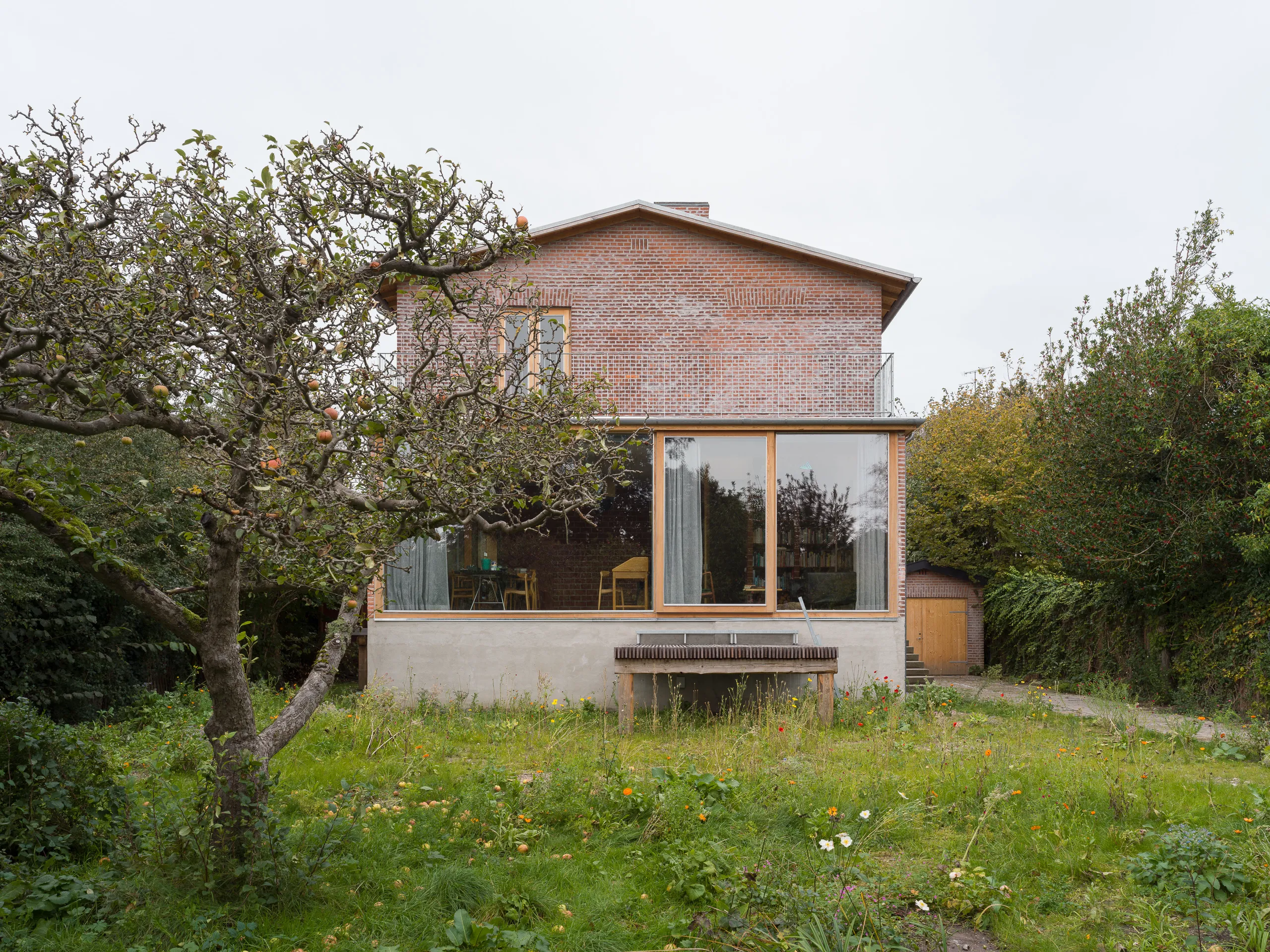
House 14a by pihlmann architects
Credit: Hampus Berndtson
This is the adaptation of a 1951 single-family house. Originally built in the post-war residential style prevalent at the time in Denmark, the existing house was a two-storey box with evenly distributed windows, red brick façade and a gable roof. Traditional techniques such as exposing, covering, cutting, joining, stacking and casting were all employed to transform its original composition – making it more of an unfinished collage cultivated by on-site experimentation to blend old with new. The key intervention is the introduction of three interposed masonry cores containing all the essential elements: storage, stairs and pipework.
Location Hellerup | Start on site 2022 | Completion 2023 | Client Private | Construction cost Undisclosed
Reuse
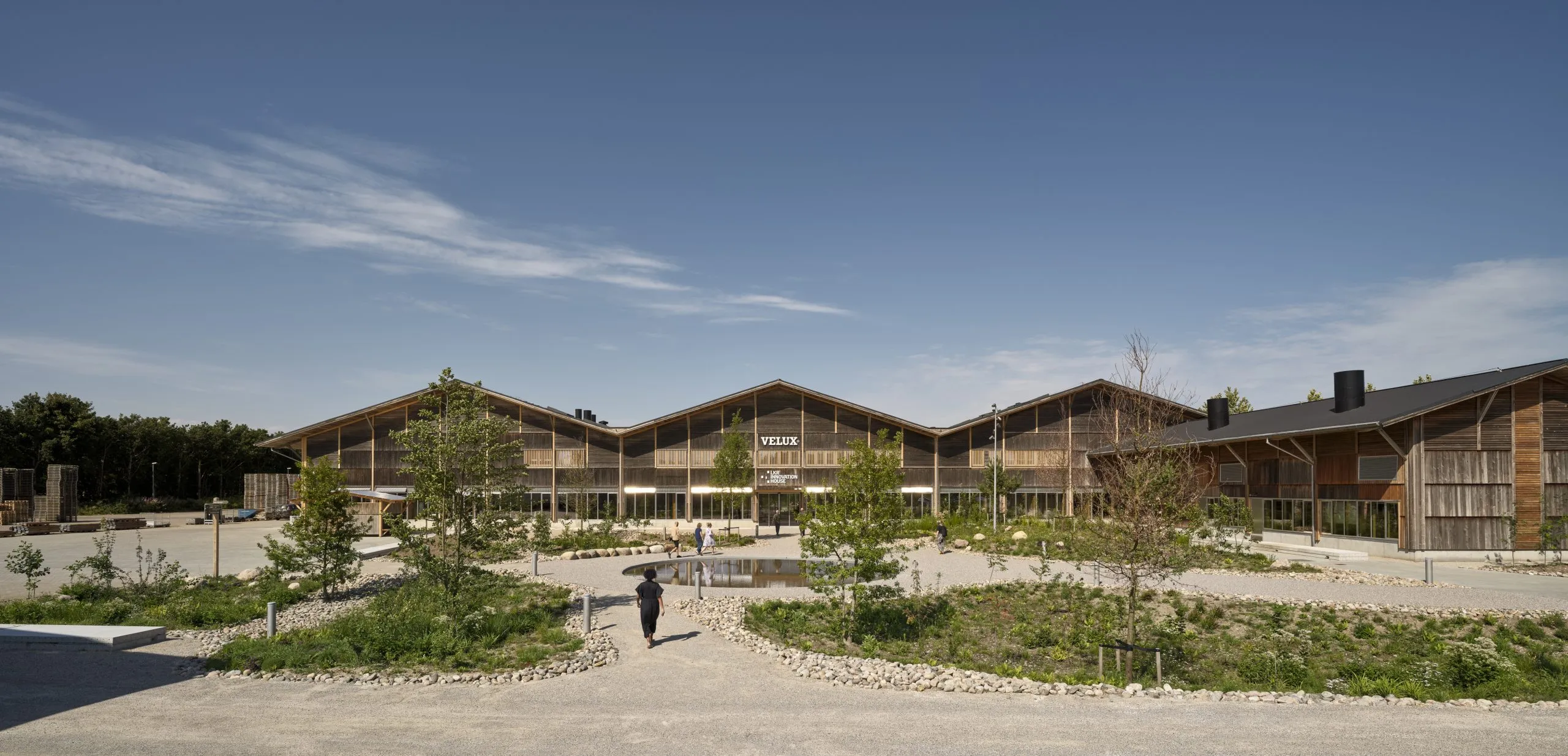
VELUX LKR Innovation House by Praksis Arkitekter
Credit: Adam Mørk
Located in Østbirk, western Denmark, where rooflight manufacturer VELUX established its first factory in 1946, this project transforms its 30-year-old 9,500m² warehouse into a research and development centre. The original 1994 warehouse had been constructed of untreated wood to test its durability, and this has been carefully restored and repurposed. By using the existing structure and repurposing its materials, over 55 per cent of materials required were saved. The now 14,000m² innovation hub has a modular-based grid system to allow adaptability for its 500-strong staff.
Location Østbirk | Start on site February 2023 | Completion May 2025 | Client VELUX | Construction cost Undisclosed
Climate resilience
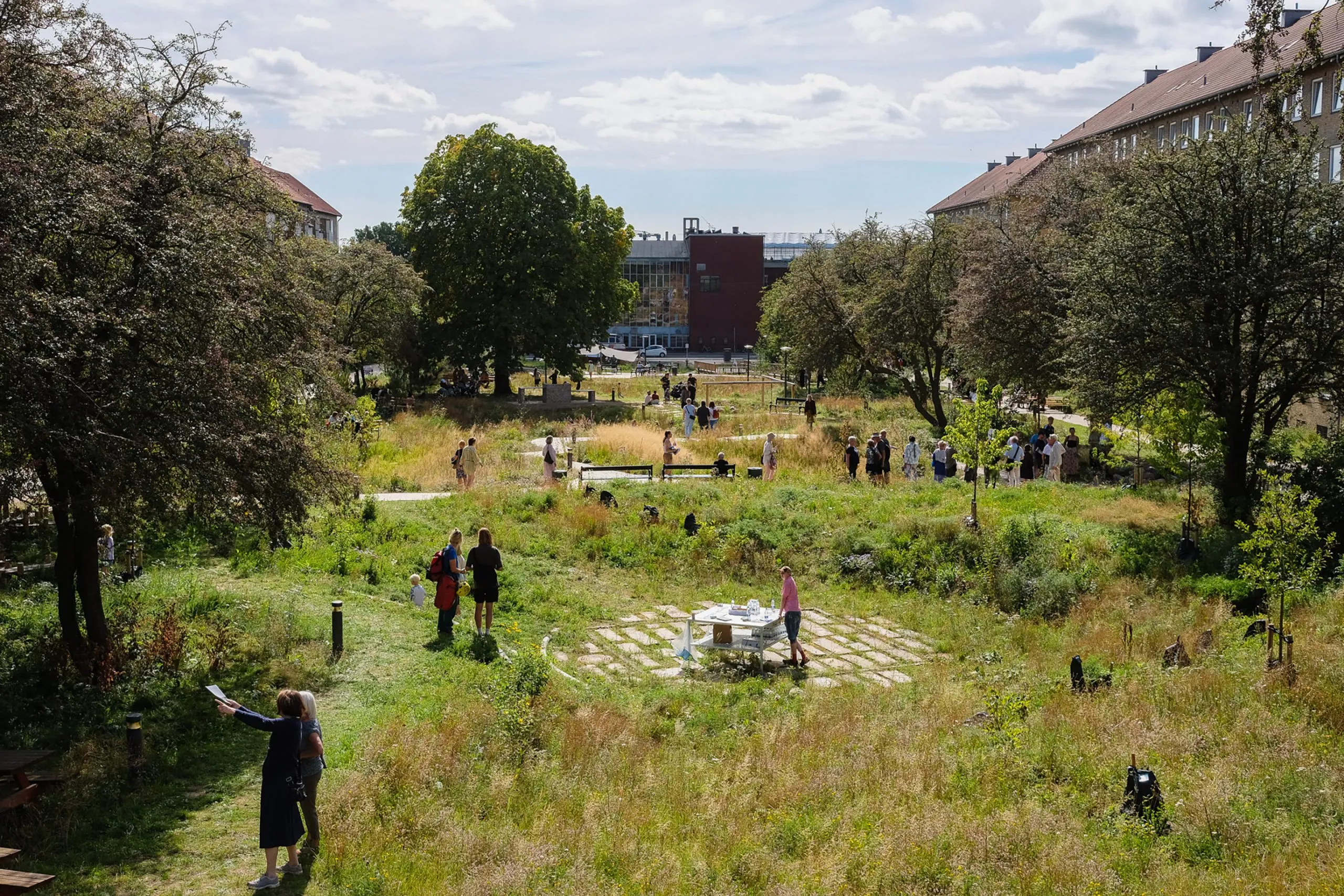
Grønningen-Bispeparken by SLA
Credit: SLA
A radical climate adaptation project, Grønningen-Bispeparken integrates nature in its most ‘untamed’ form directly into the city. SLA has transformed 20,000m² of green space into a landscape of varying topography, including 18 rainwater basins which will protect the surrounding neighbourhood from flooding, enhance biodiversity and create new social spaces for locals. Sculptural wooden installations are interwoven, while brick pathways and gravel, inspired by nearby Grundtvig’s Church, weave through the grasses.
Location Copenhagen | Start on site 2022 | Completion 2024 | Client Copenhagen Municipality | Construction cost £4 million
Infrastructure
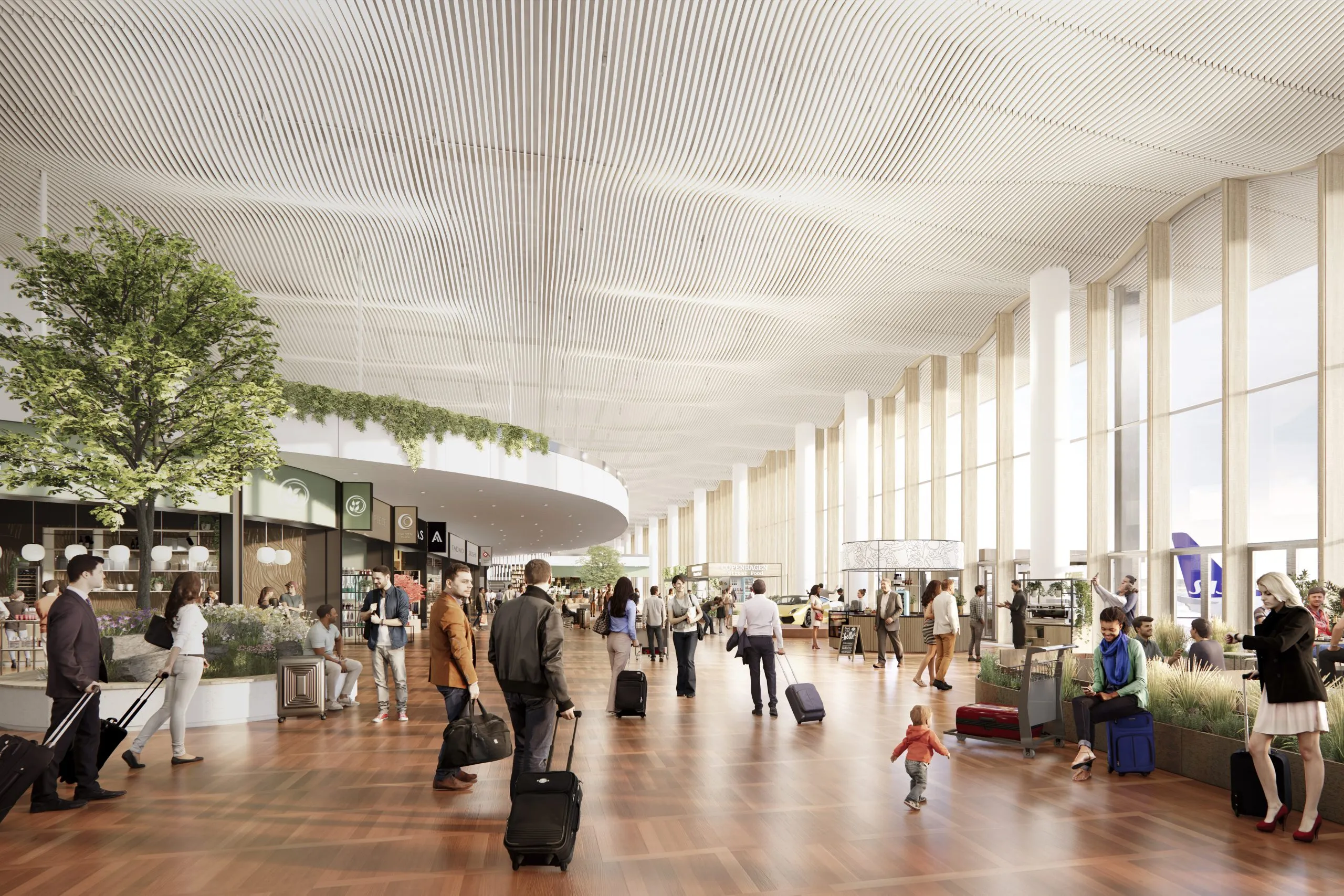
Copenhagen Airport Terminal 3 Expansion by Vilhelm Lauritzen Architects and ZESO Architects
Credit: Vilhelm Lauritzen Architects
Copenhagen Airport first began operations on a grass field in 1925. In the late 1930s, Vilhelm Lauritzen designed the first airport terminal, now internationally recognised as a principal example of Danish modernist architecture. The same practice are now are expanding Terminal 3. The 60,000m² extension references the 1939 terminal through an undulating roof. Transparent ceilings, diffuse light shafts and green walls will all draw in daylight while at its centre is a garden and panorama window – all inspired by the city of Copenhagen’s urban realm.
Location Copenhagen | Start on site 2019 | Predicted completion 2028 | Client Copenhagen Airport | Construction cost Undisclosed