
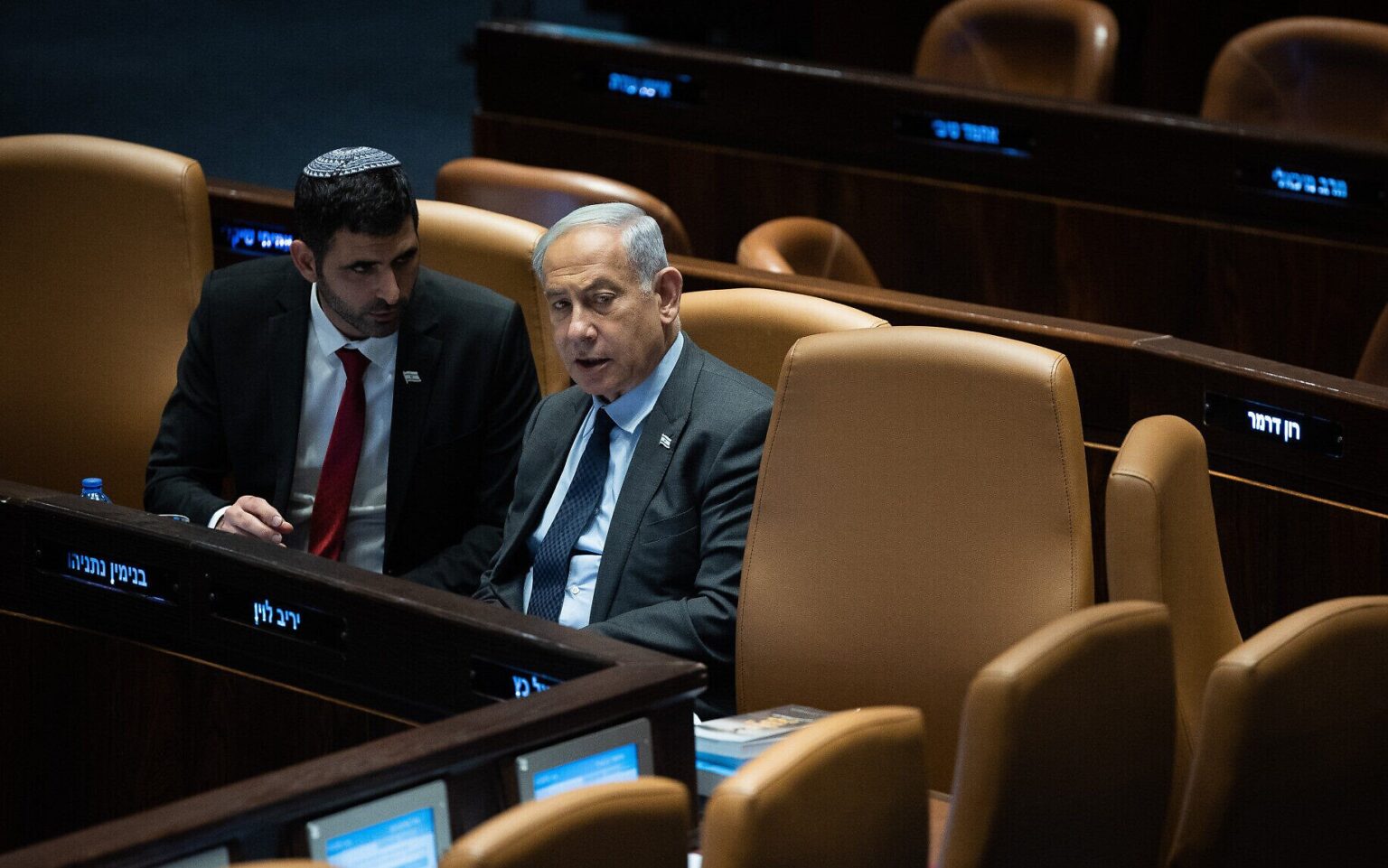
A bill proposed by Communications Minister Shlomo Karhi targeting broadcast media would loosen safeguards meant to silo off news content from moneyed interests, opening up the media landscape to more bias and editorial chicanery — but despite concerns, would not by itself expand the government’s ability to directly steer coverage, according to an expert on the subject.
Karhi’s bill, which passed its first Knesset reading on Monday, scraps existing license requirements that the lawmaker says have hamstrung competition, instead establishing a new regulatory council with broad powers, dramatically remaking the media landscape.
But though Karhi’s rhetoric has sparked worries that the bill will give him and other strident critics of the media the ability to squelch unfavorable content, on paper the legislation stops well short of giving the government control over news content, according to Tehilla Shwartz Altshuler, a senior fellow at the Israel Democracy Institute.
“Scrapping… quality guardrails, while opening the door to many new entrants… risks flooding a small, shrinking-ad market with weak outlets. That can trigger a race to the bottom — less investigative capacity, shallow reporting, and more bias,” said Shwartz Altshuler, who composed the code of ethics for Israel’s Public Broadcasting Corporation and, since 2023, has overseen the ethical tribunal of Israel’s Journalists’ Association.
Critics of the bill, including Attorney General Gali Baharav-Miara, and media watchdogs have warned that it presents “real concern of severe harm to freedom of expression and freedom of the press,” and concentrates power in the hands of a communications minister and government that have repeatedly referred to the media as “an enemy of the state” and accused of being responsible for October 7.
Prime Minister Benjamin Netanyahu has largely refused to give interviews to the Israeli press and has insisted that he is the victim of a witch hunt by a left-leaning legal system in cahoots with the media, against the backdrop of his ongoing corruption trial, which involves allegations that he tried to improperly influence news coverage.
Karhi, a far-right lawmaker in Netanyahu’s Likud party, says the overhaul will increase competition in the media market and reduce costs for consumers.
Shwartz Altshuler has been following Karhi’s efforts to remake the media landscape for years. A technology law and policy expert, she examines how developments in information, surveillance, cyber, and artificial intelligence intersect with democratic governance.

Dr. Tehilla Shwartz Altshuler, a research fellow at the Israel Democracy Institute. (Israel Democracy Institute)
She has written extensively about the pressures on Israel’s small news broadcast market, noting that Hebrew-language news cannot expand its audience internationally and faces limited advertising revenue — factors that make outlets vulnerable to political influence.
While Shwartz Altshuler says the current bill is less extreme than its first incarnation two years ago, she remains concerned.
“You can’t divorce this bill from the broader context of this government’s policies. Netanyahu is happy to let Karhi play and intimidate current media channels because he sees the media as an enemy, and he wants to take revenge,” she said.
Shwartz Altshuler spoke to The Times of Israel on Tuesday following the first reading of the bill. The text has been edited for clarity.
What does the bill propose to do?
The bill rewrites the rules for Israel’s commercial audiovisual media market — TV and online video news and programming. Its core move is to eliminate licensing for anyone who wants to run an audiovisual outlet (TV or online) and replace it with a simple registration requirement under a new statutory regulator.
It also cancels key obligations for commercial broadcasters, most notably the requirement to operate news through distinct independent companies, separate from the channel itself, which at least diminishes the influence of the owner on the content of the channel.
Who will it affect?
It targets commercial audiovisual content creation — TV and online video, such as Channel 12 and 13. It does not, as of now, apply to radio or public broadcasting, including Army Radio or the Kan public broadcaster, which is being targeted in a separate bill by Karhi.
Traditional print-only outlets and user-generated social media would not need to register. Ynet and Mako would likely have to register, Haaretz most likely wouldn’t, and The Times of Israel is somewhat borderline, as it depends on how much video content you publish.
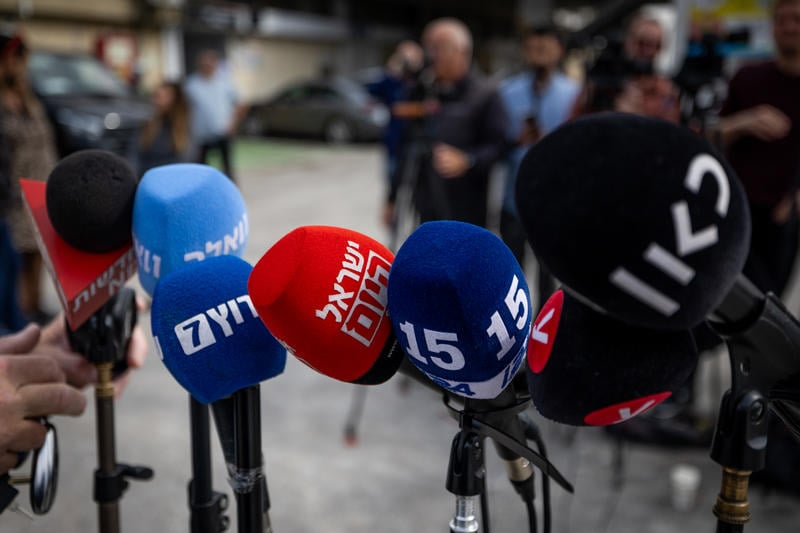
Microphones belonging to different media outlets at a press conference in Jerusalem, February 19, 2025. (Yonatan Sindel/Flash90)
What would the new regulator look like and is it politicized?
The bill creates a new independent statutory authority, structurally similar to — and arguably slightly more insulated than — the current Second Authority for Television and Radio. About half the members would be public officials, including representatives from the Finance Ministry, the Prime Minister’s Office regulatory authority, and Antitrust at the Economy Ministry, and half appointed by the Communications Ministry’s director general, but only from candidates vetted by a subcommittee chaired by a former judge, appointed by the communications minister with the consent of the chief justice. It’s not a direct ministerial takeover.
While any regulator can be politicized in practice, the selection architecture in the bill appears at least no more political — and potentially less — than today’s setup. In other words, the rhetoric, including from the communications minister himself, that the bill “abolishes regulation” is misleading; it replaces it with a new regulator.
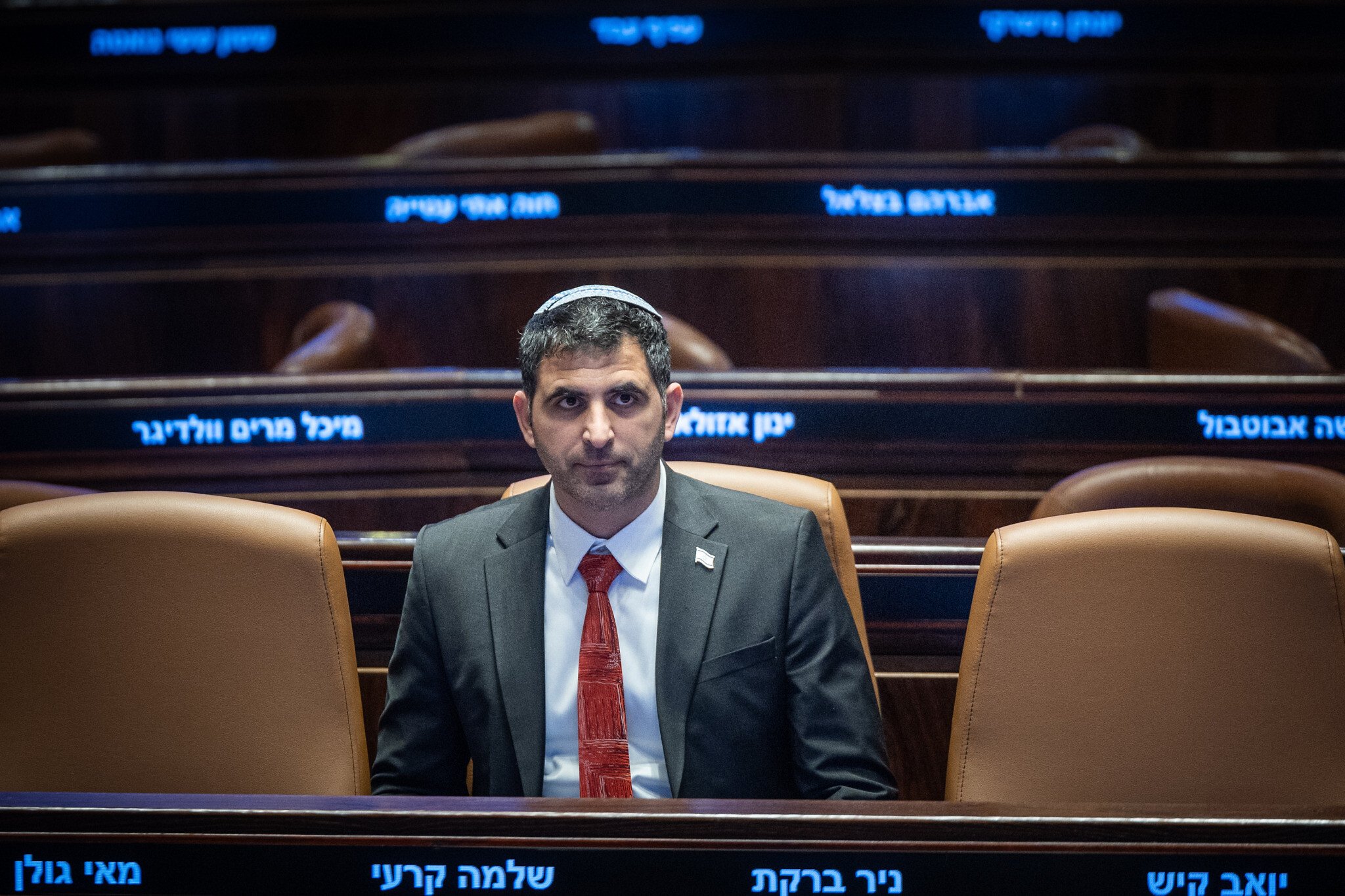
Communications Minister Shlomo Karhi in the Knesset in Jerusalem on March 31, 2025. (Yonatan Sindel/Flash90)
What is the motivation behind the bill?
Karhi says he wants to create more voices and expand competition in the market, but he really wants to expand governmental control over the media. They want to create a mess more than anything else. Karhi is fulfilling Netanyahu’s mission. He wants to be able to shake the market all the time, to keep the players on their toes. He wants them to feel attacked, to feel unstable. And I think he’s succeeding in doing so.
Is there a legitimate need to reform Israel’s broadcast market?
Absolutely, and for more than a decade, there has been an understanding that the broadcasting market needs to be reformed. Most of Karhi’s bill was copied and pasted from then-communications minister Yoaz Hendel’s initiative under the Bennett government.
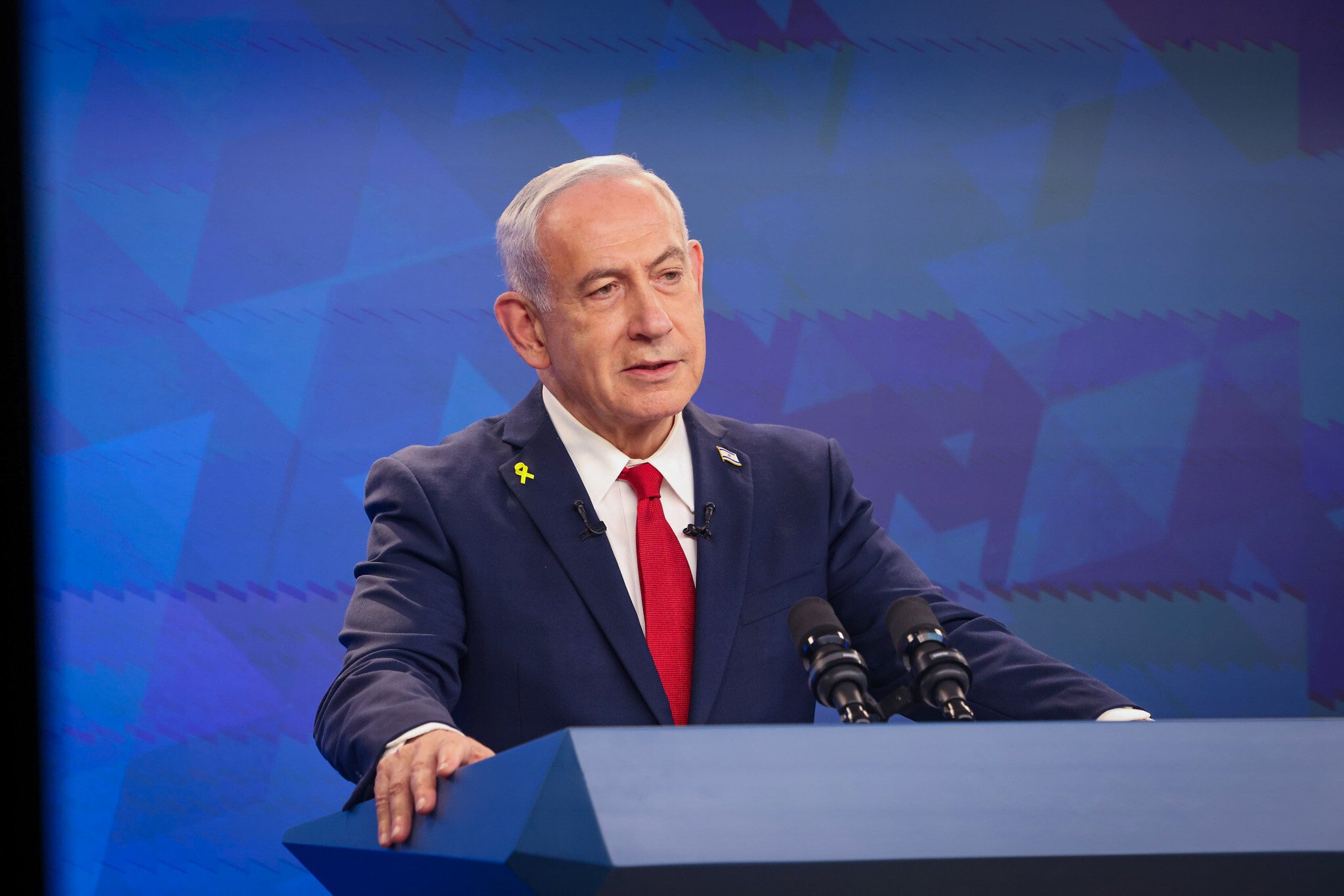
Prime Minister Benjamin Netanyahu holds a press conference at the Prime Minister’s office in Jerusalem, September 16, 2025. (Marc Israel Sellem/POOL)
Israel’s audiovisual market is unevenly regulated. Legacy multichannel platforms Yes and Hot, and major commercial broadcasters Channel 12 and Channel 13 face strict rules: they need licenses, must maintain separate news companies, require approval to add or drop channels, and must invest roughly 6–8% of annual revenue in original Israeli content.
Meanwhile, newer players — Channel 14; internet TV platforms, like Free TV and Partner TV; international streamers like Netflix, Disney+, Apple TV+, Prime Video; and news websites streaming video — operate with little to no comparable regulation. Since all compete for the same ad revenue and audience attention, there’s a broad consensus that rules should be modernized to level the playing field.
What are the main problems with the bill?
The real issues are a lack of quality safeguards, relaxed cross-ownership, and uncertain obligations for international streamers.
The bill scraps the separation between channel ownership and news editing, i.e., no more mandatory independent news subsidiaries, and imposes no alternative internal safeguards.
Scrapping the separate-news-company requirement and other quality guardrails, while opening the door to many new entrants via mere registration, risks flooding a small, shrinking-ad market with weak outlets. That can trigger a race to the bottom — less investigative capacity, shallow reporting, and more bias.
Basic quality and independence safeguards should be preserved where public-interest news is concerned. Large news providers should have internal independence mechanisms — such as editorial separation from ownership, independent news editors, among other things.
How does too much competition risk bringing about lower quality?
Israel’s Hebrew-language market is small, with about 8 million consumers, and ad revenue is shifting to digital platforms (Google/YouTube). Karhi wants to swamp the market with as many small, weak competitors as possible with no quality assurance. And this is going to create a race to the bottom in terms of Israel’s news market.
Too many fragmented players means underfunded “watch puppies” rather than watchdogs — less investigative journalism and weaker ability to hold power to account.
What does the bill say about cross-ownership?
The bill relaxes longstanding cross-ownership regulation. That invites dangerous concentration — think dominant newspaper owners acquiring major TV news, consolidating enormous agenda-setting power. This could put power in just a few hands.
I think that this is what concerned the attorney general most of all. She [Gali Baharav-Miara] said that Karhi needed to find a way to prevent the creation of very big news conglomerates in Israel because this could be harmful for Israeli democracy. And he refused to do that.
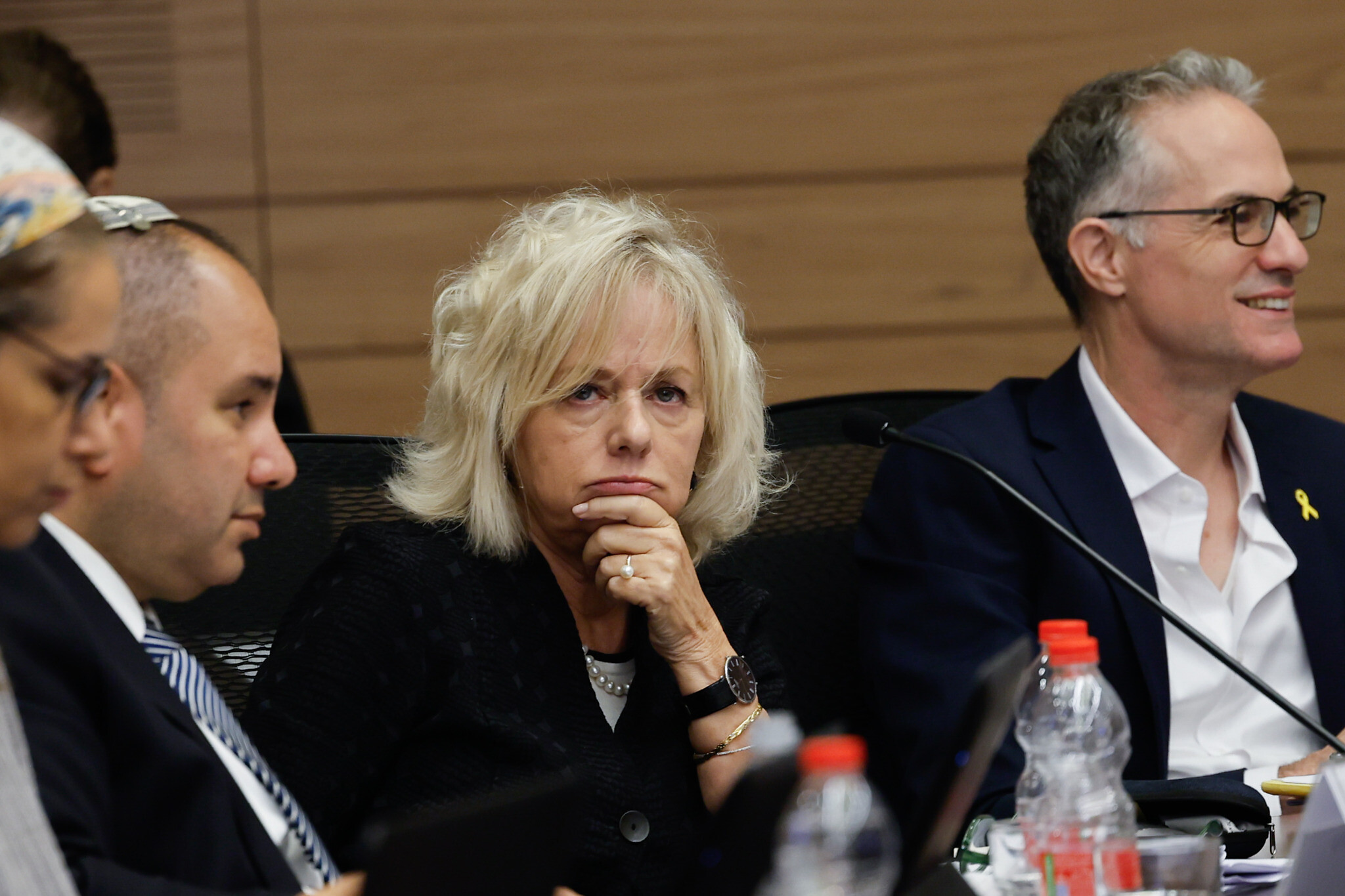
Attorney General Gali Baharav-Miara at a Constitution, Law and Justice Committee meeting at the Knesset, on September 30, 2025. (Oren Ben Hakoon/Flash90)
Would international streamers have to invest in Israeli content?
The bill originally sought to require international streamers with Israeli subscribers to invest in original Israeli productions — addressing a longstanding equity issue, since local players like Hot, Yes, and Channels 12 and 13 are already obligated to do so.

This Netflix logo appears on a tablet in North Andover, Massachusetts, January 17, 2017. (AP Photo/Elise Amendola, File)
However, there is diplomatic pushback: the American ambassador, Mike Huckabee, reportedly met with Karhi to oppose this requirement. If Netflix and other global platforms are ultimately exempted, while obligations on local broadcasters are loosened, the overall production-support architecture could collapse — threatening the future of Israeli scripted content and undermining the bill’s policy logic.
Obligations to invest in original Israeli content should be applied fairly across all significant players, including international streamers active in the market.
Can the new regulator, or the government that appoints it, fine outlets over content it dislikes?
Formally, neither the minister nor the government can directly fine outlets; enforcement would run through an independent regulator and be subject to public-law constraints and judicial review.
Even so, the heightened fines are a concern because, in practice, steep penalties can chill outlets and create leverage over regulated players, especially in a small, resource‑tight market like Israel’s. While the bill purports to avoid punishing outlets over content it dislikes, the size of the fines and the broader context raise credible worries about indirect pressure on the media.
Does this bill threaten press freedom or promote the “Hungarian model” of government asserting control over media, as critics such as the Movement for Quality Government in Israel have suggested?
The minister’s rhetoric is alarming — vilifying mainstream media and telegraphing a desire to keep outlets off balance. But the bill’s text is more moderate than the speeches: it does not hand the ministry direct content control, it doesn’t nationalize ratings, and the regulator’s structure is no more political than today’s.
The main risk here is less a direct gag than a market architecture that degrades quality and independence over time — either by splintering the field into weak outlets or by allowing a few conglomerates to dominate it — both of which diminish robust journalism.
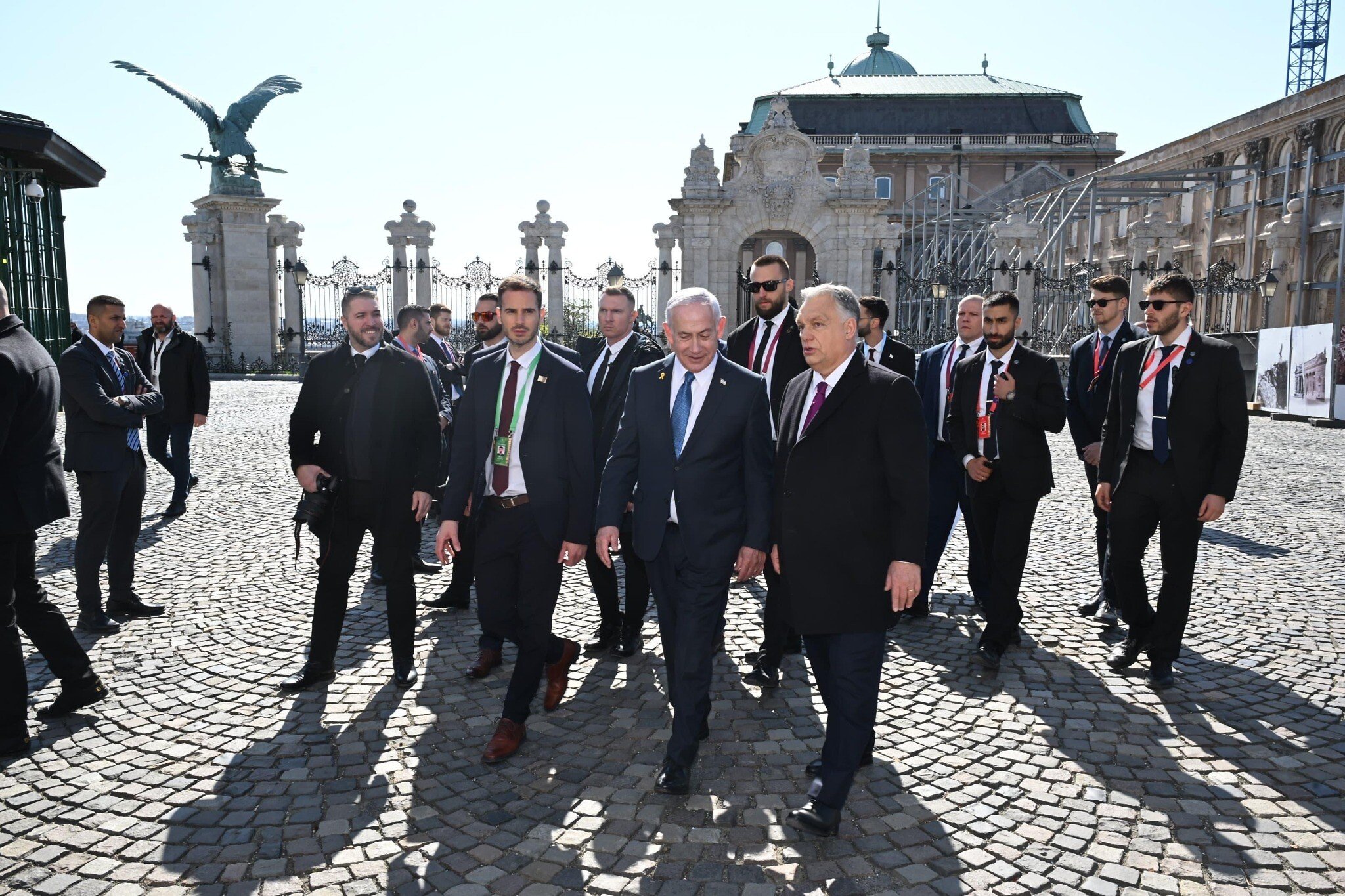
Prime Minister Benjamin Netanyahu (left) is hosted by Hungarian Prime Minister Victor Orban in Budapest, Hungary, April 3, 2025. (Avi Ohayon / GPO)
But you’ve said the bill on its own is actually moderate, that the text itself isn’t hyper-politicized.
Yes, but you can’t read it in isolation. It has to be understood alongside the rhetoric that Karhi uses and how he’s promoted it. He said, for example, [Monday] in the Knesset, that this bill is going to be a punishment for all media outlets because [the media] has created polarization in Israeli society, and is to blame for October 7.
You can’t divorce this bill from the broader context of this government’s policies. Netanyahu is happy to let Karhi play and intimidate current media channels because he sees the media as an enemy, and he wants to take revenge.
This government is trying to do with this bill what it has been trying to do with every gatekeeper of Israeli democracy: the Supreme Court, the attorney general, the media — attack and control. It wants to destroy any existing structures within Israeli democracy, and this bill is part of that.