
Credit: Unsplash/CC0 Public Domain
Action is needed locally, nationally, and internationally to curb sales of new sports utility vehicles (SUVs) to reduce their potential harms to health and the environment, say experts in The BMJ’s climate issue.
Their call comes as Cardiff looks set to be the first city in the UK to charge higher parking fees for larger vehicles, following in the footsteps of Paris.
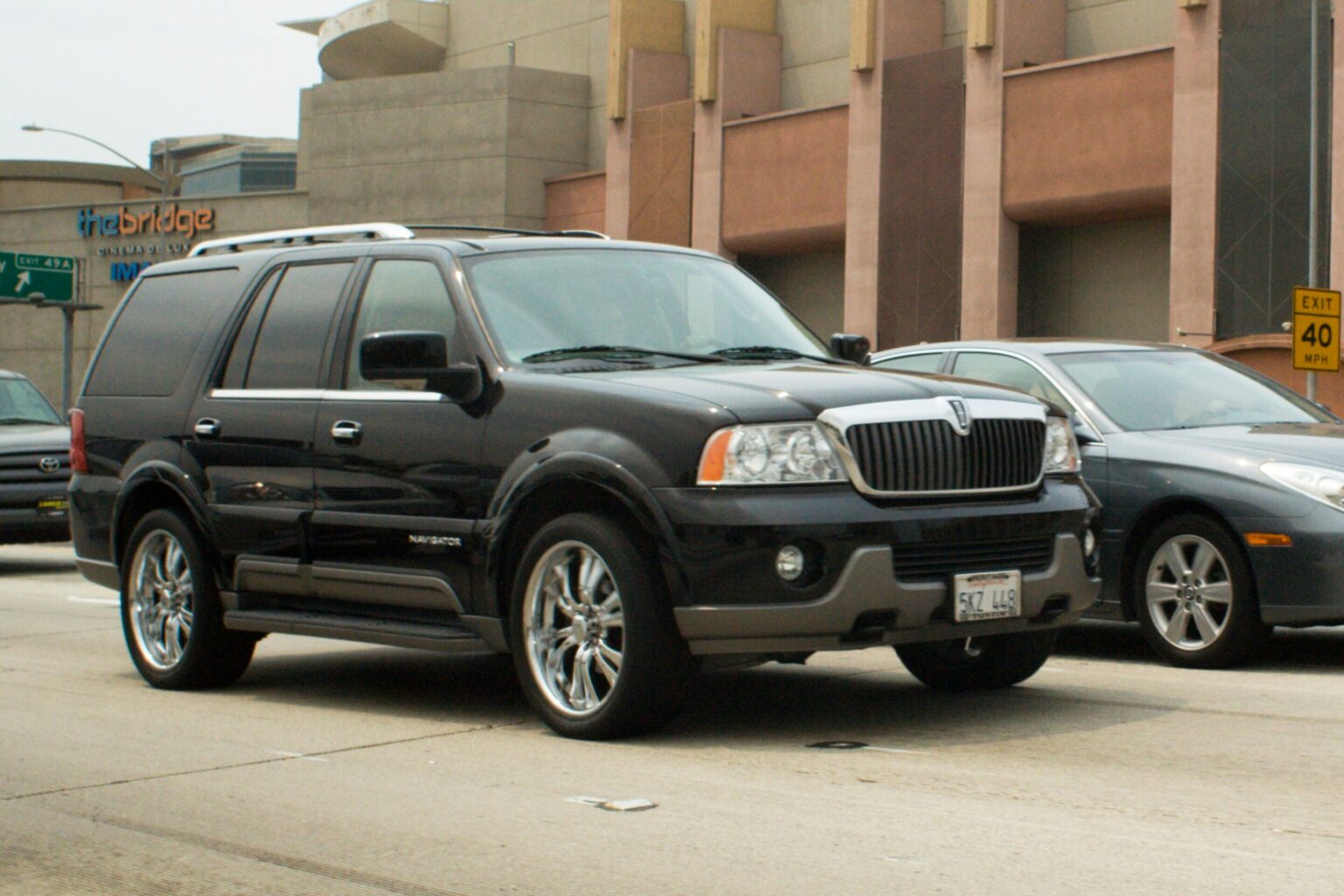
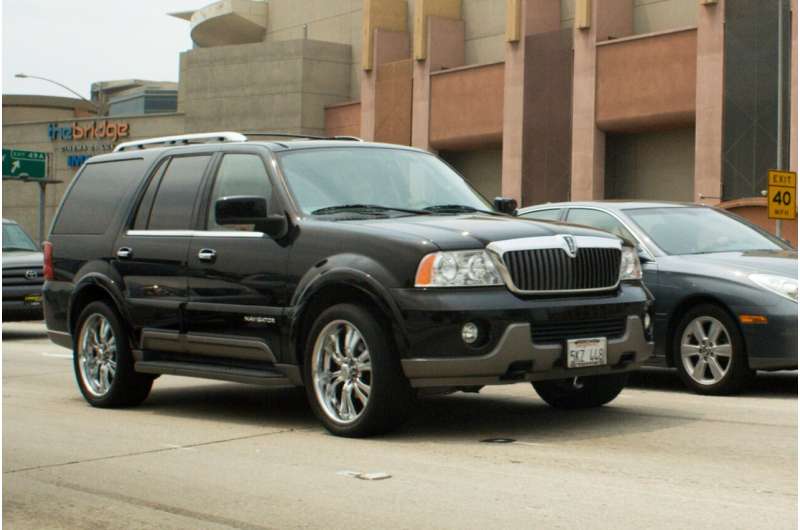
SUVs are passenger cars that have a chassis with extra ground clearance and are generally taller, wider, and heavier than other models, writes Dr. Anthony Laverty and colleagues.
Once a niche vehicle for offroad driving, SUVs now make up half of new car sales globally, up from 15% in 2010, and in the UK, SUVs accounted for 63% of new sales in 2024, compared with 12% in 2010.
The proliferation of SUVs is one aspect of the wider trend of “carspreading,” whereby cars are becoming steadily larger over time, and with this comes potential harms to health, they warn.
A recent evidence review found a 44% relative increase in the likelihood of death for an adult pedestrian or cyclist hit by an SUV or similarly large car compared with a standard car. For children there was an 82% relative increase in the likelihood of death.
The taller, squarer hoods of SUVs cause more serious injuries and make collisions more lethal, all other things being equal, they write, while poorer visibility for drivers in large SUVs further increases risk to children. The average driver in a Land Rover Defender cannot see a 4-year-old child standing directly in front, they note.
Nonetheless, vehicle manufacturers continue to increase new car dimensions, with average hood height increasing from 77 cm in 2010 to 84 cm in 2024 among new car sales in Europe. Across the same years, new cars in Europe also grew 0.5 cm wider a year.
“These vehicles reduce the space available for cyclists (and other two-wheelers) to move safely beside them and make it harder to achieve an increase in active travel and the substantial associated public health benefits,” say the authors.
Carspreading is also an obstacle to achieving climate and air quality goals as SUV versions of regular-sized gasoline cars emit more carbon, and bigger vehicles use more raw materials in production, they write.
SUVs also increase air pollution as fine particles thrown off by tire and road wear increase with rising vehicle weight. These fine particles enter deep lung tissue and the circulatory system, and may be important contributors to chronic illnesses and premature death.
Action is needed to reverse the trend, they argue. Measures include higher parking fees for larger vehicles in cities, reforms to vehicle tax to create stronger incentives for smaller cars, and mandating vehicle dimensions on registration certificates to increase public consciousness of rising vehicle size.
Independent vehicle safety rating programs could also introduce a “child visibility test,” which would encourage lower hood heights in future vehicle designs, while regulators also need to be convinced to adopt reforms that reduce ever-increasing hood heights and vehicle widths.
“We urge health professionals, as opinion leaders in society, to raise their voices in supporting the health and environmental case for policy action,” they conclude.
More information:
Reducing the harms from ever larger cars, The BMJ (2025). DOI: 10.1136/bmj.r2162
Citation:
Curb sales of SUVs to reduce harms to health and the environment, say experts (2025, November 5)
retrieved 5 November 2025
from https://medicalxpress.com/news/2025-11-curb-sales-suvs-health-environment.html
This document is subject to copyright. Apart from any fair dealing for the purpose of private study or research, no
part may be reproduced without the written permission. The content is provided for information purposes only.