
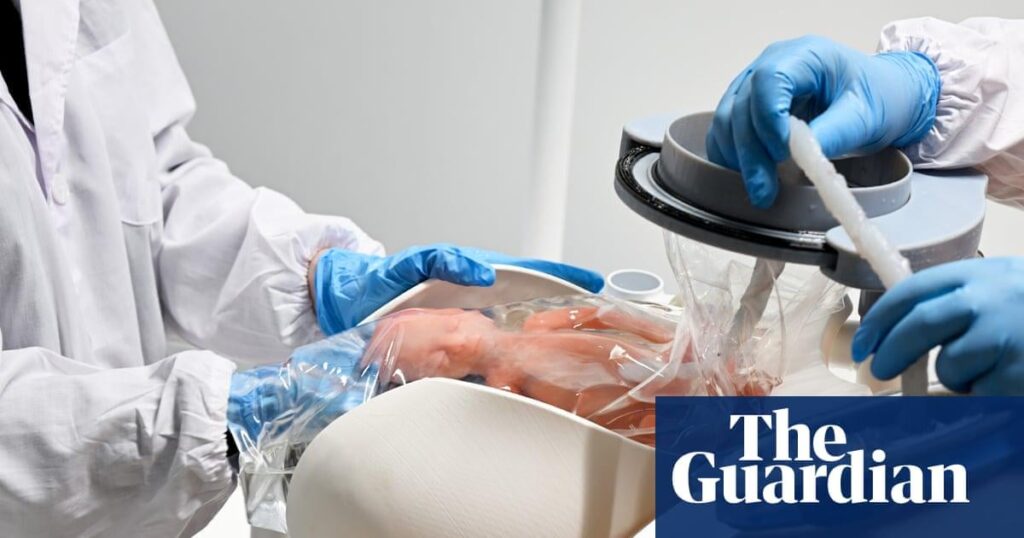
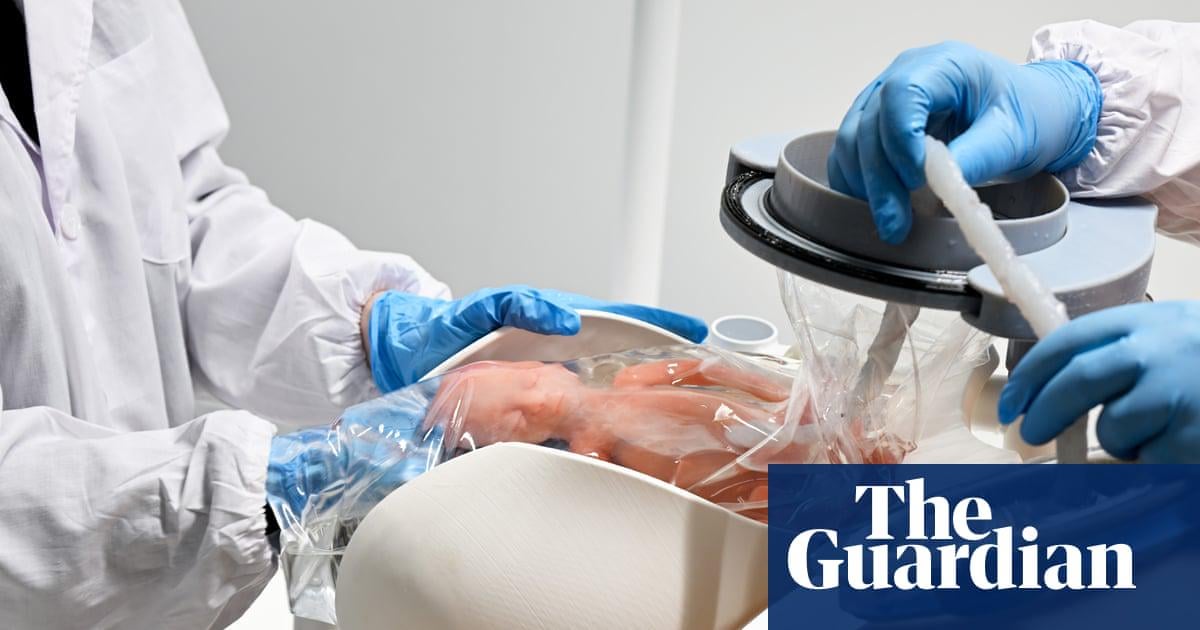
This machine could keep a baby alive outside the womb: an artificial womb, engineered to gestate babies outside the human body. In AquaWomb’s design, the baby is delivered via caesarean section into a fluid-filled pouch, where it can be transferred from mother to machine.
https://www.theguardian.com/world/2025/nov/05/baby-alive-outside-womb
7 Comments
**This machine could keep a baby alive outside the womb.** How will the world decide to use it?
For parents who have buried infants born too soon, a device like the AquaWomb is a miracle in waiting – and an impossible choice
In 2017, researchers in Philadelphia unveiled an experimental lifeline: **an artificial womb, engineered to gestate babies outside the human body.**
In September 2023, the United States Food and Drug Administration convened an advisory committee to consider whether to greenlight the first clinical trials. If approved, the first candidates will be babies like Beth’s son, those born between 22 and 24 weeks of gestation, or less than two-thirds of the way to full term. (FDA representatives declined to comment on whether or when these trials might begin.)
The glass tank rests on a waist-high platform in a bright laboratory in Aachen, Germany, one of the sites affiliated with AquaWomb, a Dutch startup that is developing devices to improve health outcomes for the smallest, sickest infants.
About the size of a household fishtank, the vessel sits under fluorescent lights so technicians can monitor every movement inside, though in practice it would be covered to mimic the dimness of the womb. Tubes coil from the sides into filters that cycle synthetic amniotic fluid in rhythmic glugs.
The design feels apt for extremely premature infants, who often arrive looking as though they belong to another world entirely – skin translucent and gelatinous, limbs thin as matchsticks. In this tank, those babies could float, drink, urinate and grow without touching air.
Myrthe van der Ven, a technical physician and the co-founder and CEO of AquaWomb, shows me how their prototype mimics the constant shelter of pregnancy. The amniotic fluid holds at 99.7F, just above a mother’s core temperature. A double-layered bag hangs in the tank’s center. Its inner sac flexes as the baby grows, from pomegranate-sized at 23 weeks to the heft of an eggplant by 28. The outer silicone layer is stiffer, with just enough give to resist the baby’s kicks and encourage its muscles to stretch and strengthen.
In today’s neonatal intensive care units, doctors can only step in after the fact, using ventilators and incubators to force these fragile organs to function. That mechanical intervention brings its own risks of lasting injury. And once exposed to air, the lungs are irreversibly activated; you can’t throw the fish back into the water.
Artificial wombs aim to bypass this crisis altogether. **In AquaWomb’s design, the baby is delivered via caesarean section into a fluid-filled pouch, where it can be transferred from mother to machine**. Once inside the transfer chamber, clinicians reattach the umbilical cord to a human-made placenta, a fist-sized device lined with catheters delicate enough to pull carbon dioxide from the blood and cannulas robust enough to push oxygen and nutrients in.
This points out that the English language is missing a word. What do we call equal parts of fascination and terror?
Yes we did this! Yes this will be a miracle for mothers with difficult pregnancies. Yes we are going to horribly misuse this in the worst possible way.
It would also be helpful to all couples who can’t conceive naturally, or just woman who want to avoid all the issues with pregnancy.
I recently wrote a story where gestation outside a womb was central, and did a fair bit of research. There’s a lot more to child-bearing than removal of waste and provision of nutrients – babies learn inside the womb, and there’s an intricate exchange of hormones related to socialisation (among other things) going both ways. This is just the first step.
How to raise a generation of psychopaths with no connection to humanity.
Piggy backed with the ability to create [embryos from skin cells](https://www.bbc.com/news/articles/c4g2vyee0zlo), it’s looking more and more like a Brave New World or “The Scientific Outlook” by Bertrand Russell.
If this ever becomes a feasible and somewhat accepted procedure I guarantee that all competitive corporate jobs will expect female employees to no longer need maternity leave. On the one hand it would probably lead to actual diversity in top jobs (not just quotas) but on the other hand if someone wants both a career and a family then they won’t have much of a choice except for using the machine womb.