
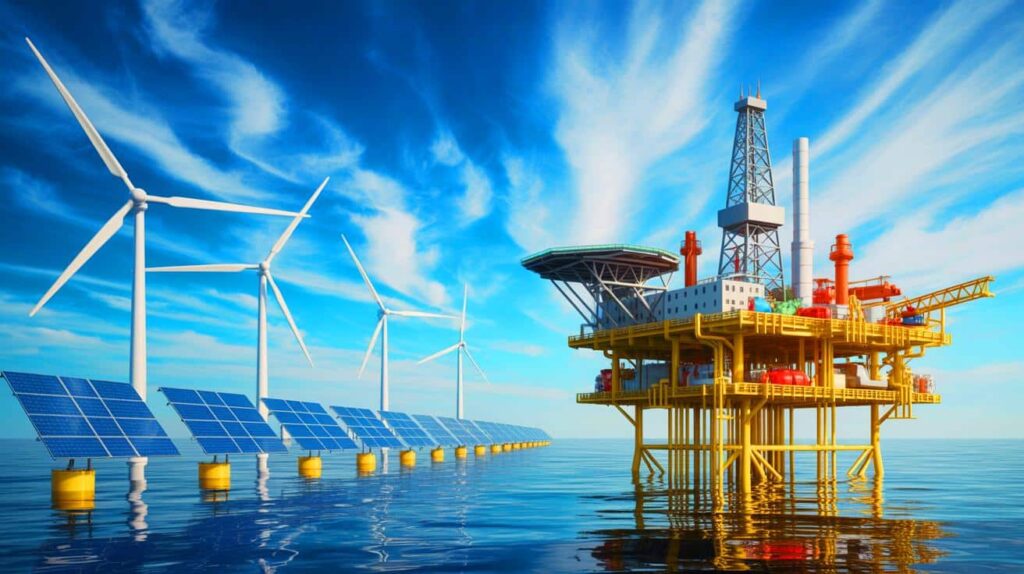
- 🌍 HSBC adjusts its investment strategy, focusing more on renewable energy due to AI-driven demand.
- 📉 The bank predicts a decline in the relative share of oil and gas investments.
- 🙅♂️ Critics argue HSBC’s new targets backtrack on climate commitments.
- 🔋 AI is expected to significantly increase electricity demand, influencing energy strategies.
The global energy sector is at a critical juncture, with traditional fossil fuels and renewable energies vying for dominance as artificial intelligence (AI) technologies drive unprecedented demand. HSBC Holdings Plc, a major global bank, is adjusting its investment portfolio to reflect this shift. While the bank’s finance for fossil fuels is set to rise in absolute terms, its significance within HSBC’s overall energy capital allocations is expected to “decline materially.” This change is largely driven by the increasing reliance on renewable energy to power AI data centers, marking a fundamental shift in how major financial institutions approach energy investments.
HSBC’s Evolving Energy Investments
HSBC Holdings Plc is recalibrating its energy investment strategy to align with the growing demand for renewable energy. Julian Wentzel, the bank’s chief sustainability officer, noted that while fossil fuel financing will rise in absolute terms, its relative share in HSBC’s portfolio will decrease. This shift is propelled by the development of new energy systems that are gradually coming online. AI data centers, which require substantial energy resources, are accelerating this transition by reviving interest in green energy sectors while simultaneously driving demand for traditional fuels.
In light of these changes, HSBC has adjusted its carbon footprint targets. Previously aiming to cut absolute financed emissions by 34% by 2030, the bank now targets a reduction between 14% and 30% by the end of the decade. This adjustment reflects the complexities of transitioning to a low-carbon economy, acknowledging the diverse pace at which different sectors evolve globally. HSBC’s new targets demonstrate a pragmatic approach, balancing ambition with the reality of current global energy dynamics.
Challenges and Criticisms
HSBC’s revised emission targets have sparked criticism from environmental advocacy groups. ShareAction, a London-based nonprofit, criticized the bank’s updated goals as a significant step back from previous climate commitments. The nonprofit argues that the new targets open the possibility for increased investments in oil and gas exploration, thereby diluting the bank’s climate ambitions. Louise Marfany, director of financial sector standards at ShareAction, described the plan as an “egregious example of backtracking” that could potentially undermine responsible investment practices.
Despite these criticisms, Wentzel emphasizes the importance of supporting the transition within the oil and gas sector. He argues that prohibitive measures could hinder progress, as capital withdrawal from fossil fuels may not support the transition effectively. Instead, HSBC aims to participate actively in the shift towards sustainable energy, aligning its new emissions targets with the Paris Agreement while acknowledging the uncertainties influencing decarbonization across sectors.
The Role of AI in Energy Demand
AI technologies are rapidly transforming energy consumption patterns, with significant implications for both renewable and fossil fuel sectors. The demand for electricity driven by AI is projected to quadruple within a decade. By 2035, data centers could consume around 1,600 terawatt-hours, accounting for approximately 4.4% of global electricity demand. This surge is prompting a reevaluation of energy strategies, emphasizing the role of renewables in meeting future energy needs.
While renewables are well-positioned to benefit from this shift, fossil fuels, particularly natural gas, will continue to play a key role in the energy mix. This dual reliance underscores the complexity of transitioning to sustainable energy systems. BloombergNEF notes that AI serves as a “huge shot in the arm” for low-carbon energy, catalyzing the transition by necessitating a swift build-up of renewable energy infrastructure. However, achieving the required baseload capacity remains a significant challenge, highlighting the ongoing need for diverse energy sources.
Implications for Global Climate Goals
The global community faces significant challenges in meeting climate goals set by international agreements. The United Nations Environment Programme’s latest report indicates that the world is on track for a temperature rise of 2.8°C, assuming current climate policies are maintained. In this context, HSBC’s new targets reflect a pragmatic approach to the complexities of global energy transitions.
HSBC’s strategy aims to remain responsive to the evolving global context, ensuring that the bank continues to support its clients while navigating the intricate landscape of energy transitions. By focusing on both renewable and fossil fuel investments, HSBC seeks to facilitate a balanced transition that aligns with its clients’ needs and the realities of global energy demands. This approach highlights the inherent uncertainties influencing decarbonization efforts, emphasizing the need for flexible and adaptive strategies in achieving climate objectives.
As the energy landscape continues to evolve, major financial institutions like HSBC are tasked with navigating a complex and dynamic environment. How can banks balance the urgency of climate action with the practicalities of investing in diverse energy sources to support a sustainable future?
This article is based on verified sources and supported by editorial technologies.
Did you like it? 4.5/5 (23)