
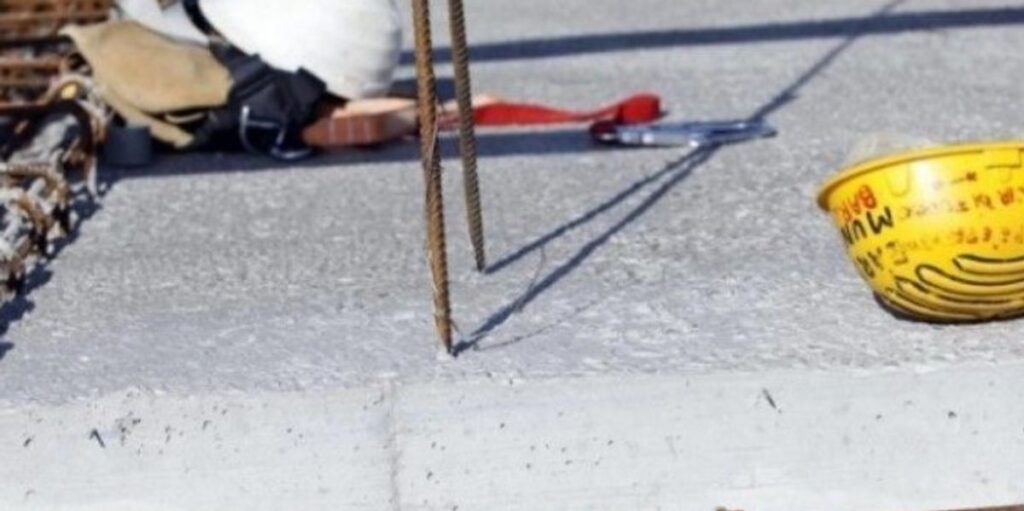
The number of workers who lose their lives while performing their work duties is increasing at an alarming rate in Kosovo. At the top of the list of the most at-risk sectors is construction, where the lack of basic safety measures, protective equipment and professional supervision is becoming a daily threat to the lives of workers.
Although Kosovo’s legislation on occupational safety and health is harmonized with European directives, its implementation in practice remains minimal. Non-compliance with rules, lack of effective controls, and symbolic punishments for violators are deepening the workplace safety crisis.
Trade unions and workers’ organizations have repeatedly raised the alarm, but the responsible institutions are accused of inaction and lack of concrete measures that would prevent repeated tragedies.
Official data and evidence from the field reveal a grim reality, where people lose their lives every month in their workplaces — most of them on construction sites.
The Labor Inspectorate explains that in most cases we are dealing with a lack of safe working conditions.
“The cases have occurred in the construction, manufacturing, electricity and services sectors. In most cases, we are dealing with the lack of safe working conditions, the failure to use personal protective equipment, training and failure to assess the risks in the workplace,” the Labor Inspectorate’s response states.
Asked if there are companies that have been prosecuted for negligence that led to loss of life, the Inspectorate says that “in all cases when we deal with accidents in the workplace, other bodies, including the State Prosecutor, are involved in these cases.”
But the situation, according to the president of the Independent Union of Private Sector Workers, Jusuf Azemi, is much more serious than official statistics indicate.
He expresses great concern about the lack of institutional response.
“The security situation in our country, namely compliance with the Law on Safety and Health, has never been more serious since the post-war period. This year alone, from January 1, 2025 to the end of October, we have 29 cases of death. And of these 29 cases of death, seventy percent of the cases are those that occurred in construction.”
According to Azemi, the victims are mainly young people.
“And unfortunately we have workers who have died from the age of 23 to the age of 45.”
He emphasizes that despite this large number of victims, institutions have not taken concrete measures.
“The most serious problem is that, because of all this large number of dead workers, we are not seeing any initiative from either the Government or the Labor Inspectorate. And it is a great concern that the union and other institutions are experiencing, they are not doing anything about this.”
According to him, even though the union constantly appeals for caution, the institutional response is lacking.
“In fact, whenever we have been given the opportunity, naturally, through our appeals we have called on workers to take care of themselves, because our institutions are not dealing with it. At the moment when something is happening, no one is dealing with them… The results are extremely, very terrible.”
Azemi adds that “first of all, we say that in 95% of cases the human factor is the cause of all these deaths.”
“However, the company owner is obliged to remove from the workplace any worker who does not use protective equipment.”
However, he sharply criticizes the negligence of company owners and the lack of legal responsibility.
“Due to disrespect for work tools, the company owner is fined fifty euros to one hundred euros, which is actually nothing to them.”
As a concrete example, Azemi mentions a tragic case: “We know that in Bechtel-Enka a worker lost his life at the factory and the Labor Inspectorate fined him two thousand five hundred euros. So, I said that the life of an animal today is costing much more than the life of a worker.”
He emphasizes that the main responsibility falls on the owners of the companies.
“We see cases on the ground, every time these workers die, that is, the company owner is exclusively to blame, first and foremost, the company owner.”
Finally, Azem concludes with an appeal to institutions.
“Definitely, the state is not dealing with this issue… the lack of a verdict that a company owner should have for the negligence that caused the death of this worker, it is not happening and this is being taken as normal.”
Fatal workplace accidents in Kosovo – lack of safety measures, the main reason
Failure to use protective measures and lack of training remain the main causes of occupational accidents in Kosovo.
This is stated by Naim Bajraktari, an expert on Occupational Safety and Health, who emphasizes that although the legislation is advanced, its implementation in practice leaves much to be desired.
“The Law on Occupational Safety and Health is in line with European directives, but in practice it is poorly implemented. The small number of inspectors and the lack of effective penalties reduce the responsibility of employers,” Bajraktari told Telegrafi.
According to him, companies should take concrete measures to prevent accidents, including investing in regular training, providing individual and collective protective equipment, and engaging certified persons or licensed companies for occupational safety supervision.
“These specialized companies can issue warnings, organize training and, in certain cases, suspend work until protective measures are applied,” he added.
Another sensitive issue in the Kosovo labor market remains the status of migrant workers.
Bajraktari says that according to the latest data from the Kosovo Agency of Statistics, their number is increasing, especially in the gastronomy sector, however, a complete and updated database is lacking.
Although the law guarantees equal treatment for migrant and local workers, Bajraktari emphasizes that in practice differences are often observed.
“Migrants face lower wages and a lack of training and instructions in a language they understand. State institutions should increase inspections to ensure full respect for their rights,” he underlined.
The expert in the field calls for the state and the private sector to cooperate more closely to raise the culture of safety at work and avoid tragic losses of human lives.
Tragic cases that show the consequences of inaction
The most recent tragedy that reinforces this reality is the case of Faik Mehmetaj, 34 years old, a construction worker from the municipality of Klina, who lost his life on October 29, 2025, after falling from a scaffold.
Following the incident, the Basic Prosecution Office of Prizren detained the owner of the company, NB, and filed a request for detention.
“Referring to your request, we inform you that regarding the case, on 29.10.2025, by order of the prosecutor, the defendant NB was detained. For the same, within the legal deadline, the Prosecution has filed a request for the imposition of a detention measure due to the well-founded suspicion that the same has committed the criminal offense “Destruction, damage or removal of protective equipment and endangering safety in the workplace” under Article 358, paragraph 7, in conjunction with paragraph 3 and paragraph 2 of the Criminal Code of the Republic of Kosovo (CPRK)”, Fitore Mehmeti, spokesperson for the Basic Prosecution Office in Prizren, confirmed to Telegrafi.
This tragic case is a clear example of the consequences that failure to implement safe standards at work can have and shows the urgency for concrete action by responsible institutions, as well as the responsibility of company owners for the lives of their workers.
What does the Occupational Safety and Health Law say?
The Law on Occupational Safety and Health (No. 04/L-161), adopted on June 14, 2013 by the Assembly of the Republic of Kosovo, sets out the rules, obligations and responsibilities of employers and employees to ensure safe and healthy working conditions.
Below is a summary of the main content of the law by chapters and articles:
The employer has full responsibility for the safety and health of workers.
Main responsibilities:
To ensure safe working conditions and cover expenses in the event of an accident or occupational disease;
Conduct a risk assessment for each workplace;
Treat all employees equally in safety matters;
Take preventive measures to avoid risks;
To inform, train and equip employees with protective equipment;
Employee obligations
The employee must take care of his own safety and that of others;
Must use protective equipment and tools properly;
To immediately report hazards or unsafe situations;
Has the right to refuse work in dangerous conditions until they are eliminated. /Telegraph/