
Abstract
Species: Brown bear (Ursus arctos)
Country: Croatia and Slovenia
Implementation: 2014 – 2025
Contact info: tomaz [dot] skrbinsek gmail [dot] com (Tomaz Skrbinsek)
More information: DINALP Bear
The issue:
Monitoring wildlife populations is one of the fundamental aspects of wildlife management and conservation because it provides insights into a species’ population size or spatial distribution. Efficient population monitoring often requires a lot of time and resources, including personnel, particularly in large, remote regions. Such activities are often limited by logistical constraints and become even more challenging when populations are monitored across national borders. In the Dinaric Mountains, for example, brown bears occupy large transboundary regions. The area is politically fragmented, making cross-border coordination even more challenging. Effective monitoring in such regions requires international cooperation and harmonised methodologies to ensure consistent and comparable data, as well as highly skilled personnel.
A solution:
The solution lies in utilising the power of collaboration, citizen science and local expertise. By actively involving stakeholders, such as hunters and foresters, who are often present in the brown bear’s range, monitoring challenges can be transformed into opportunities for success. Involving these local experts as volunteer citizen scientists improves data collection and fosters a sense of shared responsibility.
This was done as part of the broader EU LIFE funded DINALP project, with the aim to support conservation and natural expansion of brown bears into the Alps. In Slovenia and Croatia, hunters, foresters and other interested volunteers have been encouraged to participate in bear monitoring by submitting samples of bear scats for genetic analysis. Interest has been maintained through personal engagement with volunteers and by providing them with personalised results. A yearly population status update report completes the profile.
Actions:
- Setting up a large volunteer network, primarily targeting hunters and foresters.
- Publishing articles in Slovenian and Croatian hunting magazines, providing information about the study and asking for participation.
- Contacting national hunting organisations as well as individual hunting clubs throughout both countries.
- Organisation of 8 meetings in Slovenia and 48 meetings in Croatia with hunting clubs, to inform them about the planned monitoring and asking for participation.
- Contacting foresters through the Croatian and Slovenian Forest Services.
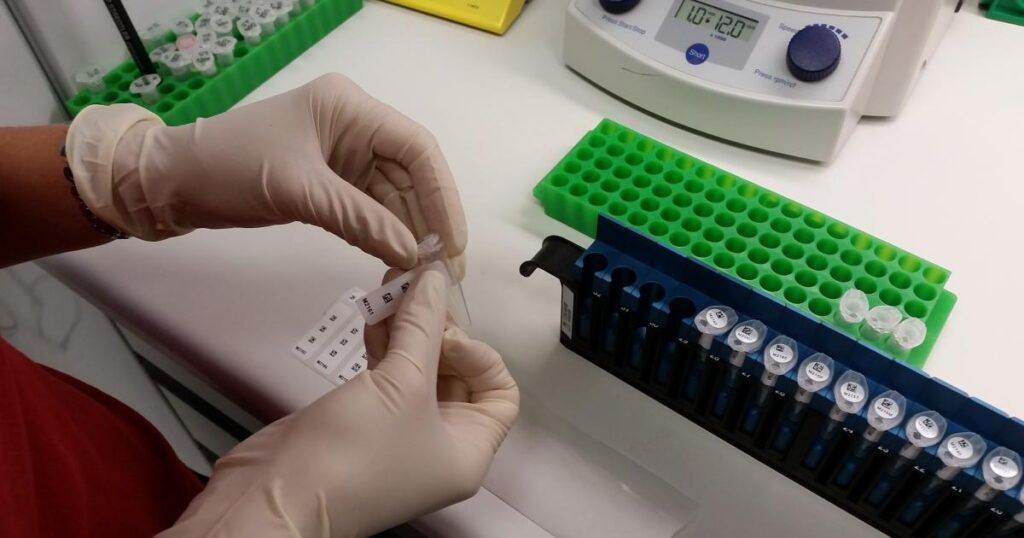
- Design and production of DNA-sampling kits to collect bear scat, including a detailed instruction brochure in the respective language, sampling tubes and a data-entry form. Various sampling tubes were extensively tested to prevent leaks.
- Distribution of DNA-sampling kits to volunteers and stakeholders, along with pre-addressed, stamped envelopes, for participants to use when sending their samples to the laboratory. Kits were provided to hunting clubs during the meetings. The number of kits provided to each club was adjusted according to the forest area covered, in order to provide approximately the same sampling intensity regardless of the expected bear density in the area. The internal structures of the Forest Services were used to distribute sampling kits to the foresters.
- Establishment of individual communication channels through e-mail.
- Motivation of volunteers during the sampling period through frequent periodic updates.
- Feedback to volunteers after sampling, including tracking information on the bears that produced the specific samples they collected.
- Sampling the entire brown bear range in Slovenia and Croatia, covering over 20,000 km².
- Analysis of the samples, using state-of-the-art genetic methods.
- Real-time tracking of sampling effort. Results were fed into an internet-based geo-database. If an area was under-sampled, local volunteers or project staff was contacted to organise sampling collection.
- For the repeat of the study in 2023 (see below), a short explanatory video on YouTube was produced, showing how samples are collected using the DNA-sampling kit.
What changed:
The project achieved the first precise estimate of the brown bear population size and sex structure in the north-western Dinaric Mountains of Slovenia and Croatia, establishing a critical reference point for all future conservation and management efforts in these landscapes. While a similar study was already done in Slovenia in 2007, this study provided Croatia with its first reliable estimate of brown bear abundance, laying a solid foundation for science-based conservation and management practices.
Between September and December 2015, 4687 samples were collected by 962 people, 56% more than initially targeted. 411 persons in Croatia and 551 persons in Slovenia provided samples, and estimates are that over 2500 people were actively part of the study. The majority of participants were hunters and foresters, but some were members of other interest groups or interested members of the general public from both countries.
The response has been very positive, with a large number of submissions: 100-150 samples per day at the height of the field season. This has also helped to develop very good working relations with the stakeholders. Keeping volunteers and stakeholders motivated in the long run is essential for the success of stakeholder engagement and citizen science projects. Direct participation actions in combination with personalised feedback kept volunteers and stakeholders interested, and in many cases fascinated, to explore and contribute in the long term.
The sampling was repeated in autumn 2023 as a part of routine long-term monitoring in both countries. In Slovenia, it was similarly successful, and results were provided to the decision makers in late 2024. The full report will be publicly available, and the results were made public in April 2025. Although the samples were also collected in Croatia, delays in funding for laboratory analysis mean the Croatian results will be available in late 2025 or early 2026.
Financing:
The 2015 project was funded through the DINALP EU LIFE project, with co-funding from the competent ministries of both countries. This initiative continues as routine monitoring, funded by national sources, with the 2023 monitoring funded by the competent ministries of each country.