
Show summary Hide summary
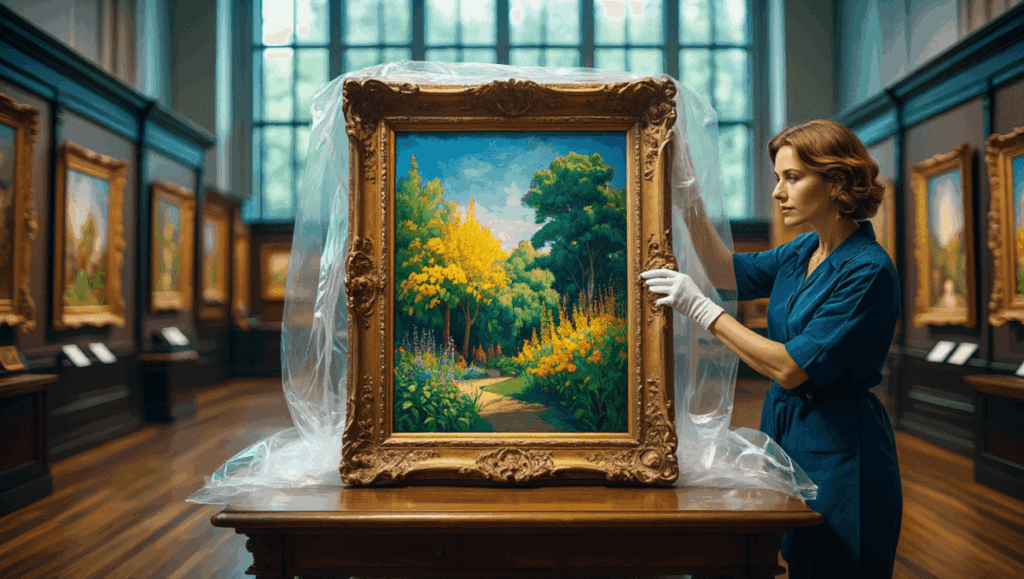
A striking early 20th-century painting has been quietly returned to Poland after vanishing for seven decades, resurfacing only when it appeared at an auction in Denmark last year. The canvas, painted by Danish artist Bertha Wegmann and known as Summer, will go on display in Wrocław after authorities verified its links to a museum collection lost during World War II.
The work’s journey traces the upheaval of Central Europe: created in 1906, acquired by local art circles, cataloged at a girls’ school in what became the Polish city of Wrocław, then lost amid wartime chaos. Its recent reappearance and voluntary handover by the current owners close one small but poignant chapter in a larger story of cultural property displaced by conflict.
How the painting disappeared and why it matters for Poland’s cultural claims
Lower Silesia — the region where the painting was likely created or acquired — moved from German to Polish administration after World War II. As borders shifted and institutions were reorganized, countless artworks were recorded as state property, only to disappear in the turmoil that followed.
Summer was officially listed as missing in 1947, after being documented as part of the Silesian Museum of Fine Arts’ holdings and later loaned to the Viktoria School for Girls in the city then known as Breslau. With no photograph on file at the school and with only descriptive records to go on, Polish officials struggled for decades to connect scattered Wegmann works in foreign sales to the original lost item.
What the painting shows and its artistic background
Bertha Wegmann, a respected Danish painter, completed the work in 1906. The canvas depicts a rural scene: a woman surrounded by golden stalks — likely corn or wheat — breastfeeding one infant while supporting another, a tender domestic image rendered with early 20th-century realism.
The Silesian Artists’ Association purchased the painting and donated it to the Silesian Museum of Fine Arts. From there it was loaned to the girls’ school, where it remained recorded until it vanished during the postwar dismantling and dispersal of collections.
How the artwork was identified and reclaimed
International networks that track missing cultural objects played a crucial role. The Art Loss Register flagged a Wegmann painting listed for auction in Denmark under the descriptive title Young Woman Breastfeeding Her Twin Infants in a Cornfield. On the back of the frame, officials found a label in Polish that matched archival references.
Poland’s culture ministry supplied the auction house with documentation proving the painting’s wartime provenance. The current owners — a young Danish couple who had inherited the canvas and were unaware of its history — decided not to contest the claim.
The couple donated the work to Polish authorities, enabling the painting to be prepared for exhibition at the National Museum in Wrocław. Poland’s minister of culture, Marta Cienkowska, publicly thanked the family for their cooperation and understanding.
Related cases: recent returns of looted and displaced art
Poland’s recovery of this particular canvas fits into a wider international movement to return cultural property removed during armed conflict and illicit trade. Recent headline recoveries include:
- United States returning hundreds of ancient artifacts to Italy, described as long-overdue repatriation.
- Discovery of a cache of modern artworks looted by the Nazis and found in Munich.
- FBI efforts resulting in the recovery of paintings missing for decades from a U.S. museum.
Why gaps in documentation made recovery difficult
Many of the more than 100,000 cultural items recorded as missing from Polish institutions after World War II lack photographs or precise inventory records. That meant when similar Wegmann canvases surfaced at auctions in the UK, Israel or elsewhere, Polish officials could not establish an incontrovertible match and press for repatriation.
The discovery of a Polish-language label on the frame and the notification by an international registry were decisive. Without such physical clues and cooperative sellers, recovering lost artworks can be legally and practically complex.
What happens next for the painting and public access
Conservators have readied the painting for public display, and museum staff are preparing interpretive materials to explain its provenance and the circumstances of its disappearance and return. The recovery will be part of an ongoing effort by Poland’s cultural ministry to locate and restore items lost in wartime upheaval.
Since 2008, Polish authorities have recovered hundreds of works lost during conflict — 805 items to date — a tally that includes paintings, sculptures and other cultural artifacts found at home and abroad through documentation, registries and international cooperation.
You might also like:

Michael Thompson is an experienced journalist covering U.S. and global news. With ten years on the front lines, he breaks down political and economic stories that matter. His precise writing and keen attention to detail help you grasp the real‑world impact of every event.
★★★★★
Be the first to rate this post
or leave a detailed review