
Russia is rapidly developing a new generation of autonomous, AI-driven drones with machine vision, GPS-independent navigation, extended strike ranges, and swarm capabilities, according to Serhii “Flash” Beskrestnov, a Ukrainian drone developer.
The drones can strike up to a range of 62 miles (100 km). Beskrestnov also claimed that the Kremlin “borrowed” technology from Ukrainians and scaled it. The drone expert also referred to the fiber optic wires that Russia borrowed and produced in large quantities after Ukraine began testing them.
The era of autonomous combat AI
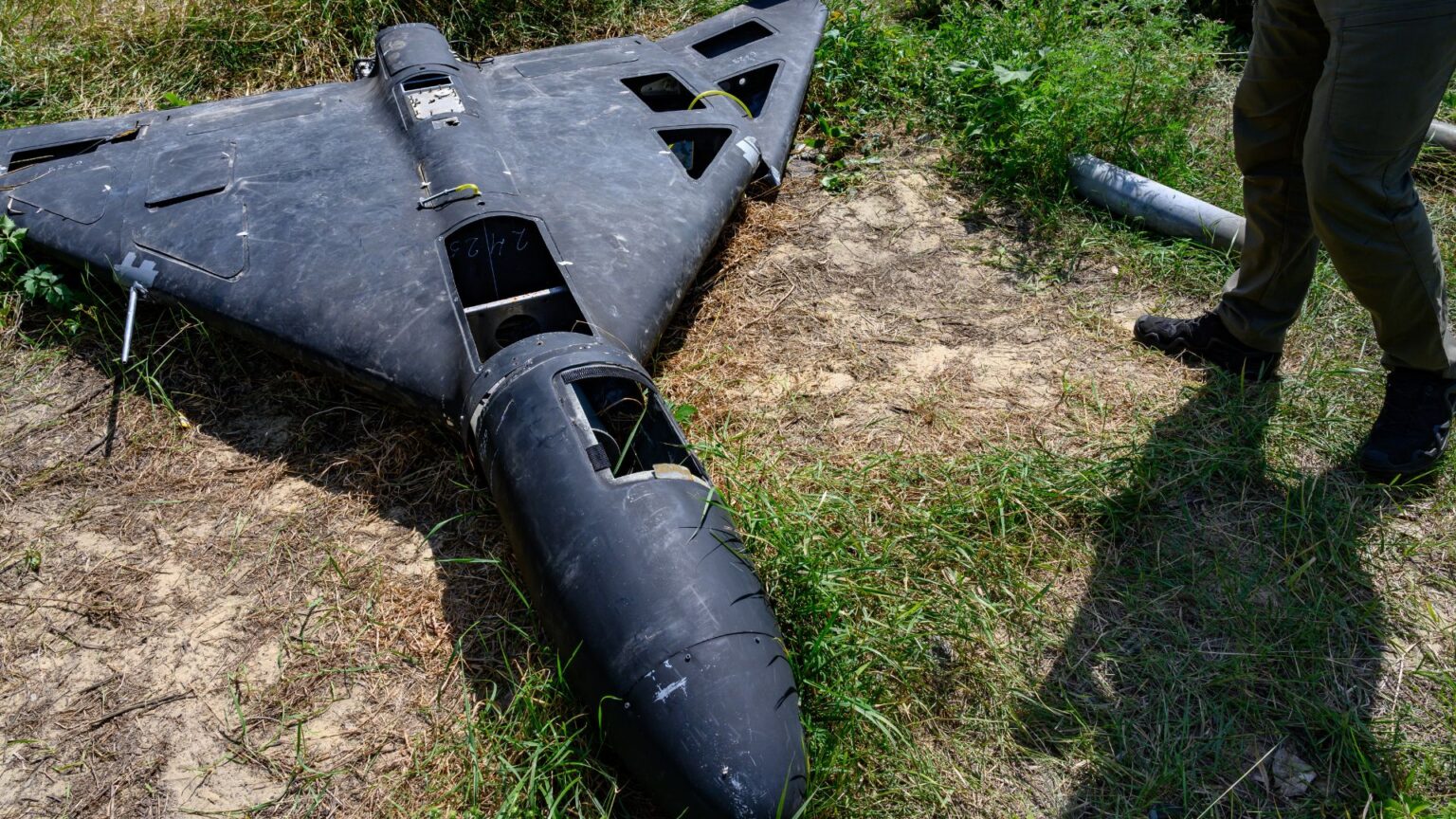
Russia is reportedly testing its V2U drone, which requires no GPS or human commands. It can locate and autonomously target using its terrain-analysis feature. Beskrestnov noted that this is a futuristic drone that can be programmed to hurt anything.
From military vehicles to camouflaged objects, AI can spot anything better than the human eye and hit the targets with precision. Analysis of downed V2U drones revealed that their code is updated every week to facilitate better AI learning.
Earlier in May, Beskrestnov had already revealed that Russia was testing around 20 to 50 V2U drones per day to train its AI. Besides, Russia is reportedly pushing to extend the range of its smart drones from the current 12-31 miles (20-50 km) to 43-62 miles (70-100 km).
Dissecting the process
In an effort to enhance the range, Russian forces are deploying “mother drones” to the battlefield. These larger UAVs can fly 31 miles deep and relay signals for smaller drones, which are then released to attack targets at greater distances.
Russia is launching batches of seven or eight V2U drones for experiments. Beskrestnov suggested this technology could be transferred to long-range weapons like Shahed, an Iranian combat UAV used by Russia extensively in Ukraine.
These drones can monitor each other visually without requiring direct radio links, indicating a form of reactive group intelligence.
“If one disappears, the others begin to perform anti-aircraft maneuvers because the algorithm understands that one of the ‘flock’ was shot down,” Beskrestnov stated.
About the V2U drones
The V2U drone utilizes a 14MP camera and a laser rangefinder to navigate its surroundings. It is aided by a digital terrain map stored on a 100GB hard drive, paired with a Jetson AI module. China’s Meskernel manufactures the laser rangefinder.
The V2U first appeared in the Sumy region in February 2025, and its use increased markedly by May. It can operate fully autonomously or in first-person-view (FPV) mode over LTE via a Microdrive Tandem-4GS-OEM-11 modem-router paired with a Ukrainian SIM card.
The system can switch to machine-vision navigation if the GPS/GLONASS signals are jammed. Carrying a 3.5 kg warhead, the drone supports multiple payload options, including a 3 kg KOFZBCh multi-effect warhead or a 2.9 kg shaped charge.
Launched from a pneumatic catapult, internal combustion engines power newer variants, extending range to 62 miles.