
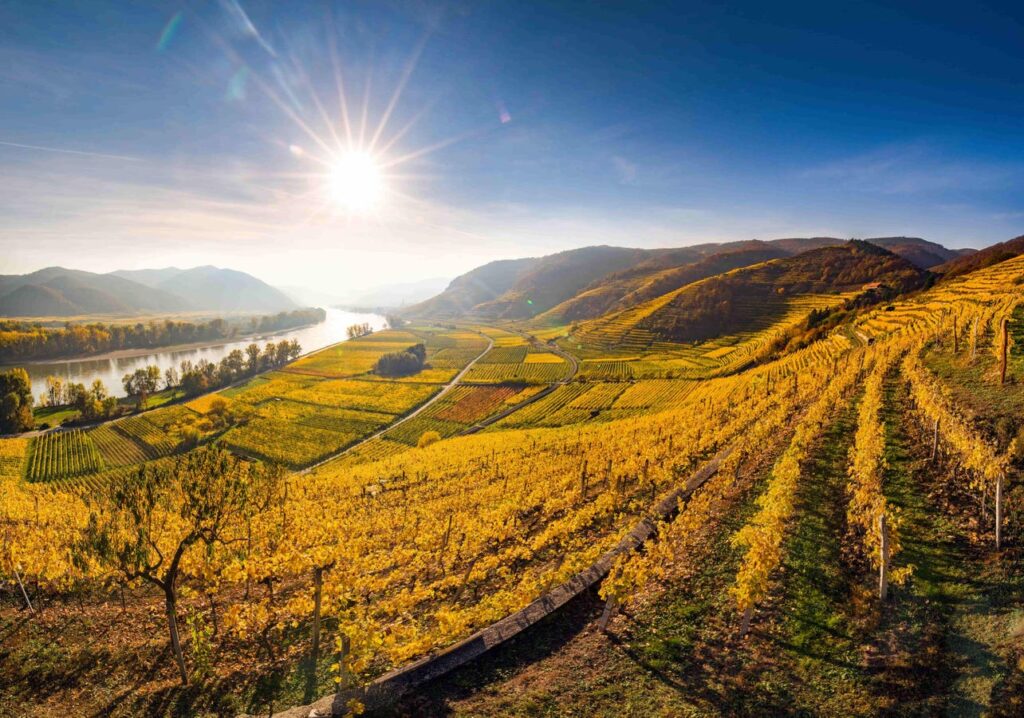
Ried Liebenberg, Ried Kaiserberg, Ried Frauengärten, Dürnstein, Wachau, Niederösterreich
© Austrian Wine / WSNA
Austrian wine may not dominate American wine shop shelves the way French Bordeaux or California Cabernet does, but a new economic impact study reveals why discerning consumers should pay closer attention to this Central European wine region.
New to Austrian wine? You’re in good company—plenty of curious drinkers are just discovering it. The insights in this article draw on a 2025 study by the Economica Institute of Economic Research, commissioned by the Austrian Wine Marketing Board, which analyzed the wine industry’s contribution to Austria’s economy in 2023.
Here are five key things to know about Austrian wine as we look ahead to 2026.
Quality Has Been The Strategic Focus For Decades
Austrian wine isn’t an overnight success story. According to Chris Yorke, CEO of the Austrian Wine Marketing Board, the high quality of Austrian wines and their strong reputation both domestically and internationally stems from “strategic, targeted activities engaged in over the decades” that have systematically boosted image, sales, and export potential.
This long-term commitment to quality over quantity means that when you pick up a bottle of Austrian wine, you’re benefiting from generations of focused improvement. It’s a fundamentally different approach than regions chasing trends or maximizing volume.
Austrian Wine Regions Offer Distinct Experiences
The study examined Austria’s four major wine-growing federal states, and each brings something to the country’s wine portfolio.
Niederösterreich (Lower Austria) is the largest wine-producing region by both area and number of wineries, generating the greatest overall economic impact. This is Austria’s powerhouse region.
Burgenland stands out as having the greatest significance for agricultural wine production among the four states. This is serious winemaking country.
Wien (Vienna) punches well above its weight as the smallest wine-growing state, creating disproportionately high added value thanks to its thriving hospitality industry and wine tourism. Few world capitals can claim an active wine industry within city limits.
Steiermark (Styria) thrives as a wine-producing region with high tourism appeal, where wine-related goods and services play an outsized role in the local economy.
Ried Kirchenberg, Kirche St. Leonhard, Kellergasse, Wartberg, Weinviertel, Niederösterreich
© Austrian Wine / WSNA
Austrian Wine Tourism Means Premium Experiences
If you’re planning wine travel, Austrian wine regions deserve serious consideration. The economic data tells a compelling story: in 2023, visitors who engaged in wine-related activities spent an average of 18% more per day than other tourists.
According to the Austrian Wine Marketing Board, dedicated wine and culinary tourists, representing about 4-5% of all vacationers, generate approximately 50% greater sales than the average tourist during their holiday.
But wine tourism in Austria isn’t just for dedicated oenophiles. Around 30% of all tourists have a fondness for wine and fine dining, and an additional 25% of visitors integrate wine themes into their vacations, including art and culture enthusiasts, active and wellness-oriented travelers, families, and event-goers.
This premium isn’t about price gouging. It reflects the caliber of experiences available in Austrian wine country, from acclaimed Heuriger wine taverns to cycling through vineyard landscapes. Austria’s wine tradition has been deeply rooted for thousands of years, with vineyards integral to the landscape, culture, and daily life, reflected in unique grape varieties, many exclusively found in Austria’s wine-growing regions.
Consider Niederösterreich (Lower Austria), home to the Wachau valley, a UNESCO World Heritage site, and the Weinviertel with its countless romantic Kellergassen, affectionately called “villages without chimneys.” You’ll find ancient Roman archaeological discoveries in Carnuntum and immersive experiences like the LOISIUM WeinWelt in Langenlois, a vistor center devoted to wine culture.
When wine tourists are willing to spend significantly more, it signals something special is happening in these regions.
The Industry Is Family-Driven And Culturally Rooted
More than 10,000 wineries operate in Austria, and 95% are family-run operations. Johannes Schmuckenschlager, Chairman of the Austrian Winegrowers Association, emphasizes that viticulture is “more than just agricultural production” in Austria. It’s an “economic and social lifeline” that contributes to regional attractiveness and cultural identity.
This family-business model typically means smaller production, more hands-on winemaking, and deeper connections to specific terroirs. It also means you’re more likely to meet the actual winemaker when visiting, rather than a corporate representative.
Now Is Time To Support Quality Austrian Wine Producers
The Austrian wine industry generates €3.8 billion in gross added value and supports more than 68,000 jobs. Behind those numbers are thousands of family winemakers working to maintain quality standards while navigating serious economic headwinds.
Here’s what every wine consumer should understand right now: the industry is under significant pressure. Schmuckenschlager notes that wineries face “record-high production costs, falling consumption of wine, excessive bureaucracy and growing international competition.”
For wine lovers, this means two things. First, expect potential price increases as production costs rise. Second, and more importantly, some smaller family producers may not survive these pressures without consumer support.
If you appreciate quality Austrian wines, now is precisely the time to seek them out and support the producers who have spent decades building this reputation for excellence.
More From ForbesForbesHoliday Gift Guide 2024: An Impressive Lineup Of Austrian WinesBy Jill BarthForbesFor Austrian Wine, 2018 Was A Record-Breaking YearBy Jill BarthForbesBudapest Wine Festival 2024: A Celebration Of Hungary’s Wine HeritageBy Jill BarthForbesAustrian Single Vineyard Wines: ‘The Silent Voice Of Terroir’By Jill Barth