
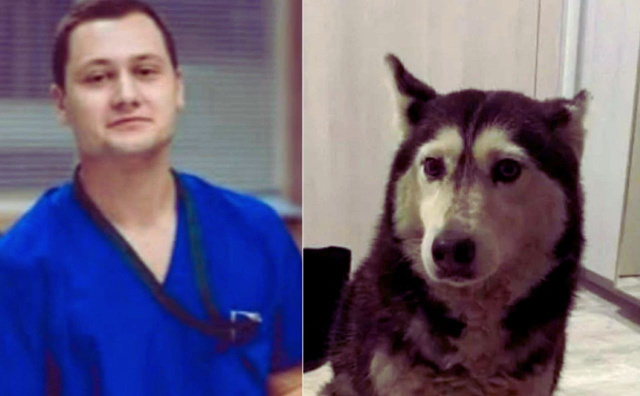
The Military Medical Academy (VMA) in Sofia has suspended North Macedonian citizen Dr. Nenad Tsonevski, who was involved in the case of a dog being run over in the capital’s Rassadnika district. In a statement, the VMA said it is fully cooperating with all relevant authorities, including the Military Police Service, the Military Prosecutor’s Office, the District Prosecutor’s Office in Sofia, the Third Regional Office, and the Ministry of Defense Inspectorate, as the investigation continues.
Further reading: North Macedonian Doctor Sparks Outrage in Bulgaria after Running Over Beloved Stray Dog Maya (GRAPHIC VIDEO)
According to the Sofia Directorate of Internal Affairs, the man responsible for the incident has confessed and claimed that the collision happened unintentionally while making a maneuver. The suspect is a 29-year-old citizen of North Macedonia and a doctor at the Military Medical Academy. Following the development, the VMA confirmed that Dr. Tsonevski will not perform any official duties until the case is fully clarified.
The hospital emphasized that it can only assess his professional conduct, not his personal actions. It also condemned all forms of aggression and incitement to violence, regardless of the target. The institution stated that it stands firmly against such acts and will wait for the completion of the investigation before taking further measures.
Justice Minister Georgi Georgiev announced that the Sofia District Prosecutor’s Office has launched pre-trial proceedings in the case. The incident has sparked public outrage and renewed discussions about cruelty toward animals in Bulgaria, following the earlier high-profile case of the dog Maya.
Animal rights activist Yavor Gechev and lawyer Marieta Karadjova commented that Bulgaria’s legislation on animal abuse is among the strictest in the EU, and that authorities acted promptly in this case by initiating proceedings within 48 hours. However, they also noted inconsistencies in institutional response, pointing to other cases, such as in Ruse, where no perpetrators have been found.
Gechev said there is growing public intolerance toward acts of cruelty, with citizens increasingly expecting justice, but also expressing distrust in institutions, which sometimes leads to extreme reactions and calls for revenge. He added that the role of state institutions is not only to investigate but also to ensure public security and trust.
Lawyer Karadjova observed a marked improvement in recent years, highlighting that court practices have evolved due to two major amendments to the Penal Code addressing cruelty to animals. She noted that the Ministry of Internal Affairs has received 457 reports of animal cruelty in the past year, with around 250 of them already concluded.
Karadjova said what disturbed her most about the Rassadnika case was that a seemingly ordinary person could leave an injured animal to suffer on the street without offering help. She pointed out that, tragically, many animals continue to die painfully on Bulgarian roads every day, underscoring the need for stronger empathy and accountability in society.