
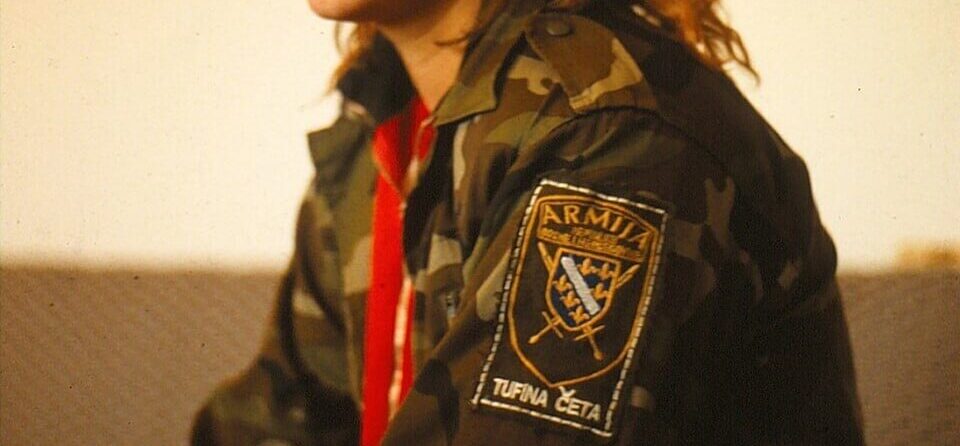
Like Duraj, Nusreta made the same decision after reading of the displacement and killings. She enlisted in 1992, aged 21.
“I studied engineering before the war. I loved maths and science. When the war began, we, the youth, didn’t take it seriously. We didn’t believe that a war could actually happen,” Nusreta recalled.
“However, as more and more refugees arrived in my town, hearing their stories and seeing their pain made me realise that the war was real. I became increasingly upset by what I heard, but what finally prompted me to join the Bosnian army was reading the testimonies of forcibly displaced people. My sister worked for a humanitarian organisation and documented their plight. One day, I came across a pile of papers in our unit and started reading them. They were the stories of people who had fled to my town to save their lives. I was furious. I went to the town’s military base and said I wanted to join the army, that I knew how to shoot, and that was the start of my fighting.”
Nusreta said she had no “formal training” before her deployment as part of a sabotage-reconnaissance unit.
“You learn as you go,” she said. “I served as a sniper in the war. Men had the advantage because they had their regular military training before the war. We practiced here and there as needed.”
Nusreta said she was the only woman fighting alongside 120 men.
“I tried to be a mate to them. I would take off their socks and wash them in the river or make them a pie when I could. There were very few women in the field. Before the war, I trained in shooting, and I wanted to use that skill to contribute to my unit. I fired my weapon when needed. They would call me when it was necessary.
Nusreta recalled her commander saying he would register her as a ‘general affairs officer’, not a sniper. When she objected, he replied: ‘Don’t be a fool, this is what you will be in the official register only.’
“He was thinking about my future and didn’t want that identity [as a sniper] in my files,” she said. “He thought it might stigmatise me, and he was right.”
Not officially registered in Bosnia as a war veteran, Nusreta does not receive a veteran pension from the state and said she could not face the “bureaucratic, humiliating” hurdles she would have to cross to get one.
“I left Bosnia and received a pension overseas within two months of my diagnosis,” she said.
Asked how she dealt with the deaths, Nusreta replied:
“Thirty-seven of my comrades were killed – all young people, many of them minors, just 17 or 18 years old.”
“I got leave when my boyfriend was killed. And that’s important because you can do all sorts of bad things if you don’t take leave or have some time off,” she said. “My commander knew it, so he would force us to take leave.”
‘No room for error’