
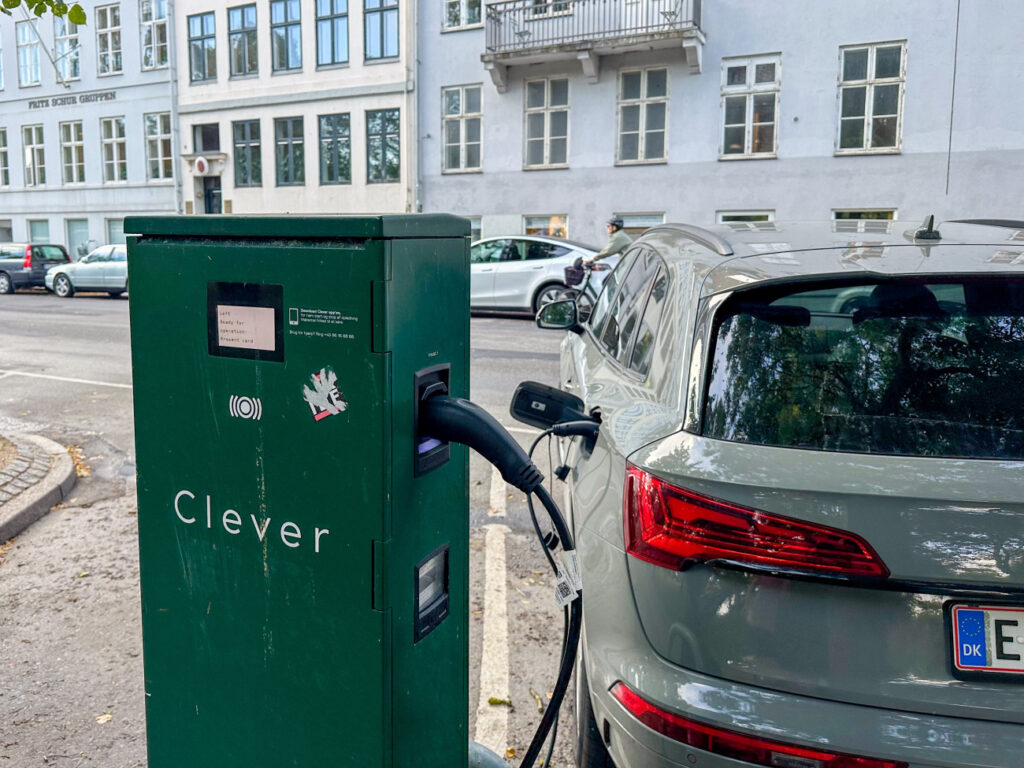
Denmark will remain a reliable cross-border outlet for used fleet electric vehicles in 2026, after the Danish Government announced a 12-month postponement to its proposed increase in the national Registration Tax applied to battery electric vehicles (BEVs).
BEV owners currently only have to pay 40% of the Registration Tax, although this was due to rise to 48% in January 2026. Following the Government’s deferment decision, the tax will now remain at 40% throughout 2026, making BEVs more affordable to Danish buyers.
However, Registration Tax will rise to 48% in 2027 and increase to 56% the following year.
Cross-border remarketing
Yoann Taitz, Regional Head of Forecast & Market Expert at Indicata, said the delay would offer some short-term relief to Europe’s used BEV remarketing ecosystem, which had been braced for a slowdown in demand from Denmark.
The country is one of Northern Europe’s largest importers of used electric vehicles, which originate primarily from Germany, the Netherlands, and France. Cross-border remarketing is beoming ever more important to Europe’s leasing companies.
“Without this delay, Danish demand for imported used BEVs would have declined sharply in 2026,” said Taitz. “Keeping the rate at 40% effectively shields Europe’s cross-border markets, maintaining a healthy balance between local and imported BEV supply.”
Registration Tax
Registration Tax applies to both new vehicles registered locally in Denmark, as well as used cars imported from other EU countries. The tax is progressive, rising from 25% of the first DKK72,900 (€9,800) of the official list price (including VAT) to 85% on the portion between DKK 72,900-226,500 (€9,800-€30,300), and rising to 150% on the element of vehicle price above DKK 226,500 (€30,300).
Purchasers of BEVs only have to pay 40% of this standard registration tax. They also benefit from a basic deduction of DKK 165,000 (€22,100) from the vehicle Registration Tax.
“For example, the registration tax difference between a small BEV and a small gasoline car is nearly €14,000, the largest tax break among 31 European countries assessed (including the EU-27 plus Iceland, Norway, Switzerland, and the United Kingdom),” according to the International Council for Clean Transportation.
Danish BEV market
New BEV sales in Denmark were 45.5% up year-on-year for the first nine months of 2025 to 88,452 cars, representing 66% of all new registrations. The country also reported the fastest growth in Europe in the number of public rapid chargers installed during the first quarter of 2025.
By maintaining the lower Registration Tax for another year, Danish authorities are attempting to preserve consumer affordability and market stability, at a time when BEV adoption rates across Europe are slowing.
But Taitz said the measure would have mixed outcomes.
“This move is positive for consumers and exporters in the short run, but it delays the natural market rebalancing where locally registered BEVs would have benefited from stronger value retention,” he said.
And, he added, when the Registration Tax rises in 2027 and 2028, all the way up to 100% in 20235, it is likely to moderate import volumes and support local residual values.
“Denmark acts as a fiscal barometer for EV flows across Northern Europe. Monitoring these changes allows market players to anticipate price movements, optimise remarketing channels, and manage portfolio risks more effectively,” said Taitz.
Image: Shutterstock_2699425467