
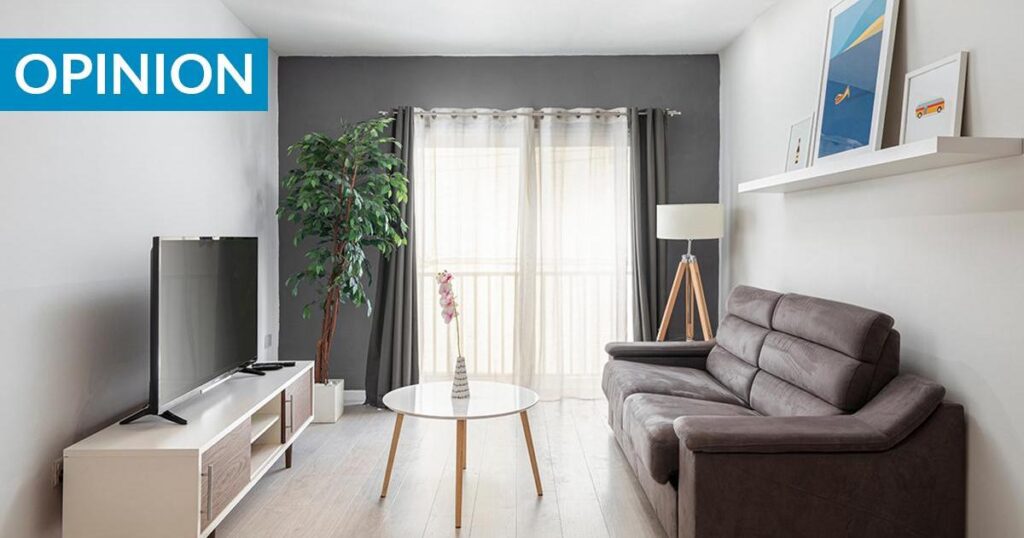
Malta’s short-let market has exploded in recent years, challenging traditional hotels to rethink how they operate.
As new rules on licensing and regulation are being discussed, one thing is clear: short-lets, and the traveller behaviour they represent, are here to stay.
The stakes are particularly high for Malta.
With one of the highest tourism densities in Europe, the dilemma we face is how to preserve community life, ensure fair market conditions and keep Malta’s tourism model sustainable for future generations.
Recent data shows Malta has more than 9,300 Airbnb listings, accounting for roughly a third of the accommodation market in some localities. In certain areas, entire apartment blocks now operate as de facto hotels.
For traditional operators, this tech-driven disruption has forced a reckoning. The days of simply listing your rooms on booking platforms and waiting for tourists to roll their suitcases into the lobby appear to be over.
But this isn’t a threat to be eliminated. It is a new reality that must be understood.
It is important to contextualise all of this. The debate in Malta over short-lets is, after all, part of a much larger shift. Across the world, travellers are seeking independence, authenticity and flexibility; values that platforms like Airbnb have capitalised on brilliantly.
This kind of disruption has transformed countless other industries in recent years and tourism is no different.
While there’s no doubt regulation is needed: fair taxation, safety standards and transparent registration must apply across the board – regulation alone won’t save hotels from decline.
The real question isn’t how to control short-lets. It’s how to compete with them because they’re not going away.
Short-let accommodation has tapped into what modern travellers want most: experiences that feel personal, local and real. They want to wake up in a neighbourhood, not just a room.
They want to eat where locals eat, meet people who live there and leave feeling they’ve touched the culture, not just passed through it.
Hotels that continue to rely on old models with uniform interiors, rigid service structures and one-size-fits-all packages are, in my view, most at risk.
On the flipside, the most successful operators in the next five years will be those who evolve their product to meet these new traveller expectations.
The lesson for Malta’s hotels is not to imitate short-lets but to integrate the spirit behind them.
The modern traveller doesn’t want to choose between professional service and personality: they want both.
Hospitality is no longer simply about where you sleep. It’s about how it makes you feel- Paul Pisani
Hotels have a unique advantage: they can offer the trust, consistency and safety that travellers still crave while adopting the flexibility, creativity and local flavour that short-lets embody.
Across Malta, hotels that adapt to these new expectations, through design, service and culture, will thrive.
At Verdi, the group of hotels I oversee, we see this as an opportunity to redefine hospitality itself.
Our role as hoteliers is to bridge the gap between guest and community, bringing the destination into the hotel not hiding the hotel from the destination.
I recently sat on a panel with other hoteliers and industry leaders. One misconception is that the hotel sector can’t innovate at the same pace as digital disruptors.
But, in reality, technology gives us the chance to compete more intelligently.
At Verdi, our AI-driven systems handle tens of thousands of guest interactions, from chatbots to booking automation. This frees our teams to focus on what matters most: creating a genuinely local and human experience for guests.
Technology shouldn’t replace hospitality; it should amplify it.
Five years from now, the line between hotels and home-stays will blur even further. In fact, many Maltese hotels are already listed on short-let apps.
The strongest players will be those who recognise that hospitality is no longer simply about where you sleep. It’s about how it makes you feel.
For Malta, that’s both a challenge and an opportunity. Our hotels can compete by becoming more local: through partnerships with Maltese chefs, artisans and communities, so every stay feels unique to Malta, not interchangeable with anywhere else.
We must understand that short-lets are not the cause of this change. They are a response to evolving guest expectations.
As hoteliers, we can either fight that change – and certainly lose – or make it work for us by adapting our models and mindset.
My vision is for Malta’s hotels to feel as personal as a home but as reliable as a brand.
Let’s stop asking how to win back the guests we’ve lost and start thinking about how to attract the travellers of the future.

Paul Pisani is president of Verdi Hotels.