
GREAT FALLS, Mont. – One of the fastest-growing tech industries in the world is offering more opportunities than ever, and a Montana game studio is working to make sure local students can be part of that future.
Josh Hughes, co-founder of Add-A-Tudez Entertainment Company and its education-focused branch Team Kaizen, said many people still don’t fully understand what game development really involves.
“The single biggest misconception is that, you must be playing video games all day. It’s like, No, it’s a lot of work. In my case, especially when you’re a part of an indie small studio,” Hughes said.
According to the U.S. Bureau of Labor Statistics, the demand for skilled game designers is projected to grow nearly 18% by 2030; a rate far faster than most other creative technology fields.
Coursera reports U.S. video game designers average around $90,000 a year, with senior positions reaching six-figure salaries. That fact alone surprises many.
“The wildest reaction we tend to get is from teachers and parents. I’ve lost count of how many times we’ve had them come up to us and say, I did not realize so many dozens of jobs were involved in game design,” Hughes said.
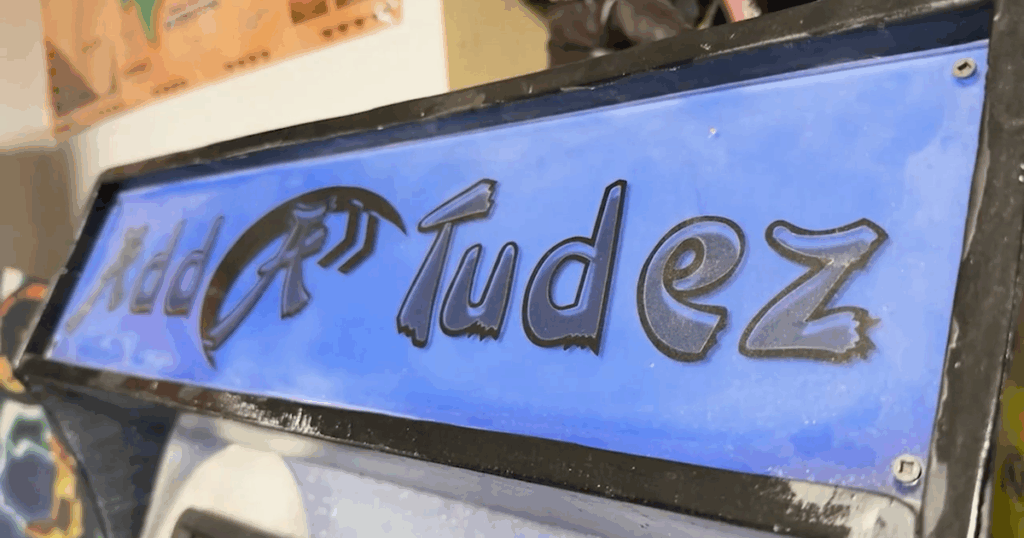
In Great Falls, Add-A-Tudez Entertainment Company is showing students those opportunities firsthand. The indie studio is one of the first in Montana to be PlayStation- and Xbox-certified, and its roots trace back to a difficult chapter for the Hughes family.
Hughes said the idea for the studio emerged when his brother, Trevor, faced a life-threatening kidney condition that forced the family into medical bankruptcy.
“We found out that he was born with a severe kidney problem,” he said. “He’s now in dialysis three times a week and, you know, trying to get on the kidney transplant list and at that point, we had to go medically bankrupt. We lost everything. We had to sell our house, sell our car, move in with our grandparents. And it just all came crashing down.”
Video games became a source of comfort and eventually inspiration.
“When Trevor and I would be sitting in the living room, you know, trying to keep our minds off all the crazy stuff happening, we’d either be playing video games, or talking about our dream video games we would love to make,” Hughes said.
He recalled telling his mother during one of Trevor’s surgeries: “Instead of trying normal because obviously normal is not working for us, let’s go crazy. Crazy meaning take our love of video games, turn it into a job.”
That leap of faith eventually evolved into Add-A-Tudez and Team Kaizen. What sets them apart, Hughes said, is their “teaching studio” model; which is blending independent game development with education and community outreach.
“We saw how you had these two different sides of the game industry [entertainment and education] that weren’t really talking to each other,” he said. “We feel that having one foot in each world helps us. And so that’s kind of where we coined the term for ourselves that we call ourselves a teaching studio.”
Team Kaizen invites students to watch real development builds, learn from mistakes, and understand every step of the process.
“We want them to see the development builds that we want them to see where we’re succeeding and where we’re tripping on something and have to learn our way around it,” Hughes said.
The studio also offers school visits, workshops, and virtual tours designed inside Fortnite, where students walk through a digital replica of a game studio.
“We built an entire fake game studio that we take kids on a tour of and say, Here’s the writer, here’s what they do, here’s the business person, here’s HR, here’s the lawyer, here’s the 3D artist, and we cover all these different jobs and explain to them how they can seek out more knowledge about these kinds of jobs.”
The Entertainment Software Association reports more than half of Americans play video games, and Hughes said the skills developed through gaming translate far beyond entertainment.
“They’re learning things like teamwork, communication, dignity and respect. They’re learning things like how to handle stressful situations,” Hughes said. “One of the things that we love about video games is they have what’s called safe to fail environments, which means if you screw up and you die in a game, it doesn’t really usually beat you over the head that hard. Just says game over, want to try again. And that encourages them to try again and think of a different way to approach the situation.”
He believes that as the industry grows, it needs more creators from places like Montana.
“We need a lot more smaller companies, a lot more mom and pop shops all across the world that are each bringing their own unique voice to the industry.”
For Hughes, the ultimate goal isn’t just making games, it’s ensuring anyone, from any background, feels welcome in game development.
“It doesn’t matter who you are, that you can do this and you can bring your own unique voice and your own unique mix to the industry and the industry is better for it,” he said. No, you were not born the wrong person. You have just as much right to pursue this and express yourself through this as anyone else.”
Team Kaizen is currently developing two new games, including one supported by the Montana Film Office, and continues presenting at national conferences on game education with two expos coming up in Florida next week (week of November 17, 2025).
But when asked what he hopes the next generation will look like…
“I hope the next generation of developers from Montana is nothing I could possibly imagine,” he said. “If you think about some of the most transformative games you’ve ever played, they’re usually the ones that made you think, I never would have thought of that.”
Before developing their own titles like “Burst” and “Shattered Soul,” Team Kaizen worked with Sony Mobile Canada on a unique project inside LittleBigPlanet, which then turned into a custom six-level Spider-Man game designed to help Sony sales representatives learn new phone features.
Testing got unexpectedly intense.
“The original version actually had Sandman hitting the character in such way that the phone went flying, landed in the ocean and sunk down, and you had to swim down and grab it,” Hughes said. “It looked wonderful and everyone loved it. Then all of a sudden we got an email from our contact and he said, I hate to break this to you guys, but we showed this to more people and someone actually went and checked one of the prototypes in a pool and legal says we can’t say it can go fully underwater now. So like somewhere out there there’s a poor phone prototype that died a hard death because of us.”
The project became so popular that Sony asked the team to translate it into multiple languages, including French.
“I apologize to any French speakers out there,” he said as he recalled one of the versions they put together, “Like the opening statements, for instance [speaks French].”
As game development surges toward a $600 billion global future, Add-A-Tudez and Team Kaizen hope to ensure Montana students aren’t just spectators, they’re creators.
“Tomorrow’s Mozart of games or tomorrow’s Steven Spielberg of games is a kid in a classroom right now that will be inspired when they see that stuff and say, hey, I could do that also,” Hughes said.