
MINSK, 16 November (BelTA) – Belarus plans to harmonize approximately 85% of its standards with international ones by 2030, Chairwoman of Belarus’ State Committee for Standardization (Gosstandart) Yelena Morgunova told STV, BelTA has learned.
“We are working with the Russian Federation to integrate our collections of standards. As for national standardization, 65% of our national standards are already harmonized with international requirements. This is a high figure, but we have set ourselves even more ambitious goals in our development strategies – to increase the level of harmonization to 85% by 2030,” said Yelena Morgunova.
According to her, Belarus has currently concluded over 50 agreements with various countries on the exchange of standards and the possibility of requesting standards from a particular country if it is of interest as a supplier country.
“We have 50 agreements with a large number of countries – we already know and exchange standards, we know their requirements. Taking the People’s Republic of China as an example, our standards database contains over 55,000 Chinese standards. We can provide these requirements to domestic producers in the food industry, light industry, electrical engineering, and mechanical engineering through standards, so that their products comply with these requirements because they are intended for that market,” Yelena Morgunova added.
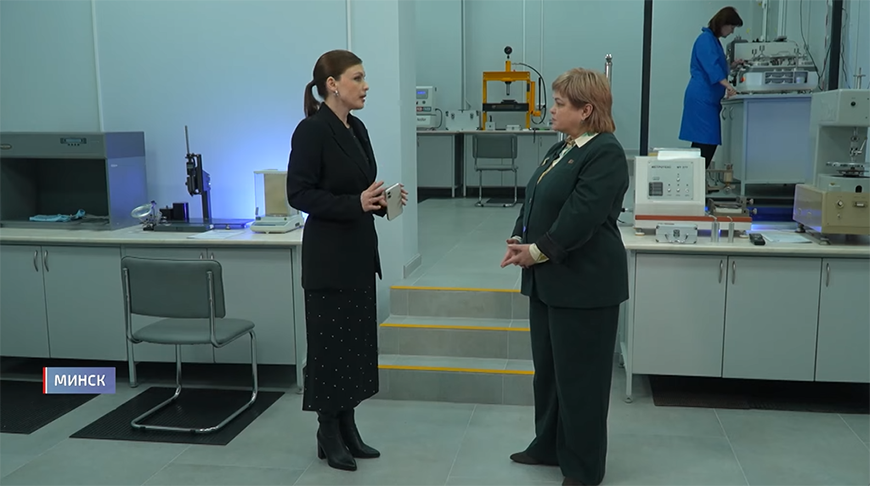
Within the Eurasian Economic Union and the CIS, their own interstate standards are in effect, and an increasing number of countries are joining them. “We have preserved these interstate GOSTs and our national standards since Soviet times. We currently have 32,000 standards in our active collection. Accordingly, these GOSTs are in the database and are updated every five years. Looking at the national standardization program, we develop 800-900 new standards per year,” explained Yelena Morgunova. She noted that while it used to take about two years to develop a GOST standard, new standards are now formed in as little as nine months, with the most relevant and in-demand ones taking six or even two months.
The head of Gosstandart also spoke about hotel certification. It is currently voluntary and based on a declarative principle, although in her opinion, it should be made mandatory. A corresponding standard for hotel certification, for assigning and conforming to certain star ratings or categories, has been developed. This standard specifies what a hotel must provide for each star rating.
“Currently, this is a voluntary field. In Belarus, 84 hotels, or about 15%, are in the voluntary system. This is a low indicator. But this standard also applies to the certification of sanatoriums. Today, two sanatoriums have the corresponding categories and have undergone voluntary certification. This standard also sets requirements for hostels: they must be isolated premises, and if located in a residential building, they must be separate from the housing stock, with a separate entrance, no more than 12 beds, and must include kitchens, lobbies, etc. So, all this is also specified, and, in principle, by using this standard, one can achieve the corresponding certification,” Yelena Morgunova concluded.