
Serbia seeks solution to Russian ownership of NIS

Express newspaper
18/11/2025 16:03
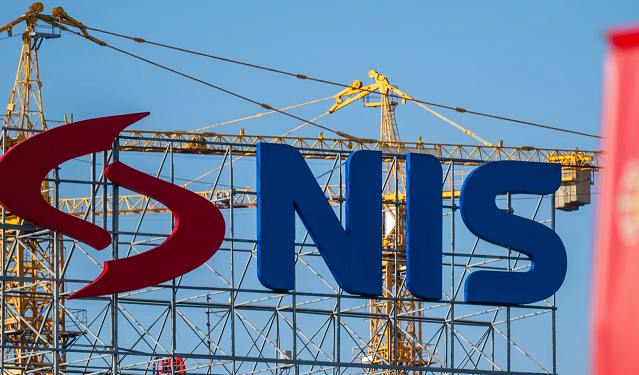
Serbian authorities say the Oil Industry of Serbia (NIS) and its refinery must continue operations as the deadline – set by the US – for the removal of Russian ownership from the company approaches.
NIS is under US sanctions because most of its ownership is controlled by Russia.
With sanctions, Washington aims to prevent the financing of the invasion that Moscow has launched against Ukraine since February 2022.
One of the possible options is the nationalization of the company, but the Serbian government is trying to avoid it “at all costs.”
Economic consultant Bogdan Petrovic says that, currently, there is no legal basis for the nationalization of NIS.
“Of course, the Assembly could adopt a law on nationalization within three or four days,” he says, but adds that such an action would be “very difficult and dangerous” and could lead Serbia to international arbitration.
US sanctions, meanwhile, have blocked NIS’s supply of crude oil, putting the operation of the Pancevo Refinery at risk.
According to authorities’ calculations, with the help of state reserves, the refinery will only have oil for processing until November 25th.
Serbian President Aleksandar Vučić, who for months has dismissed the possibility of nationalization, saying that Serbia will not seize the property of others, now does not rule out this possibility.
“I want to avoid nationalization and confiscation at all costs, because this is not our majority ownership. First, I want to exhaust all possibilities,” Vučić said at an extraordinary government session on November 16.
Serbia, besides Belarus, is the only country in Europe that has not joined the European Union’s sanctions against Russia, due to its invasion of neighboring Ukraine.
Serbian officials say they have been given the green light to begin negotiations on the ownership issue, and this permission is valid until February 13th.
Economic consultant, Bogdan Petrovic, emphasizes that nationalization does not mean taking property without compensation.
“The option to confiscate it without any compensation does not exist,” he says.
Serbia’s Ministry of Energy did not respond to Radio Free Europe’s question about how the possible nationalization of NIS would be carried out.
“When the state nationalizes it, it takes over the ownership and management rights, while who will be appointed to manage NIS is a separate issue,” says Petrovic.
The United States, according to Serbian officials, wants the complete withdrawal of Russian ownership from NIS.
The company’s ownership structure has changed several times, but the majority of shares continue to be in the hands of Russian companies, while Serbia owns 29.87 percent of them.
Gazpromneft, the main Russian owner of NIS, had not responded to Radio Free Europe’s question as of the publication of this article whether it was willing to sell its share, or how it would react in the event of nationalization.
What has been said so far?
Serbian Finance Minister Sinisa Malli said at the extraordinary meeting of the Serbian Government for NIS on November 16 that the time has come for Serbia to think about itself.
He said that Serbia has shown enough understanding towards “Russian friends”, but that Russia has not offered cooperation to find a common solution.
“I know it’s a difficult decision, but there is no other alternative. We have to secure the money. If the third party doesn’t accept this, we have to offer a higher price,” Malli said.
Vučić responded by saying he understood Malli’s nervousness, but asked him “not to express it.”
He said that Serbia will await the outcome of Russia’s talks with Asian and European partners on the sale of NIS shares and, if they fail, Serbia will offer a higher price.
“Even if we have to pay more… but I don’t want to take anything from anyone by force,” said the Serbian president.
According to the 1996 Agreement between the Government of the Federal Republic of Yugoslavia and that of Russia on the Promotion and Reciprocal Protection of Investments, measures such as nationalization may not be implemented except in cases of general interest and only with prompt and adequate compensation.
What did Bulgaria do with Lukoil?
Bulgaria is in a similar situation to the private Russian oil company Lukoil, on which the United States has imposed sanctions.
The Bulgarian parliament approved legislative changes in early November that place Lukoil’s large refinery in the east of the country under state control.
In Bulgaria, Lukoil has owned the Neftohim plant since 1999.
It is the largest oil refinery in the Balkans and is located in the city of Burgas on the Black Sea.
In October, the United States imposed sanctions on Russia’s two largest oil producers – state-owned Rosneft and private Lukoil – in an attempt to pressure Russian President Vladimir Putin to accept negotiations to end the war in Ukraine.
Legislative resolutions of the Bulgarian Parliament give the special administrator, appointed by the state, broad powers, including the right to sell the assets of companies, and his actions cannot be reviewed by the court.
Officials in Serbia say a solution must be found within seven days so that NIS can function.
Asked if this is a realistic deadline, Petrovic says that it is impossible to resolve it within seven days, but that it is possible to present to the American side the path that will be followed.
The U.S. Treasury Department’s Office of Foreign Assets Control (OFAC) did not respond to Radio Free Europe’s question about which option for the exit of Russian ownership from the NIS would be acceptable to it.
Serbian officials stated on November 15 that the US had approved the start of negotiations for the ownership of NIS, but not for NIS and the refinery to continue operating. /REL/