
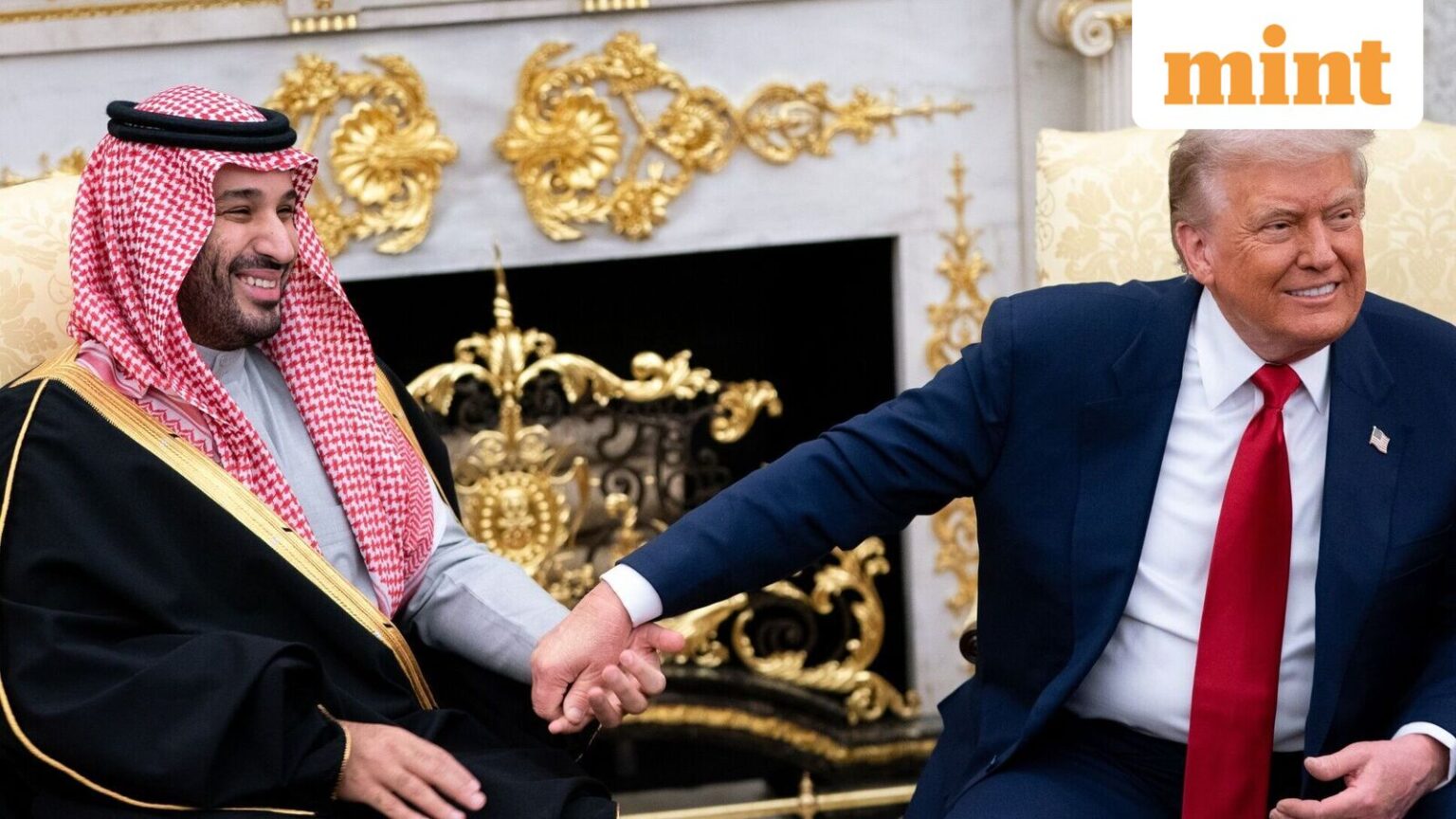
US President Donald Trump on Tuesday (local time) announced that he was designating Saudi Arabia as a Major Non-NATO Ally (MNNA) while hosting Crown Prince Mohammed bin Salman at a gala dinner at the White House.
The designation, given to nations with close strategic ties to the US, grants financing and priority access for certain military equipment purchases, along with the ability to engage in joint research initiatives, a Bloomberg report noted.
According to AFP, Trump said, “Tonight, I’m pleased to announce that we’re taking our military cooperation to even greater heights by formally designating Saudi Arabia as a major non-NATO ally, which is something that is very important to them.”
Trump mentioned of the designation, “And I’m just telling you now for the first time, because they wanted to keep a little secret for tonight”, noting that only 19 other countries have previously received it.
Argentina, Australia, Bahrain, Brazil, Colombia, Egypt, Israel, Japan, Jordan, Kenya, Kuwait, Morocco, New Zealand, Pakistan, the Philippines, Qatar, South Korea, Thailand, and Tunisia are designated as MNNAs.
Saudi Arabia will become the 20th country to receive this status.
Saudi Arabia’s de facto leader, MBS, attended the Tuesday evening event alongside prominent executives and celebrities, including Elon Musk and soccer star Cristiano Ronaldo. Apple CEO Tim Cook and FIFA President Gianni Infantino were also present. Other notable guests, such as Citigroup’s Jane Fraser, Nvidia’s Jensen Huang, and investor Bill Ackman, were served a rack of lamb at long tables adorned with candles and flowers.
US President Donald Trump, from right, First Lady Melania Trump, and Mohammed bin Salman, Saudi Arabia’s crown prince, during a dinner in the East Room of the White House in Washington, DC, US, on TuesdayPresident Donald Trump shakes hands with Saudi Arabia’s Crown Prince Mohammed bin Salman during a dinner in the East Room of the White House, Tuesday.
Earlier, Trump showered MBS with praise during a lavish Oval Office welcome, calling the prince a “very good friend of mine” and clearing him of responsibility for the 2018 murder of Washington Post columnist Jamal Khashoggi.
The two leaders agreed to a broadly-worded defense cooperation pact, which includes the potential future sale of F-35 advanced fighter jets to Saudi Arabia, while the US committed to formalising negotiations on assistance with a Saudi civil-nuclear programme.
The White House visit and associated deals, including a vague Saudi pledge to raise investment in the US from $600 billion to $1 trillion, represent significant wins for the Crown Prince. Until recently, he had been shunned by many long-standing Western allies, comprising briefly by Trump’s predecessor, Joe Biden, over the Khashoggi killing.
Trump and MBS have maintained a warm rapport since the early years of Trump’s first term, and the next phase of their relationship could influence the geopolitical balance in the Middle East. However, key agreements have yet to be reached on issues such as the normalisation of Saudi-Israeli relations, a longstanding US objective stalled by Israel’s two-year war with Hamas in Gaza.
Trump said the US and Saudi Arabia have reached a deal on artificial intelligence, following tense negotiations over the kingdom’s request for access to advanced chips. While no formal announcement was made on Tuesday, sources familiar with the matter indicated that the US has agreed to approve deliveries of the technology to Saudi firm Humain.
(With inputs from agencies)