
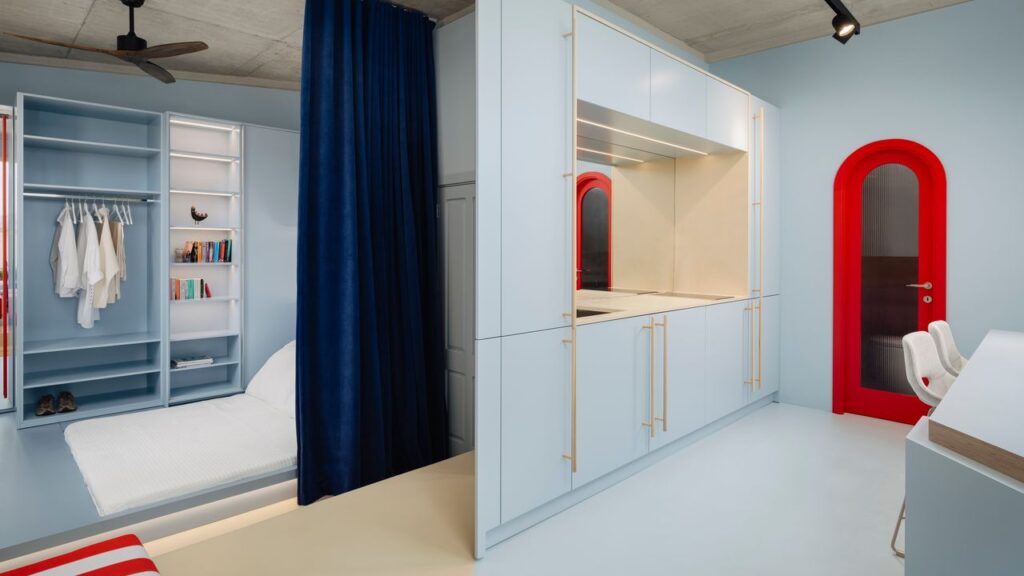
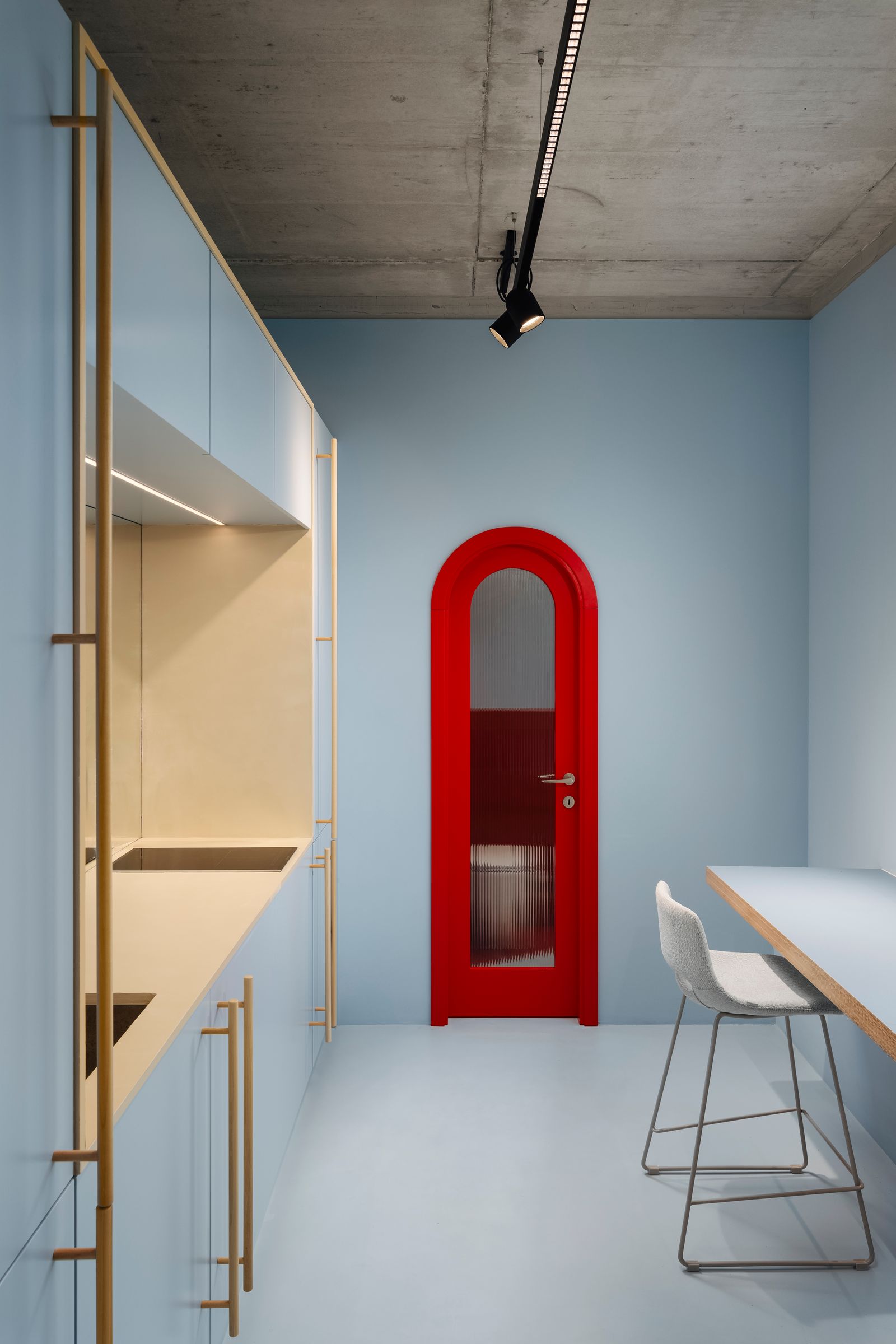
Additionally, a previously underutilised corner of the home has been transformed into a concealed yet highly functional storage unit, while the sleeping area is seamlessly integrated within a tailored joinery composition, maintaining a cohesive material language throughout.
Preserving original structural elements significantly reduces embodied carbon, while passive environmental strategies – such as natural cross-ventilation, high-albedo surfaces, and optimised daylighting – help to minimise energy consumption. Locally sourced limestone reinforces contextual relevance and reduces transport-related emissions. Restored timber apertures, paired with newly added louvres, promote natural airflow, reducing reliance on mechanical cooling and underscoring a climate-conscious approach to adapting heritage architecture.
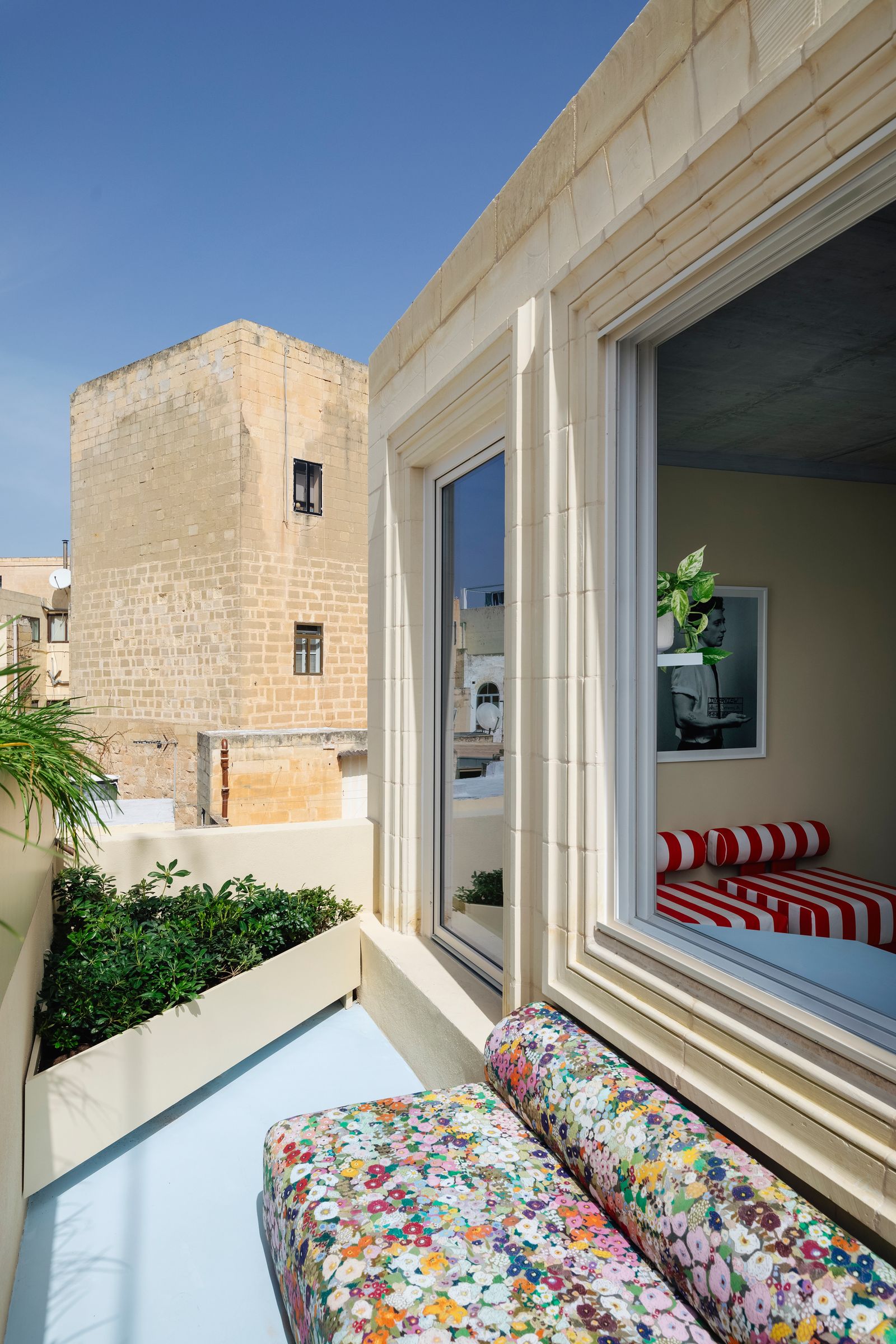
“By bridging minimalist spatial strategies with playful artistic elements, the intervention fosters a compelling dialogue between past and present. The result is a striking example of adaptive reuse, where material innovation, spatial intelligence, and cultural sensitivity coalesce to redefine the potential of compact urban living,” says Fenech Adami.