
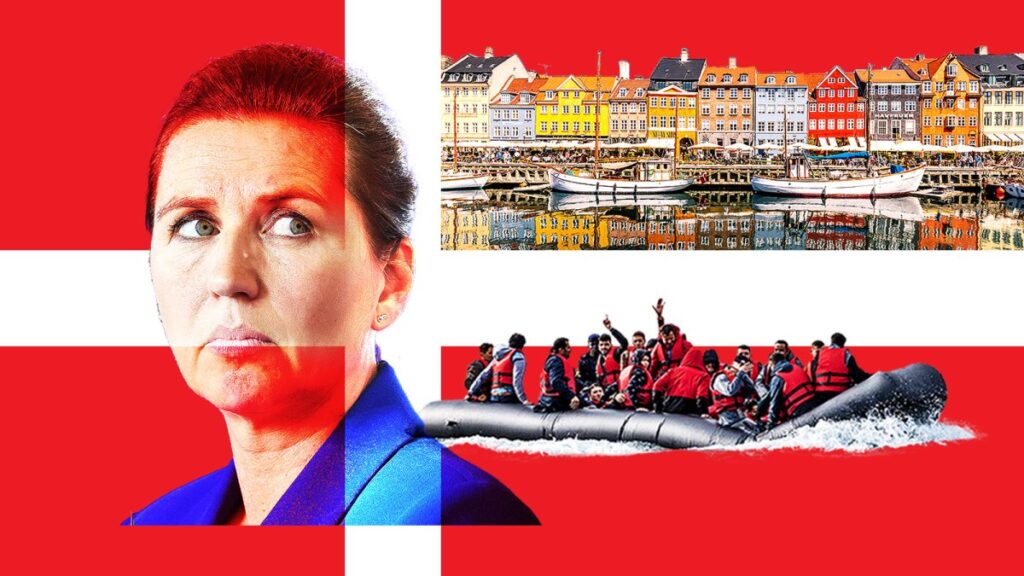
From London to Berlin, mainstream parties in government have begun to seize on the “Danish model” of tough immigration policies and rhetoric from the centre ground as a strategy for combating the radical right on its own turf.
Yet the latest election results from Denmark suggest this path is less straightforward than it might seem.
Mette Frederiksen, who has been the country’s Social Democratic prime minister since 2019, not only retained the “zero asylum” agenda she inherited from her centre-right predecessors, but enthusiastically deepened it.
This approach seemed to be vindicated at the last parliamentary election in 2022, when her centre-left party won its best result in two decades while the right-wing populist Danish People’s Party, hamstrung by infighting and dogged by a fraud investigation into its leader, was wiped out.
• How Denmark’s centre-left leaders got tough on migration
On Tuesday, however, Frederiksen’s Social Democrats lost control of Copenhagen for the first time in 122 years and surrendered councils around the country in a dismal local election performance.
The party found itself caught between socially liberal rivals on the left, who made gains in the larger urban centres, and a rural revival for the populist right, with the relatively new Denmark Democrats party doing so well in some districts that it won more seats than it could fill with its candidates.

Sisse Marie Welling, centre, from the Green Left, will be the new lord mayor of Copenhagen
MADS CLAUS RASMUSSEN/AFP/GETTY IMAGES
Frederiksen said afterwards: “We had expected a setback but it appears the decline is greater than we expected. We will consider what is behind this.”
The losses augur poorly for the national election next autumn, with both the socialist Green Left party and the resurgent Danish People’s Party gaining in the polls as the Social Democrats hover around 20 per cent of the vote, which would be their worst result since 1915.
The causes of the defeat at municipal level are complex and locally specific. In Copenhagen, the most important was the cost of living, and in particular rising rents and the scarcity of accommodation.
Pernille Rosenkrantz-Theil, a close friend of Frederiksen who ran as the Social Democratic mayoral candidate, was relentlessly targeted over her patchy previous record as the national housing minister.

Pernille Rosenkrantz-Theil
IDA MARIE ODGAARD/EPA
However, analysts said Frederiksen’s restrictive asylum and integration policies had also played a significant role. The populations of Denmark’s big cities tend to hold more liberal values than the electorate as a whole and about a fifth of the voters in Copenhagen are now immigrants, although they usually turn out in lower numbers.
As a result, two leftist parties, the Red-Green Alliance and the Green Left, won nearly 40 per cent of the vote and Sisse Marie Welling, a Green Left councillor, is expected to become mayor.