
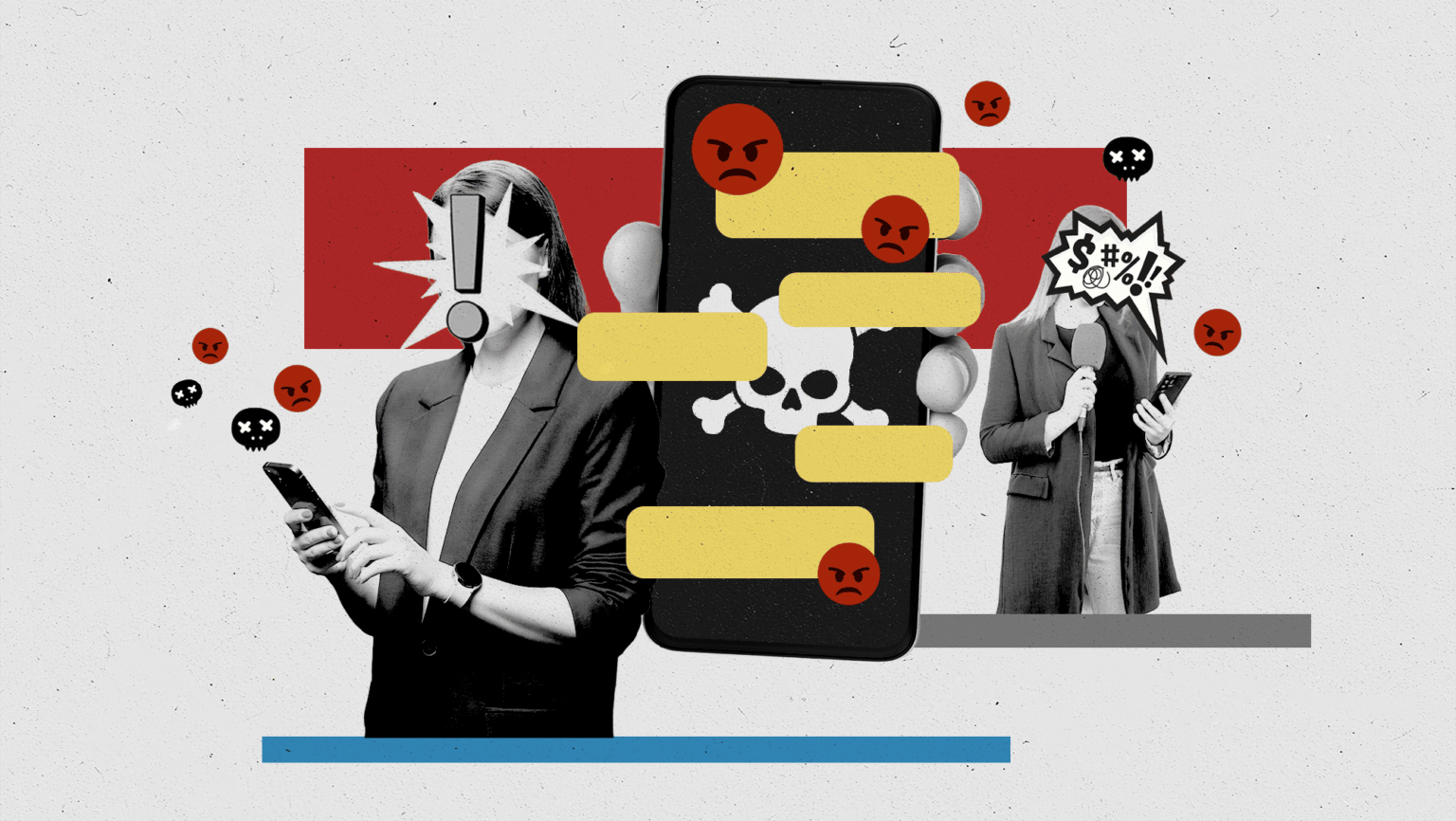
The safety of journalists, both Serb and Albanian, in northern Kosovo is a cause of growing concern, particularly since tensions soared in 2023 over the installation of Albanian mayors in four Serb-majority municipalities following a Serb boycott of local elections.
On the whole, the state of media freedom in Kosovo leaves much to be desired.
This year, Reporters Without Borders put Kosovo in 99th place on its global index on press freedom, 24 places lower than last year.
“While the Kosovo media market is diverse, its development is limited by its small size and ethnic divisions,” the media watchdog wrote. “Media freedom is threatened by politicised regulation, gag suits, insufficient access to public information and serious risks for the safety of journalists.”
Speaking of the Kosovo media situation in general, Xhemajl Rexha, head of the Association of Journalists of Kosovo, AJK, told BIRN: “Online harassment is the most common type of threat journalists face, via threatening messages or other ways of trying to interrupt their work.”
This was felt in March 2025 by Radio Gorazdevac, the only Serbian-language media outlet in the western Kosovo region of Peja/Pec, when a website called Srpski Glas [Serbian Voice] accused it of “serving independent Kosovo” and “violating the Constitution of Serbia” for referring to Kosovo’s president as ‘president’ and its prime minister as ‘prime minister’.
It called for a boycott of the radio and threatened legal action against its editor-in-chief, Darko Dimitrijevic, and his team.
“When such claims, rooted in manipulated narratives, start spreading across social media and Telegram channels, it’s more than defamation,” Dimitrijevic told BIRN. “It’s an attack on our professional integrity.”
Another Serb journalist, Dragana Vukosavljevic, said she had been threatened with legal action by a Kosovo Albanian municipal official in North Mitrovica in March 2023 over an article that named the official in connection with the suspension of birth and death registrations in the municipality.
In a statement issued by her employer, the north Kosovo media outlet KoSSev, Vukosavljevic quoted the official as telling her: “Delete my name immediately, or I will come with the police.”
Rexha, from the Association of Journalists, said journalists in Kosovo in general face “ongoing digital threats”.
“But our colleagues in the north are often targeted by both sides of the ethnic divide.”
This can involve publication of their personal information and contact details on social media, a phenomenon also affecting Kosovo Albanian journalists, with women often the target.
“This serves as a means to discourage them from the important work of reporting,” Rexha said.
“We have seen cases of attacks which disrupted the normal flow of work for the media, including those in the north,” he told BIRN, citing also the misuse of the KoSSev logo in August 2024 on fake content that included, among other things, death threats.
“They included hate speech, and that made this media a further target of threats and intimidation,” said Rexha.
Many journalists remain ill-equipped to deal with such cyber threats, he said.
“My sense is there is a great lack of knowledge on the topic from journalists, who most often ignore the threats they get and are not aware how to handle them.”
Lack of protection, lack of trust